No, and anyone who tells you otherwise is selling something. Scar revision improves scars; it does not erase them. What it does reliably is take skin that is read as scarred and make it read as normal skin with some texture — which is the change most people actually came for.
Why scars behave the way they do
A scar is not one problem. It is usually four.
Most people arrive asking which laser will fix their scars. It is the wrong first question — and asking it is how years get lost.
A single cheek can carry rolling scars tethered to the tissue underneath, sharp ice-pick tracks that no laser can reach, flat-floored boxcars with vertical walls, and a lingering red discolouration that is not a scar at all but a blood vessel response. Each of those behaves differently. Each needs a different instrument. Treating all four with one device is why so many courses of treatment plateau at a small improvement and stop.
Dr. Henningsen’s practice is built the other way round. The consultation begins by separating your scarring into its component types under several different lighting conditions, and only then deciding which combination of manual surgery, chemical reconstruction and energy device will move each one. That sequencing — not the brand of laser — is what produces the results on this page.
The four patterns we separate
- Rolling scarsSoft, undulating depressions held down by fibrous bands. Released surgically with subcision.
- Ice-pick scarsNarrow, deep, steep-sided tracks. Rebuilt from the base with TCA CROSS.
- Boxcar scarsFlat floors, sharp vertical edges. Softened and re-levelled with fractional resurfacing.
- Erythema & hypertrophyRedness, thickening, keloid. A vascular laser problem, not a texture problem.
The instruments
What we actually use
Six modalities, chosen and sequenced for your specific mix of scars. Most treatment plans use three of them in a deliberate order.
Subcision
A fine bladed needle released under local anaesthetic to cut the fibrous tethers holding a rolling scar down, so the floor of the scar can rise. Permanent, where fillers are not.
TCA CROSS
Trichloroacetic acid applied only to the base of a deep scar. Controlled injury triggers fibroblasts to rebuild the floor upward over a course of three or four sessions.
CO2 laser resurfacing
Fractional columns of ablation 1–2 mm deep, removing roughly a fifth of the epidermis and driving a full dermal remodelling response over the following year.
Genius RF microneedling
49 insulated titanium needles deliver radiofrequency at a measured depth. Dermal remodelling without removing the surface — the workhorse for darker skin types.
Surgical & traumatic scars
Raised, red, itchy and spreading scars need a different logic: vascular laser, intralesional therapy and pressure — not resurfacing.
Stretch marks
Striae respond to the same remodelling principles as scars, treated over a longer horizon and with realistic expectations set from the first visit.
Documented results
Before & after
Drag the handle across each photograph. Unretouched, same lighting, published with written patient consent.
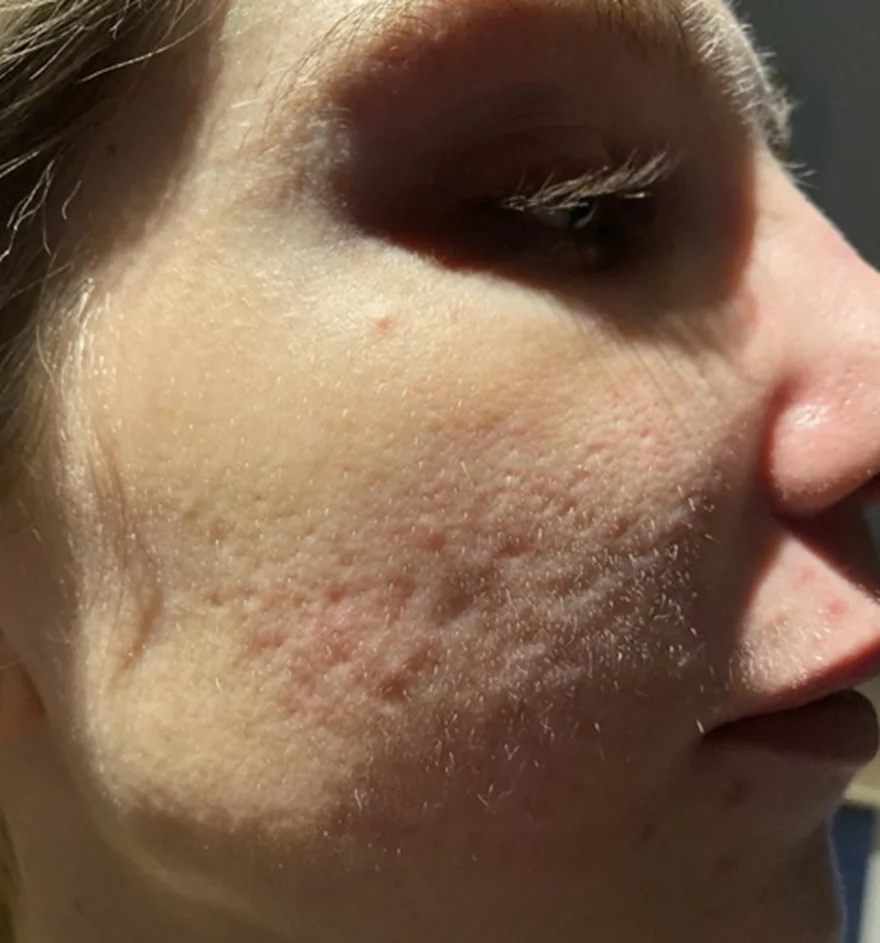
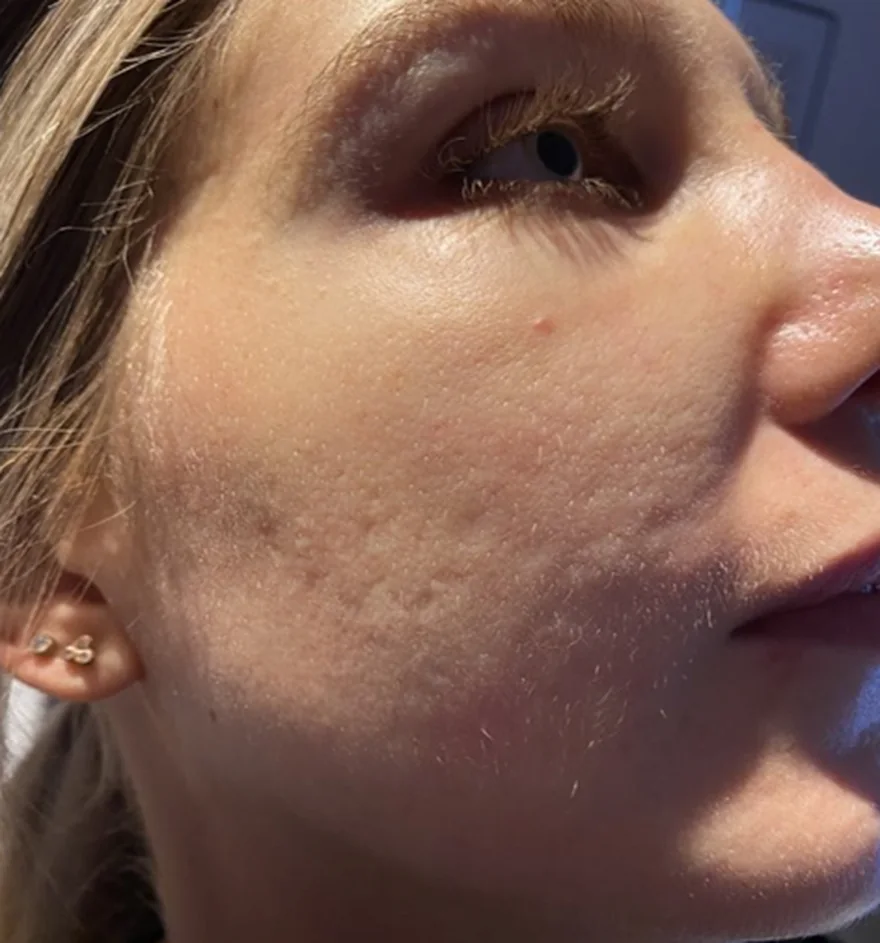
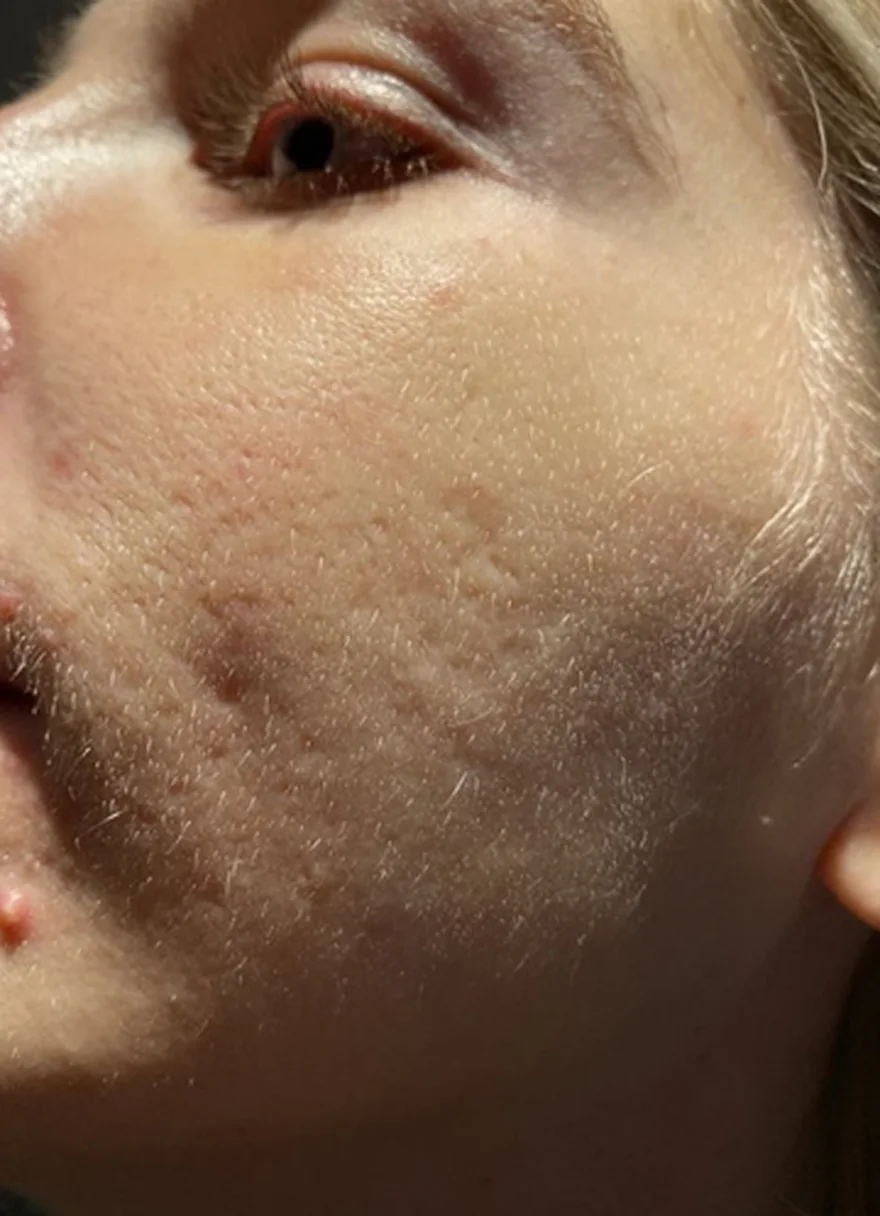
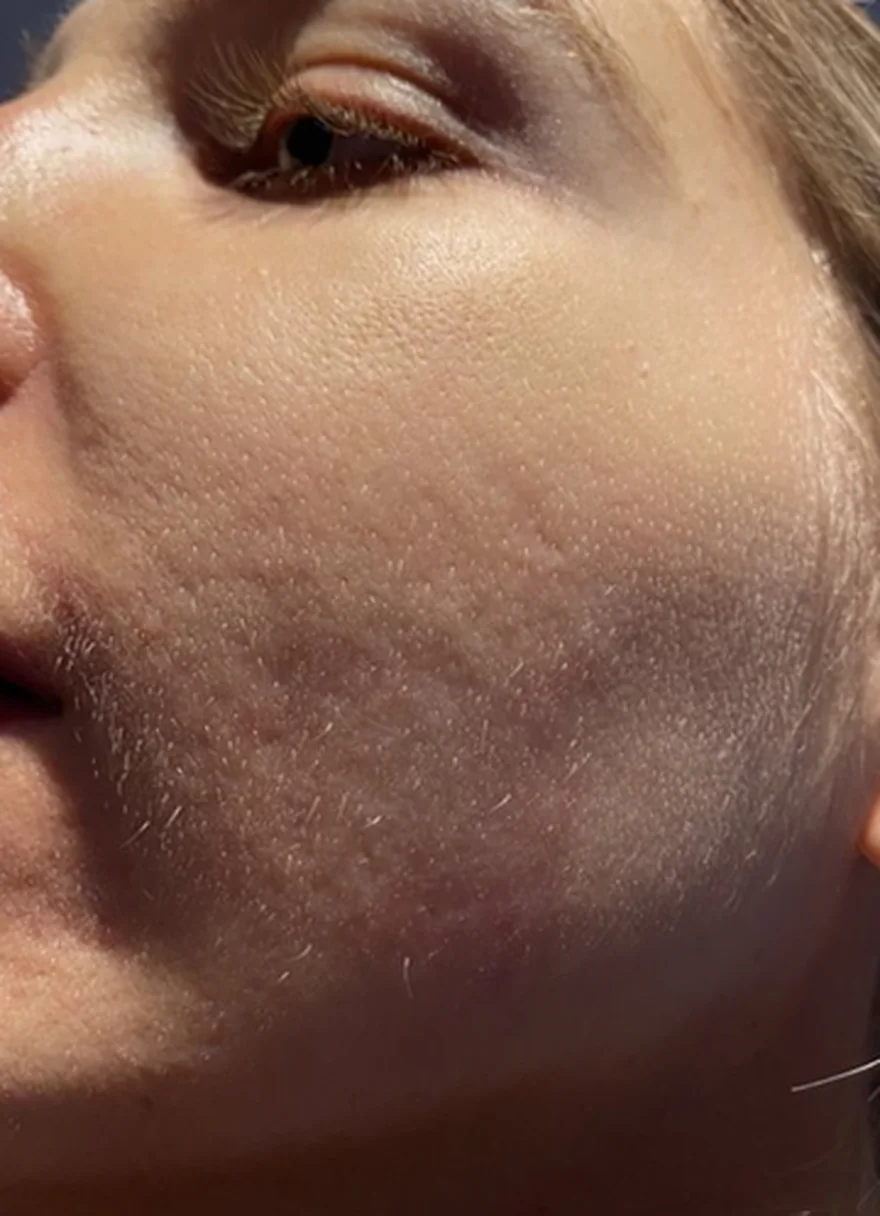
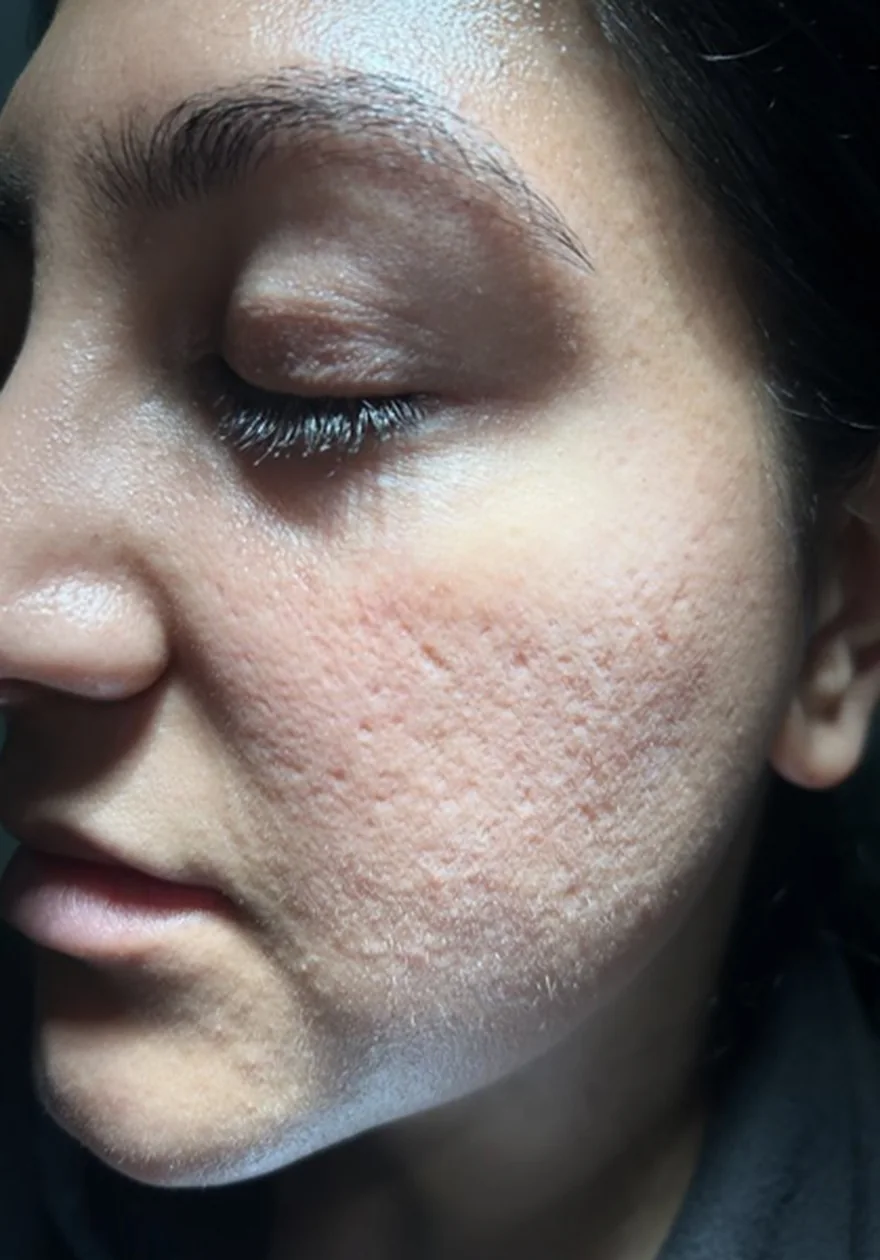
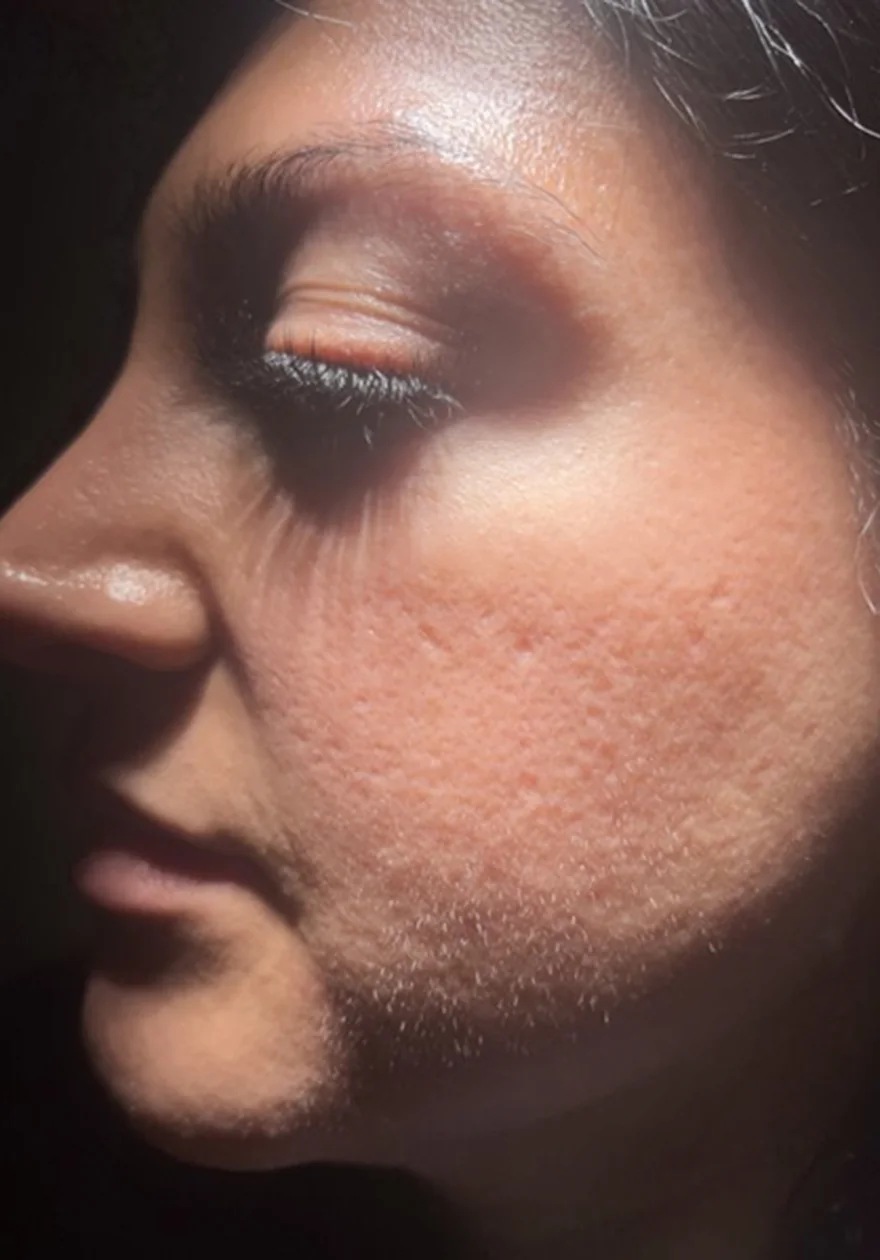
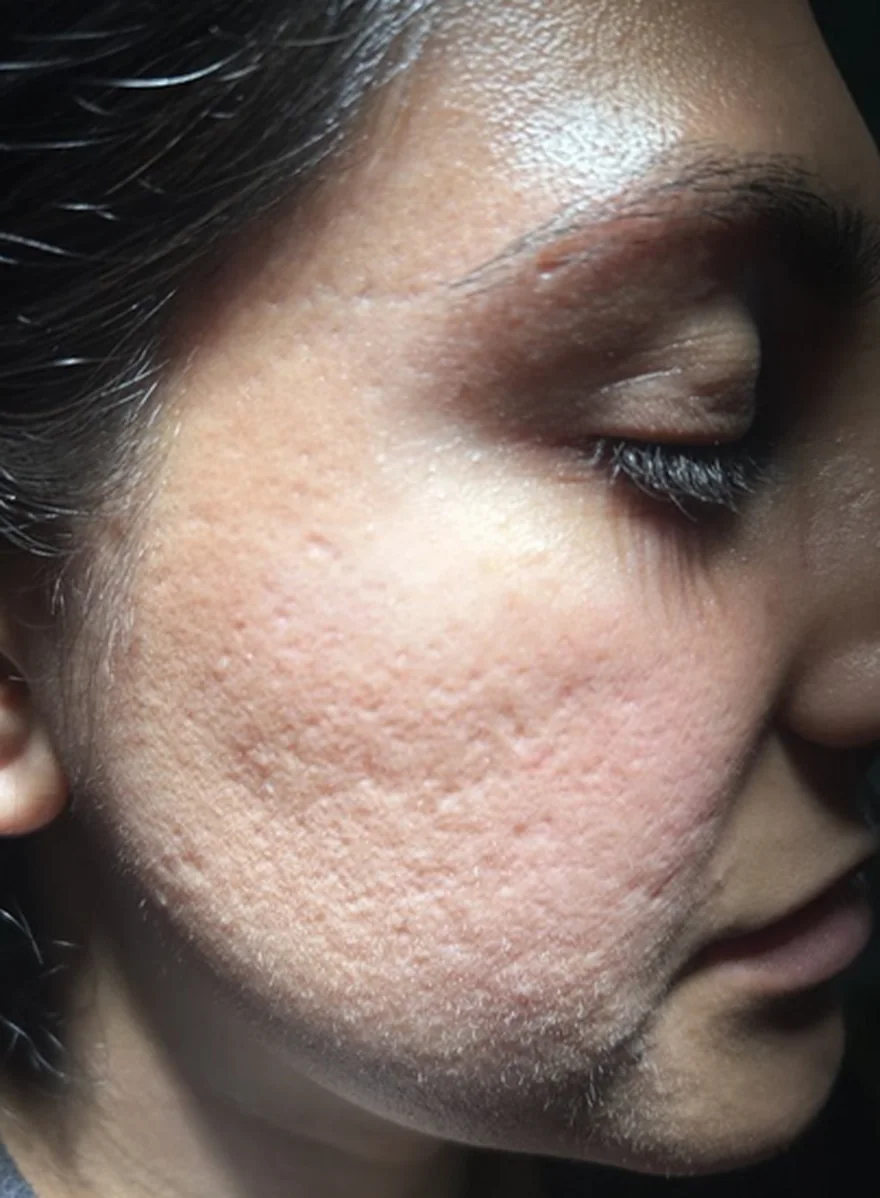
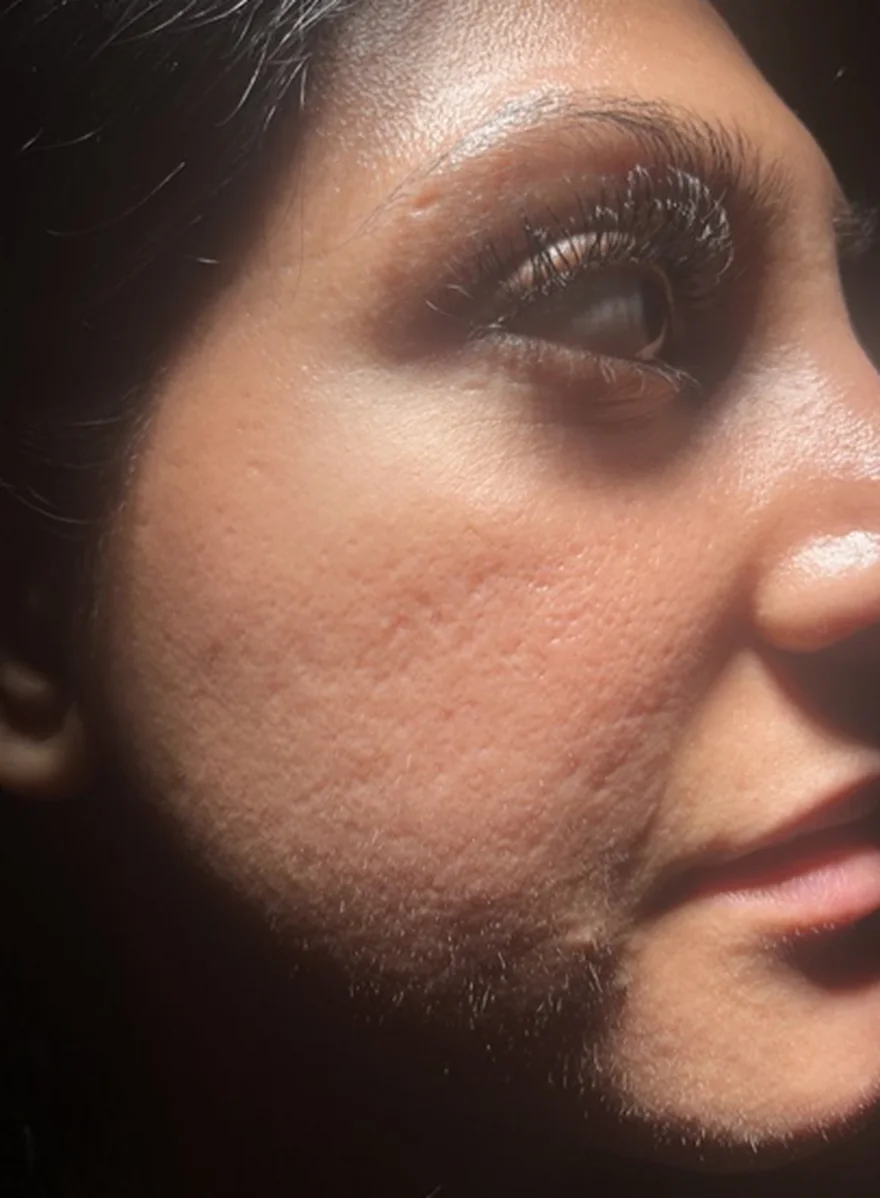
Scar revision is a complex and variable procedure. It asks patience of the patient and of the specialist — and it rewards both. Most people see a clear step from each session, and those improvements are permanent.Dr. Emil Henningsen, specialist in dermatology
What a course looks like
Measured in years, not appointments
We would rather tell you this at the beginning than have you discover it in month eight.
Skin healing after an energy device — new collagen, dermal remodelling — is slow biology. We space those treatments a minimum of three months apart for that reason. Many patients return between four and eight times, at intervals of three to six months or longer, over two to three years.
Manual procedures can often be layered in more frequently, and a well-planned course usually combines several methods in a single visit so that your travel and your recovery buy you as much progress as possible.
If you still have active acne, moderate or severe breakouts are treated first. Revising scars while new lesions are still forming simply creates new scars behind the ones we are correcting.
Consultation and mapping
Twenty minutes with Dr. Henningsen. Your skin is examined under several lighting conditions, scar types are separated and photographed, and a sequence is proposed with its honest downtime and cost.
First combined session
Typically subcision to release tethering, TCA CROSS on ice-pick scars, and an energy device across the field — done in one visit under local anaesthetic.
Healing and remodelling
Swelling settles within days; collagen remodelling continues for months. This is the part that cannot be hurried, and the part that produces the result.
Review and adjust
We photograph again in the same light, compare honestly, and decide what the next session should address. Remote review by photograph is available for travelling patients.
Honest expectations
What we will and will not promise
4–8Sessions over two to three years in a typical scar course
4–8Sessions in a full acne scar revision course
3 monthsMinimum interval between energy-device treatments
PermanentThe improvement achieved does not reverse
Consultation
Ready to talk about your skin?
Consultations with Dr. Henningsen are arranged individually. Tell us what you would like to change and we will come back to you with the options, the honest downtime and the realistic result.
Questions
Before you book
The questions patients ask most often, answered the way Dr. Henningsen answers them in clinic.
All questions- Will my scars be gone completely?
- I have dark skin. Does that limit my options?
Every treatment we offer is available to darker skin types. Transient hyperpigmentation or hypopigmentation can occur and usually settles over weeks to months during healing. Sun avoidance and high-factor sunscreen before and after treatment substantially reduce the risk, and device settings are adjusted for your skin type.
- Can I be treated while taking isotretinoin?
Most acne scar procedures can safely be performed during isotretinoin therapy. The exception is full ablative laser resurfacing, where the evidence is not sufficient for us to consider it equivalent on skin undergoing isotretinoin treatment.
- Will subcision or radiofrequency make my face lose volume?
Performed correctly, no. Radiofrequency microneedling taken too deep can affect facial fat and reduce volume — which is precisely why needle depth and energy settings are set individually rather than by protocol.
- I form keloids. Am I still a candidate?
Usually yes. A history of hypertrophic scarring is not an exclusion, and many patients with keloid scars are treatable. It does change which instruments we reach for and in what order, so this is a conversation for the consultation.