Many patients return four to eight times, at intervals of three to six months or longer, over two to three years. Scar revision is a gradual, cumulative process — each session builds on the last rather than replacing it.
Overview
More than half of this practice
Acne scars make up more than half of Dr Henningsen’s practice. Patients travel from across Europe, the Middle East, Asia and the United States for it.
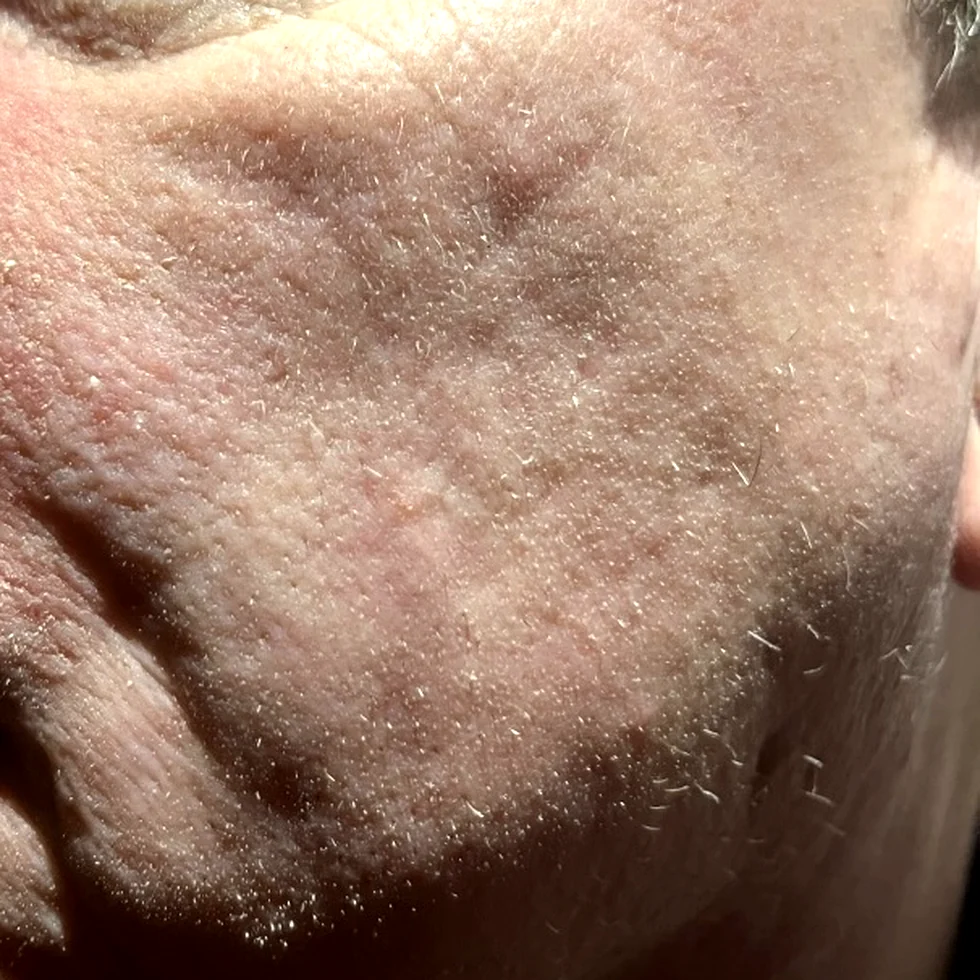
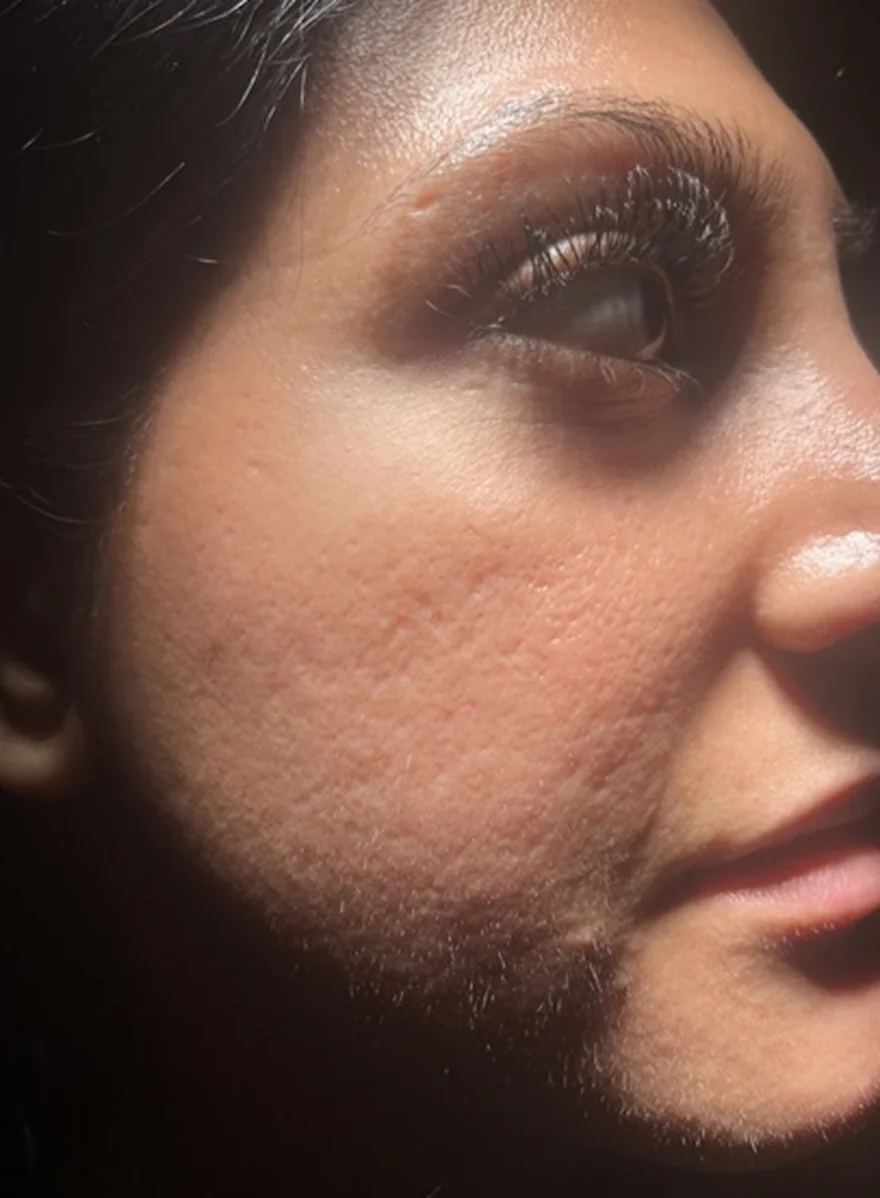
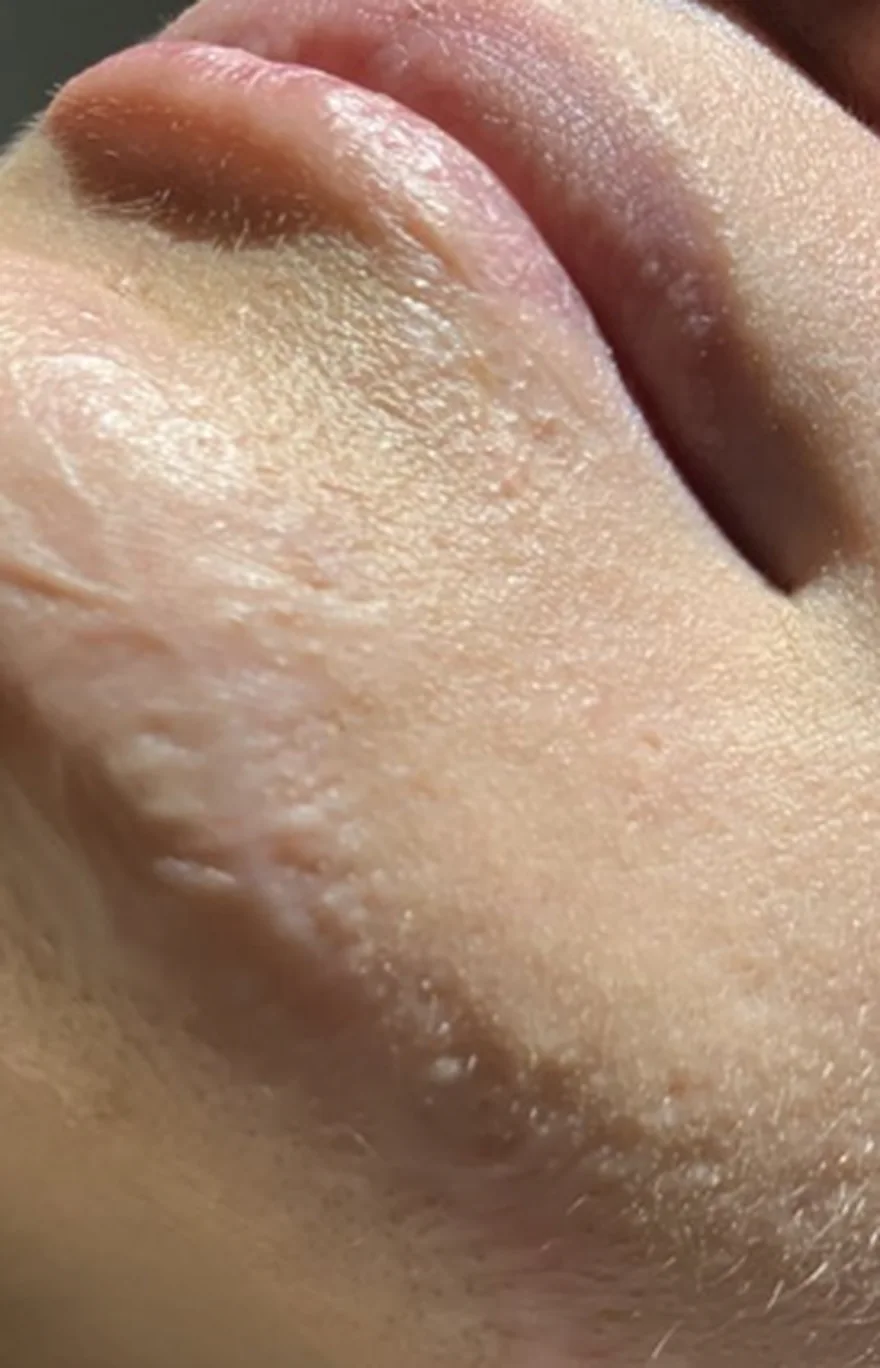
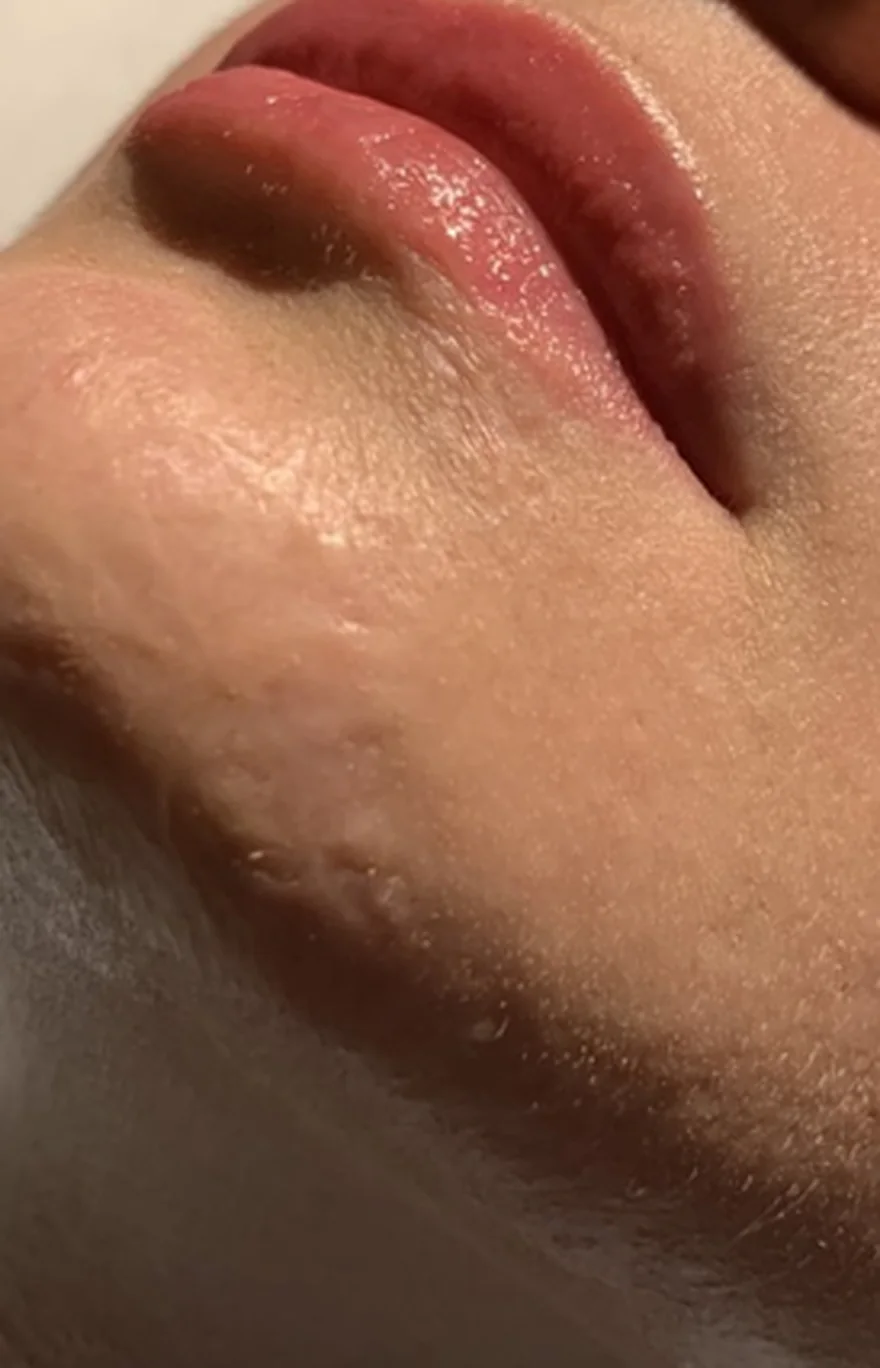
Acne leaves behind three distinct kinds of depression, and they rarely arrive alone. Rolling scars are soft, wave-like dips held down by strands of scar tissue anchored in the dermis. Ice-pick scars are narrow and steep, often only a millimetre across but running deep. Boxcars have flat floors and sharp vertical walls, like a small crater. Alongside them sits post-inflammatory erythema — the flat red marks that are not scars at all, and that respond to something else entirely.
This is why one device cannot do the job. A laser passed over a tethered rolling scar heats a surface that is being pulled down from below; the tethering wins. Acid applied to a boxcar floor does very little. The skill in acne scar revision lies almost entirely in reading which pattern is which, and treating each with the instrument that was designed for it.
Dr Henningsen trained in the manual techniques of acne scar revision under Professor Chu at the West London Dermatology Centre and has since developed his own approach, teaching it at congresses and to dermatologists in training. He is listed as a Recommended Top 1% Acne Scar Specialist on myacnescars.com.
At a glance
- Treatment time45–120 minutes for a combined session
- AnaestheticTopical, local infiltration or nerve block
- Downtime2–7 days of swelling; residual redness up to 6 weeks
- SessionsTypically 4–8 over 2–3 years
- ResultsAbout 20–30% relative improvement per session, permanent
- Combines withSubcision, TCA CROSS, CO2, Genius RF, fillers
How it works
Read the scar, then choose the tool
The consultation is a mapping exercise. Under direct, oblique and side lighting, different scar populations become visible — and a cheek that looks uniformly “bumpy” to the patient resolves into a mix of tethered rolling scars, discrete ice-pick tracks and shallow boxcars.
Each is then assigned: subcision to release what is tethered, TCA CROSS to rebuild what is too narrow and deep for any device to reach, and a fractional energy device across the field to re-level the surface and drive collagen. Where a released scar leaves a soft hollow, a biostimulator or hyaluronic acid can be placed to support it while new collagen forms.
Most sessions therefore combine two or three methods in a single visit. It is more demanding to plan and more demanding to perform — and it is the reason results keep improving instead of plateauing.
Indications
Suited to
- Rolling scars — soft depressions tethered to deeper tissue
- Ice-pick scars — narrow, deep, steep-walled tracks
- Boxcar scars — flat-floored with sharp vertical edges
- Enlarged pores and irregular surface texture
- Post-inflammatory redness and pigmentation
- Scarring on the cheeks, temples, jawline, chest and back
- Skin of all types, including Fitzpatrick IV–VI with adjusted settings
In the clinic
Step by step
Consultation and photography
Twenty minutes with Dr Henningsen. Scar types are separated, mapped and photographed in standardised lighting so progress can be measured rather than remembered.
Anaesthesia
Topical anaesthetic, local infiltration, or a nerve block depending on what the session involves. Tumescent anaesthesia is used for wider subcision fields.
The combined session
Typically subcision first to release tethering, then TCA CROSS on individual deep scars, then an energy device across the treated field.
Immediate aftercare
Swelling and pinpoint bleeding are expected. You are shown exactly how to clean and dress the area, and a nurse check-up can be arranged before you travel home.
Review at three to six months
New collagen is still forming at three months. We photograph in the same light, compare, and plan the next session around what has actually changed.
Documented results
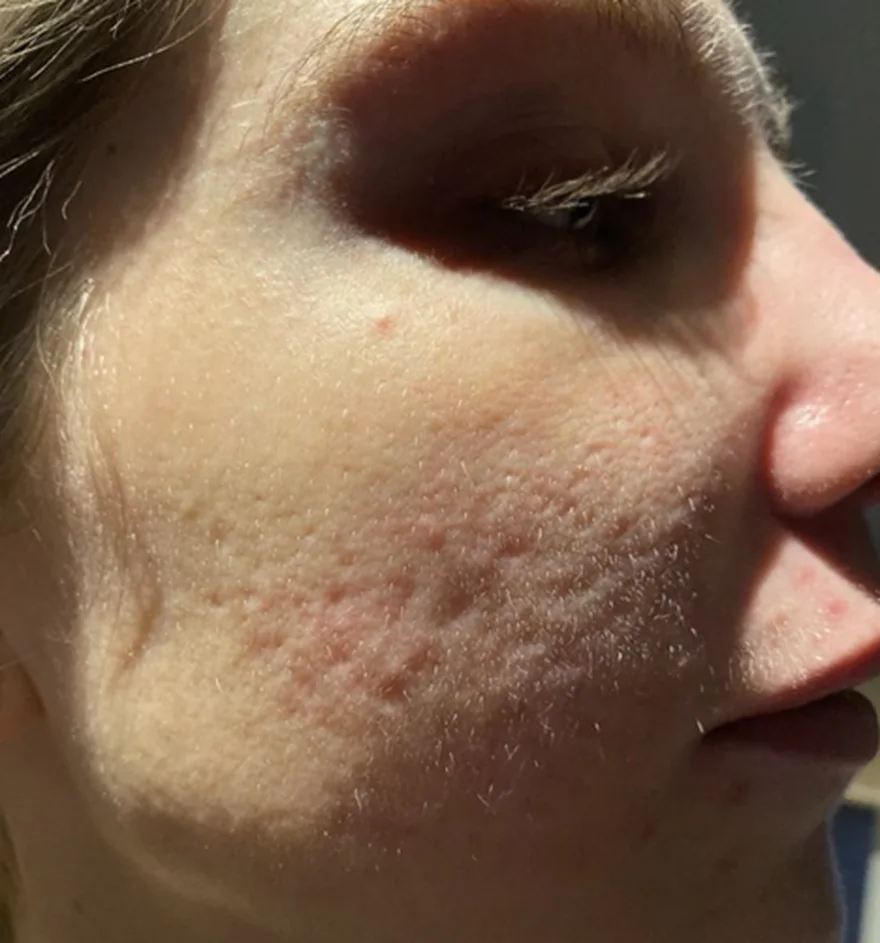
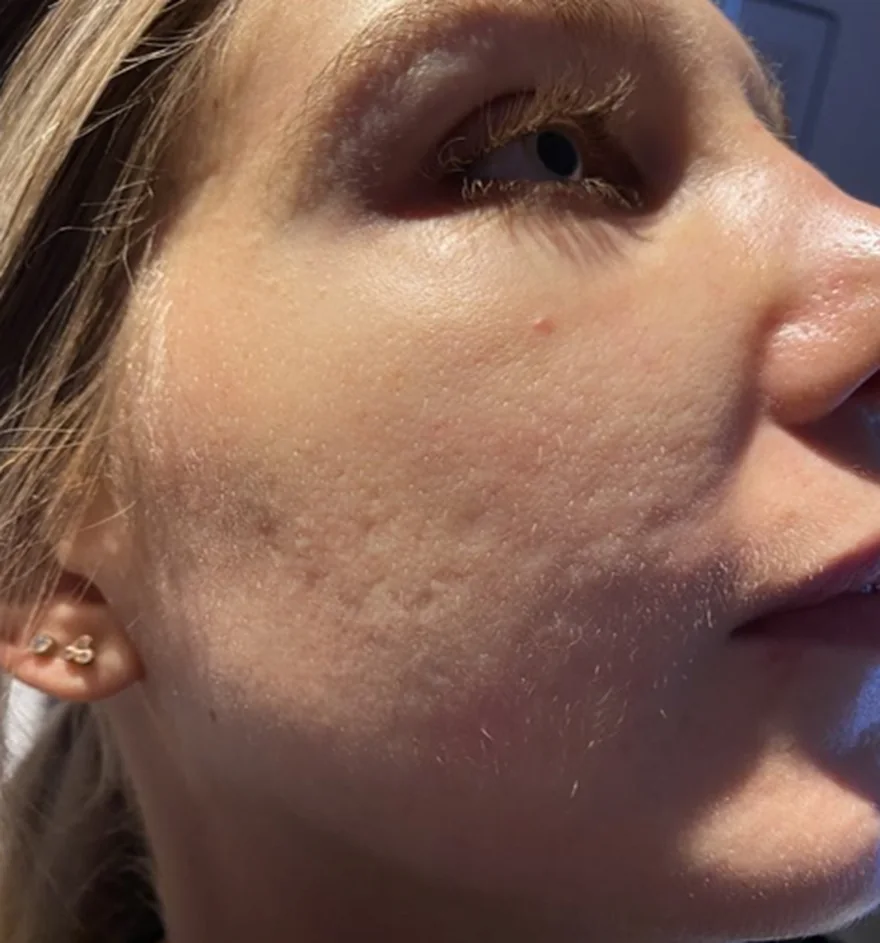
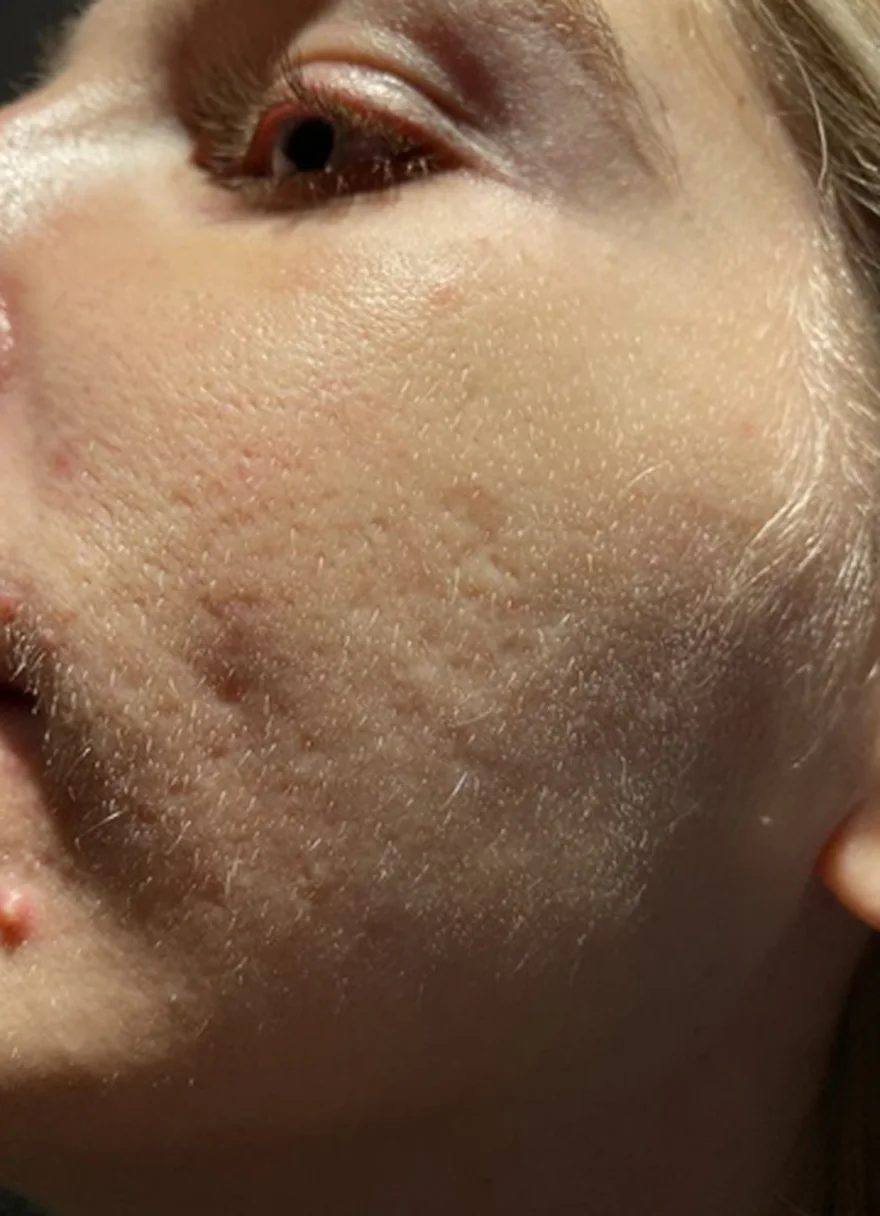
Before & after
Drag the handle across each photograph to reveal the result. All images are unretouched and published with written patient consent.
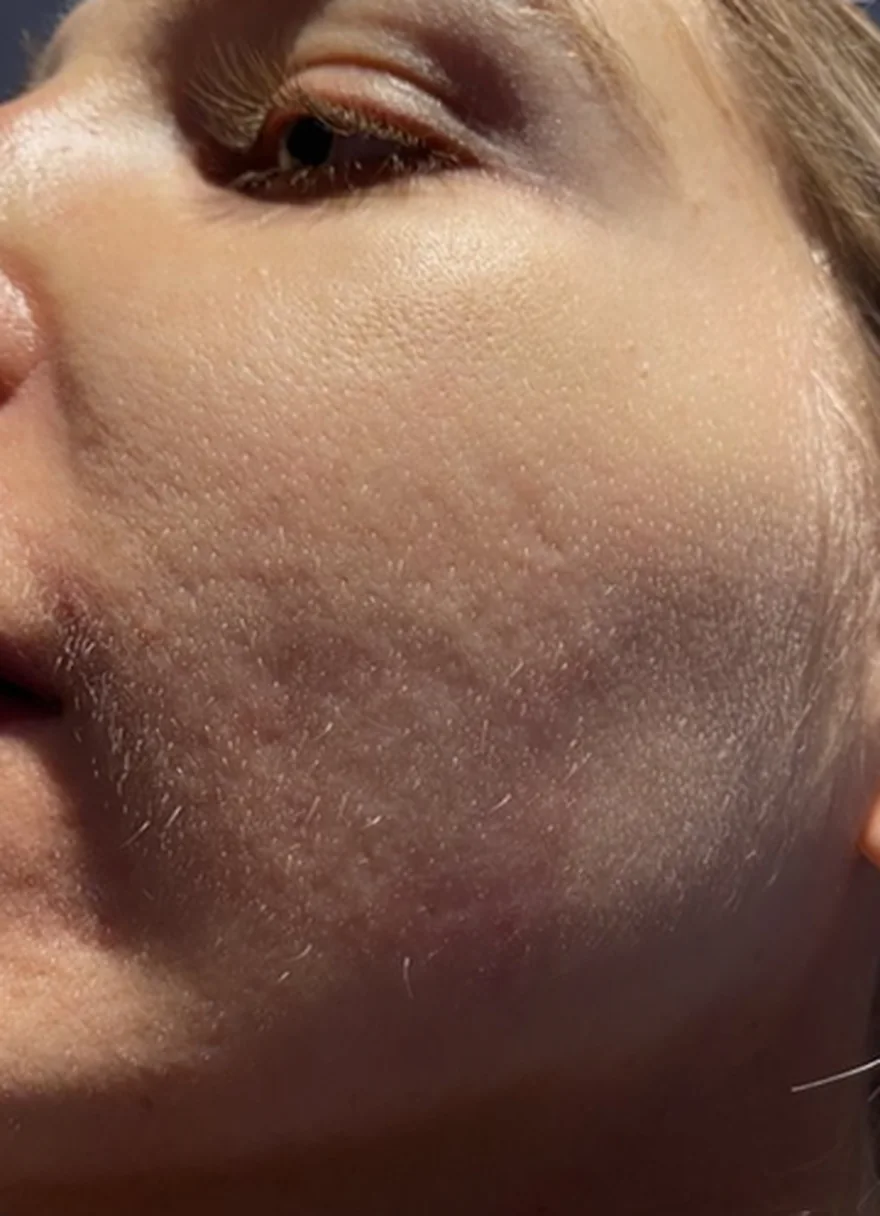
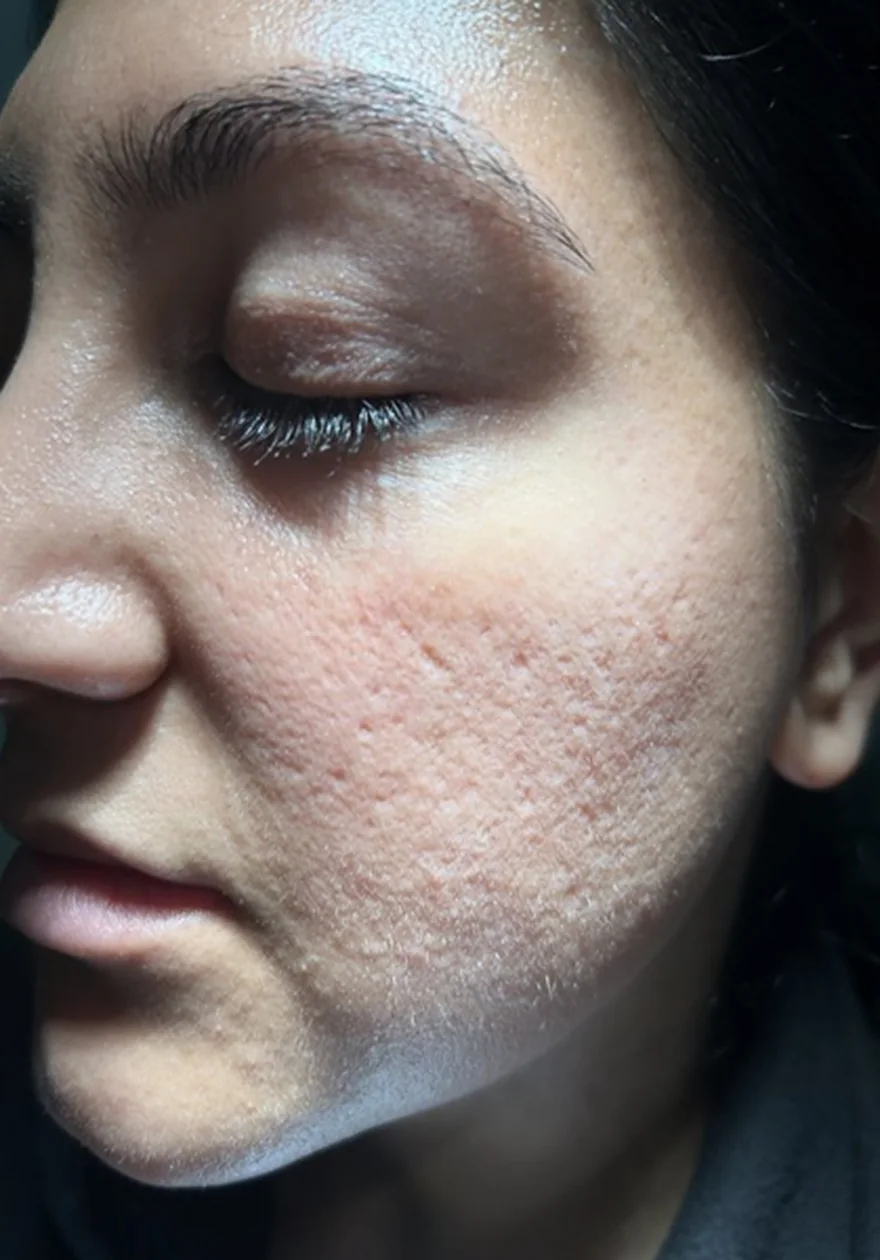
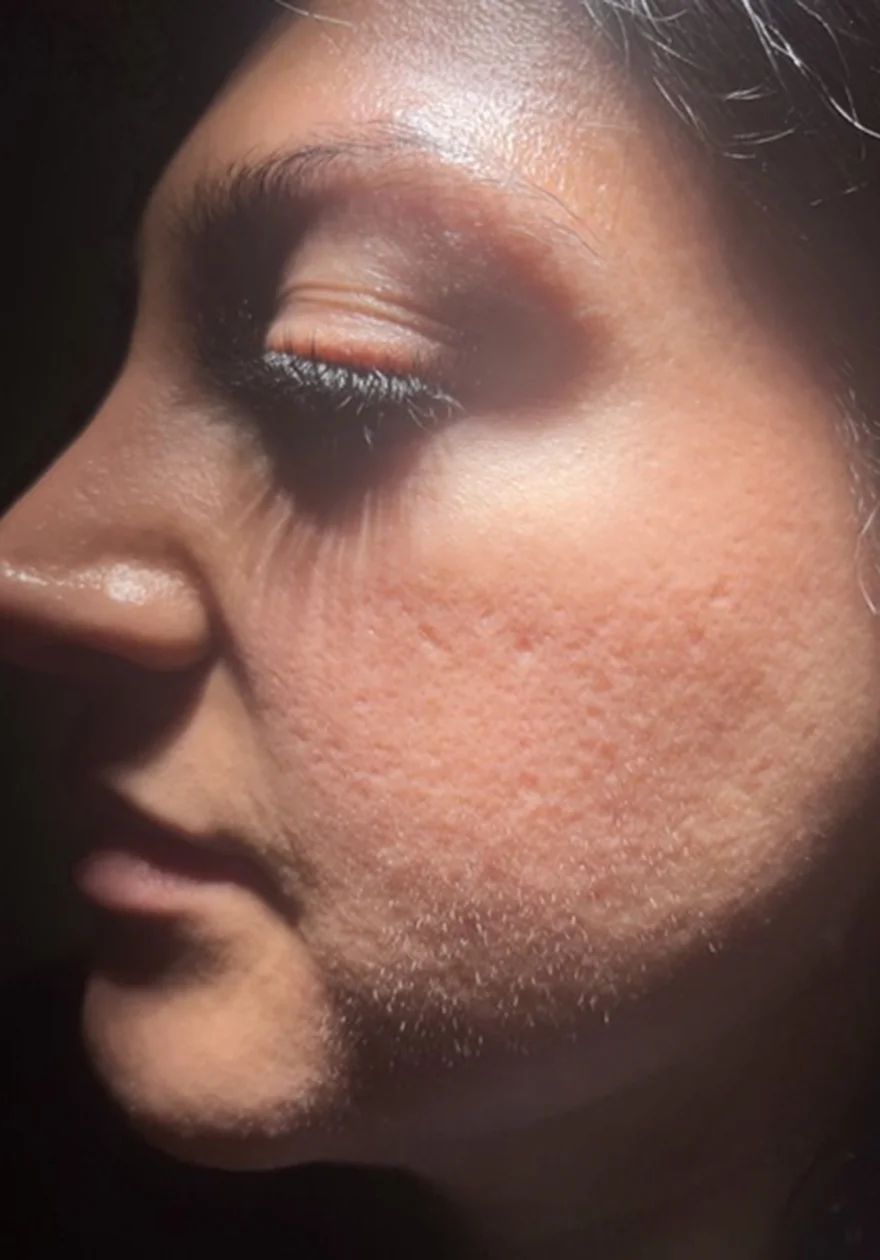
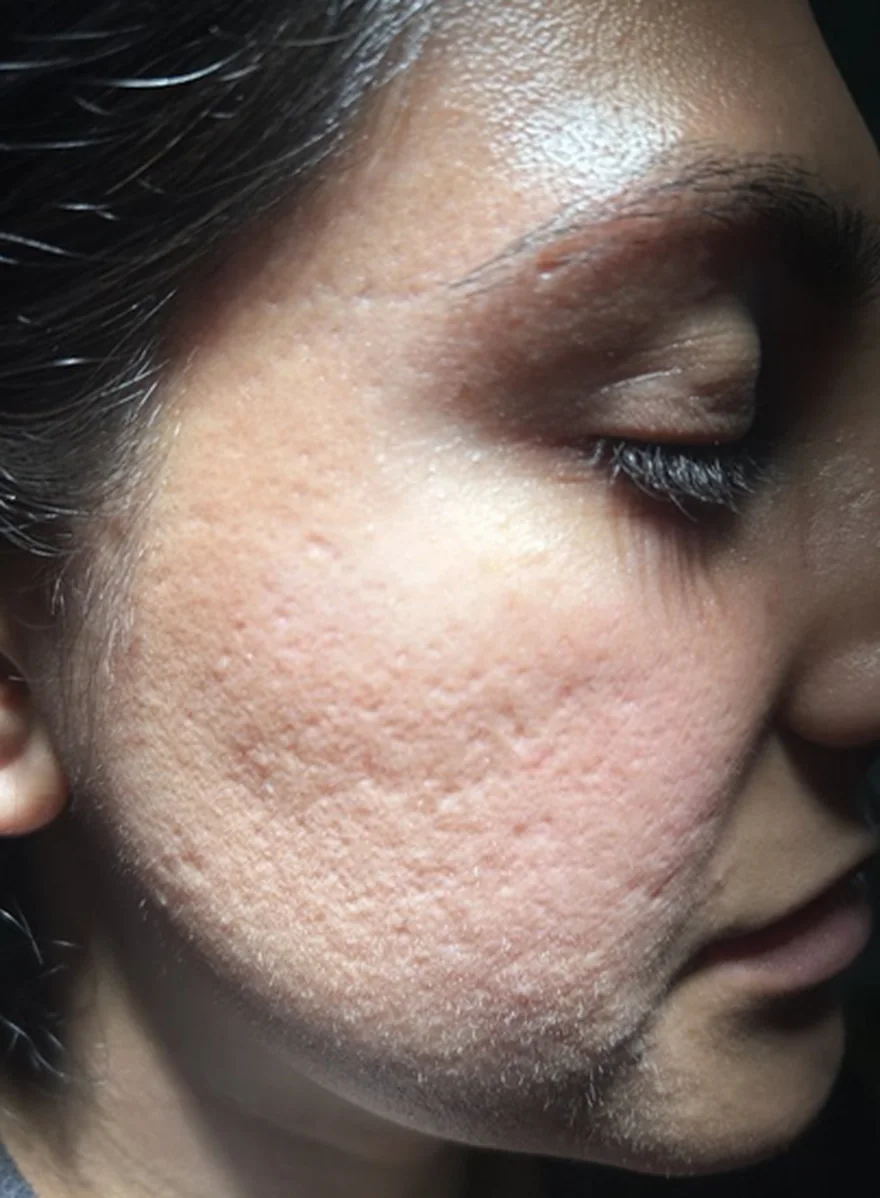
Recovery
What the days afterwards look like
Downtime depends on what was done, and we will tell you the real number before you book a flight.
- Subcision — swelling and bruising for two to four days. Same-day travel is possible.
- TCA CROSS — swelling for a day, small crusts for about a week, then residual redness for four to six weeks.
- Genius RF — swelling for around four days; a faint grid pattern can remain visible for up to eight weeks.
- CO2 or Erbium laser — five to six days of swelling and oozing, then redness for up to six weeks.
Travelling to us? Most patients stay one or two nights before flying home. Same-day travel is possible with some redness and swelling, and a nurse can see you before departure.
Questions
Good to know
If your question is not here, ask it in the enquiry form — Dr Henningsen answers these personally.
Ask a question- How many treatments will I need?
- How much improvement should I expect?
In most cases, a relative improvement of around 20 to 30 per cent per session. Those improvements are permanent, although natural volume loss with age can change how a scar reads over the following decades.
- Can I have my consultation and treatment on the same day?
We strongly recommend an online consultation first. Treatment planning determines how much clinic time, anaesthetic and equipment your session needs, and doing that properly in advance is the difference between an adequate result and a good one.
- Do I need to stop active acne treatment first?
Mild acne is not a barrier. Moderate to severe acne is treated first — otherwise new lesions create new scars behind the ones we are correcting.
- Are fillers used?
Sometimes, and deliberately. Where subcision releases a scar and leaves a soft hollow, a hyaluronic acid filler or a collagen biostimulator such as calcium hydroxylapatite can support the floor while new collagen forms. With tumescent anaesthesia, filler is not appropriate in the same sitting because the anaesthetic drains it.
Consultation
Ready to talk about your skin?
Consultations with Dr Henningsen are arranged individually. Tell us what you would like to change and we will come back to you with the options, the honest downtime and the realistic result.