The consultation is the treatment plan
Almost everything that determines the outcome of scar revision happens before an instrument is picked up. What kind of scarring this is, in what proportions, in what skin, in what order — get that wrong and the best device in the world produces an average result.
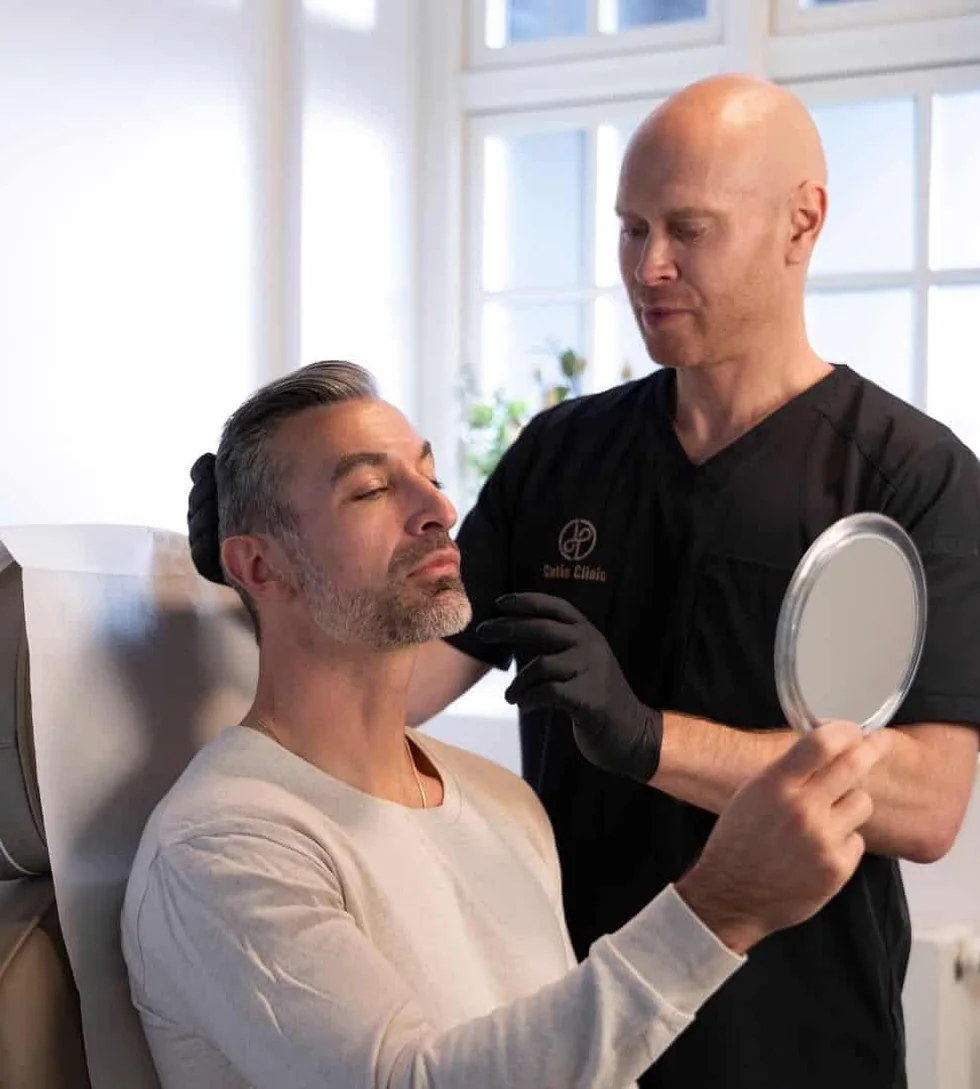
So twenty minutes are reserved for it, and most of that time is spent looking. Skin is examined under several lighting conditions, because oblique light shows texture that flat light hides, and because what presents as one problem is usually three or four with different mechanisms.
The output of that appointment is not a quote. It is a sequence: which technique, in what order, how far apart, with what recovery, and what the realistic ceiling is.
Four principles
- Diagnosis before deviceThe instrument is chosen last, not first
- Sequence over strengthOrder matters more than power
- Measured, not rememberedStandardised photographs decide the next step
- The ceiling, stated earlyWhat it cannot do is part of the plan
A laser is a tool, not a treatment
Most patients arrive having researched a device. That is understandable — devices are what the industry markets, because a device is a thing you can name and photograph.
But the same laser in two pairs of hands produces different outcomes, and a clinic that owns one device will find a reason to use it on everything. More than half of what is done here is manual: subcision, chemical reconstruction, punch techniques. These are older than the lasers, less photogenic, and for several scar types they are the only thing that works.
Where energy is the right answer, it is used properly — at a depth and density chosen for that skin, not at the setting that produces the most dramatic first week.
Most patients look for lasers, because lasers are found everywhere online. But lasers and energy devices are not the best treatment option for everyone. The key to success is addressing several scar types with a method tailored to each — and to your skin, your timeframe and the downtime you can actually take.Dr. Emil Henningsen
What this means for you
- No treatment on the day of a first consultation
- One specialist throughout — consultation, planning and procedure
- Written plan with its stages, intervals and honest downtime before you commit
- Standardised photography, so progress is measured rather than recalled
- A stated ceiling: what the course can realistically achieve, and what it cannot
- A willingness to decline treatment that would not help, or would risk making things worse
How a course is run
Look
Examination under several lights. The scarring or the skin is separated into its components and counted.
Plan
A written sequence, with intervals, downtime and cost. It is discussed before anything is booked.
Treat
Manual technique where manual technique is right, energy where energy is right, combined where combining is safe.
Measure
Photographs in the same setup at three to six months. The next stage is decided on the evidence, and the plan changes when the evidence says so.
Ready to talk about your skin?
Consultations with Dr. Henningsen are arranged individually. Tell us what you would like to change and we will come back to you with the options, the honest downtime and the realistic result.