Often, yes — but for a different reason than expected. Most incomplete results come from treating one scar type in a face that has several, not from the laser being wrong. What is left is usually the part the laser was never able to reach, and that part answers to manual technique.
Overview
Scars that have already been treated once
A meaningful share of this practice is second opinions: patients whose scars have already been lasered, needled, filled or excised somewhere else, and who were told that what remains is as good as it gets.
Sometimes that is true. More often the first attempt addressed one scar type in a face that had four, or used a single device repeatedly because that was the device the clinic owned. The scarring that remains is the part that device could never have reached.
Complex revision is also the right description for scars that were difficult from the start: mixed atrophic and hypertrophic scarring in the same area, scars over a joint or under tension, scars in skin that pigments easily, and scarring extensive enough that treating it in one pass would be unsafe.
What these cases have in common is that the plan matters more than the instrument, and that the honest answer sometimes includes a limit.
At a glance
- Treatment time60–180 minutes per session
- AnaestheticLocal, sometimes with sedation
- DowntimeTwo to seven days, by method
- SessionsOften four to eight over two to three years
- ResultsAssessed at three to six months per stage
- Combines withMost methods, sequenced deliberately
How it is approached
Re-map first, treat second
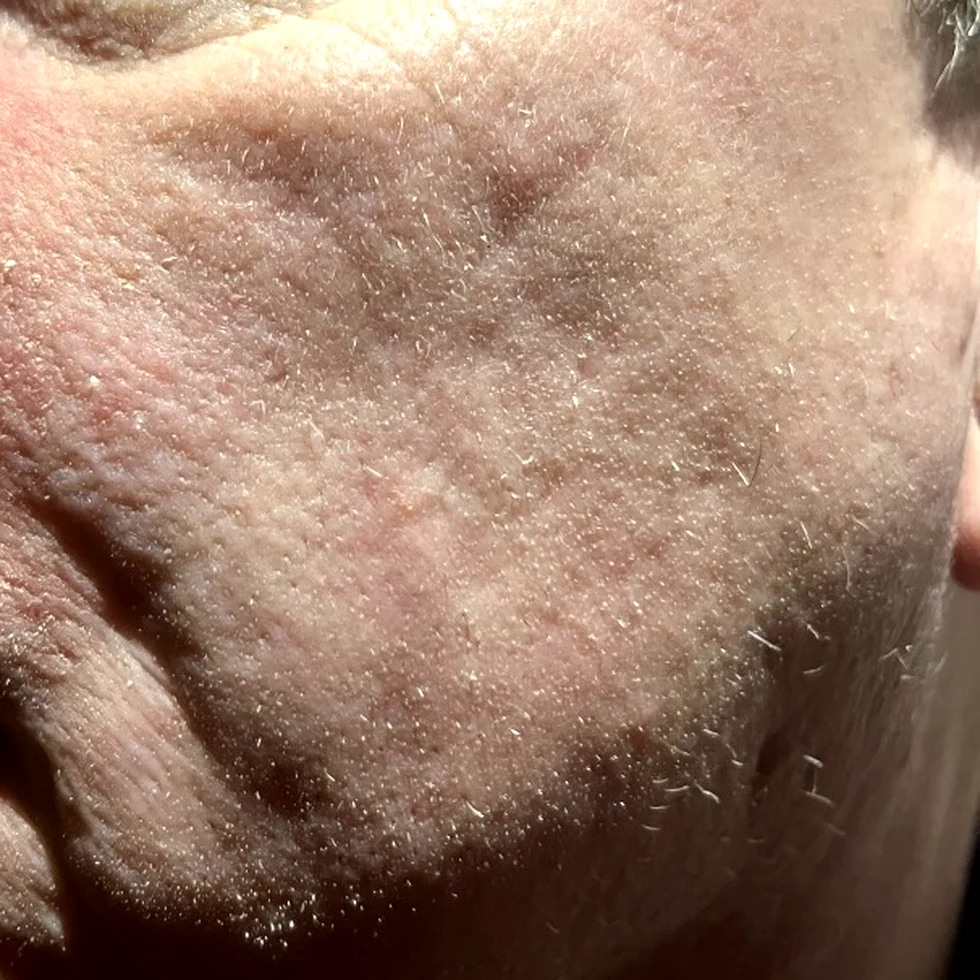
The first appointment in a complex case is not a treatment. The scarring is mapped again from scratch, under several lighting conditions, without reference to what it was called before. Rolling, boxcar, ice-pick, hypertrophic and erythematous components are separated and counted, because each answers to a different instrument and in a particular order.
Previous treatment changes the tissue. Skin that has had repeated ablative laser can be thinner and less forgiving; skin that has had filler placed into a scar bed may need that resolved before anything else is possible; a scar that was excised has a new scar to consider. All of that is part of the assessment, and it is why photographs and a treatment history from the previous clinic are worth bringing.
Then the sequence is built backwards from the hardest component. The deepest, most tethered scars are released first, because everything else looks different once they lift.
Indications
When a case is complex
- Scarring already treated elsewhere with an incomplete or uneven result
- Several scar types in the same area, needing different instruments
- Mixed atrophic and hypertrophic or keloid scarring together
- Scars under tension, over a joint, or distorting a feature
- Scarring in skin that pigments readily after treatment
- Extensive scarring that cannot safely be treated in one pass
- Scars where filler or a previous excision has changed the tissue
In the clinic
Step by step
Re-assessment
The scarring is mapped from scratch and photographed in a fixed setup. Bring whatever record you have of previous treatment; it changes the plan.
Staging
The sequence is written out with its stages, its intervals and its honest downtime before anything is booked. You will be told what it cannot fix as well as what it can.
Release
Tethered and deep components are treated first — usually subcision, sometimes with punch techniques — because the surface cannot be judged until they lift.
Resurface
Energy is added once the architecture underneath is right, at a depth chosen for the skin rather than for the schedule.
Review
Photographed in the same light at three to six months per stage. Each stage is decided on the previous one, not on the original plan.
Documented results
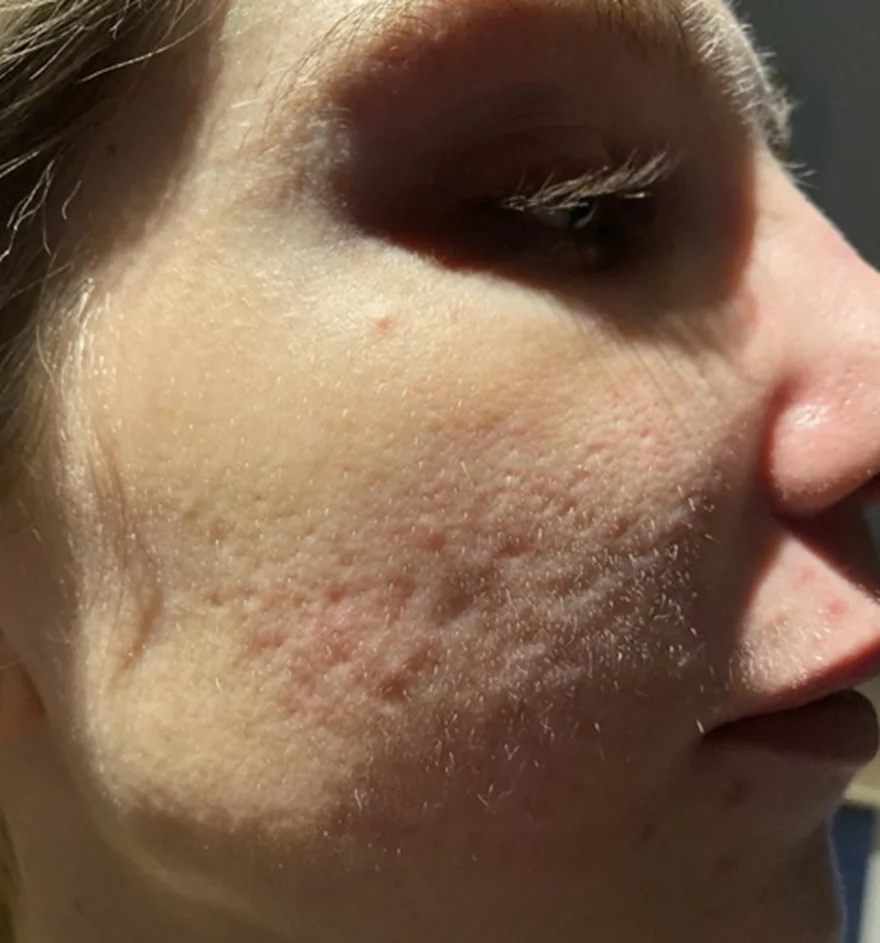
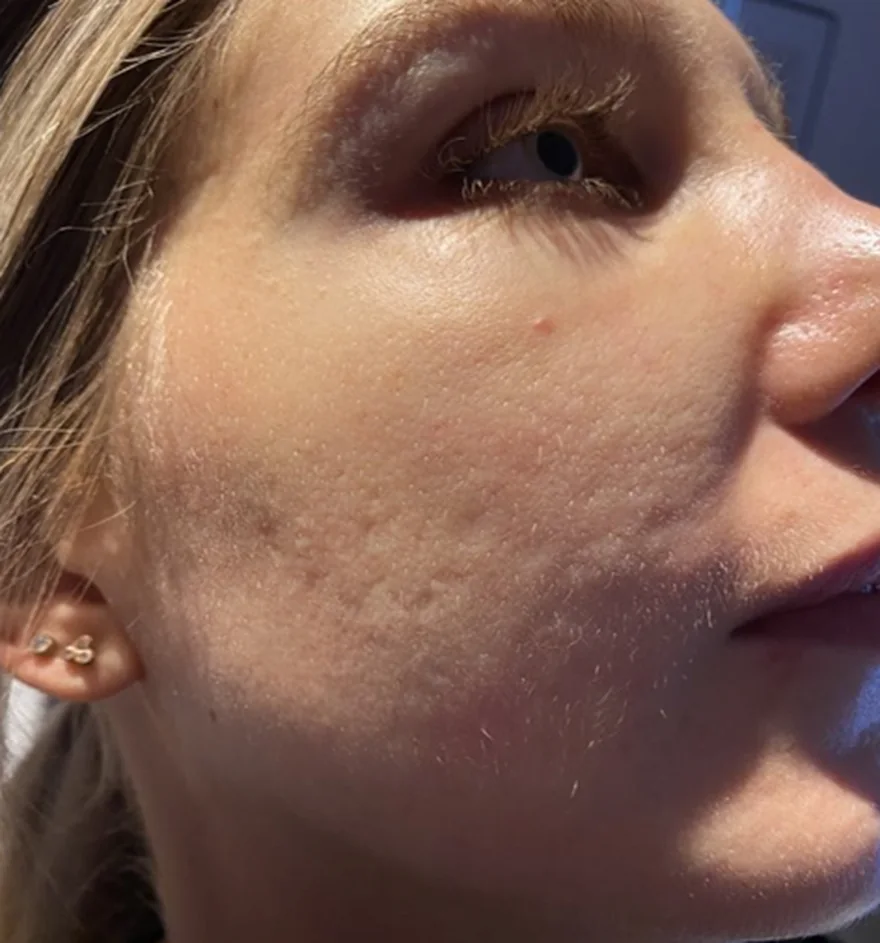
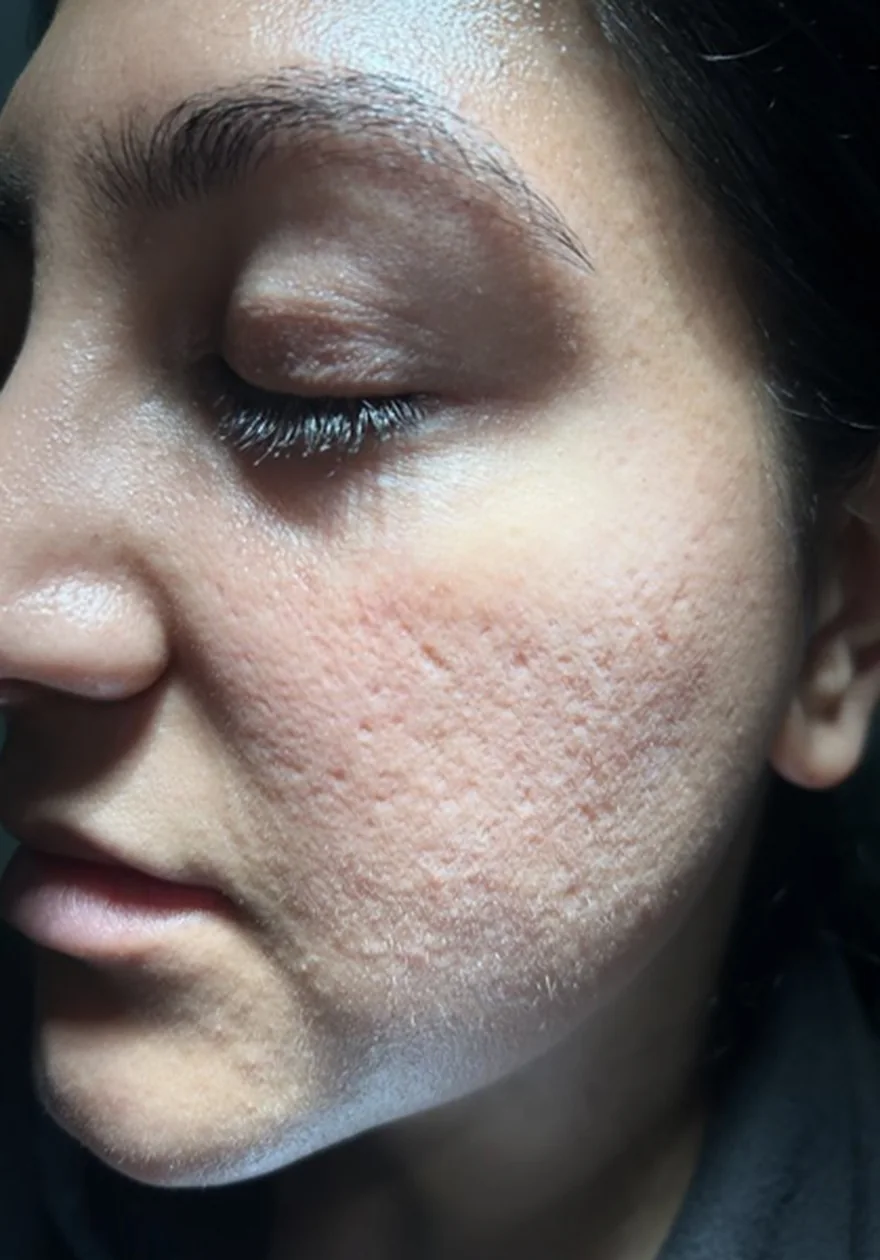
Before & after
Drag the handle across each photograph. All images are unretouched and published with written patient consent.
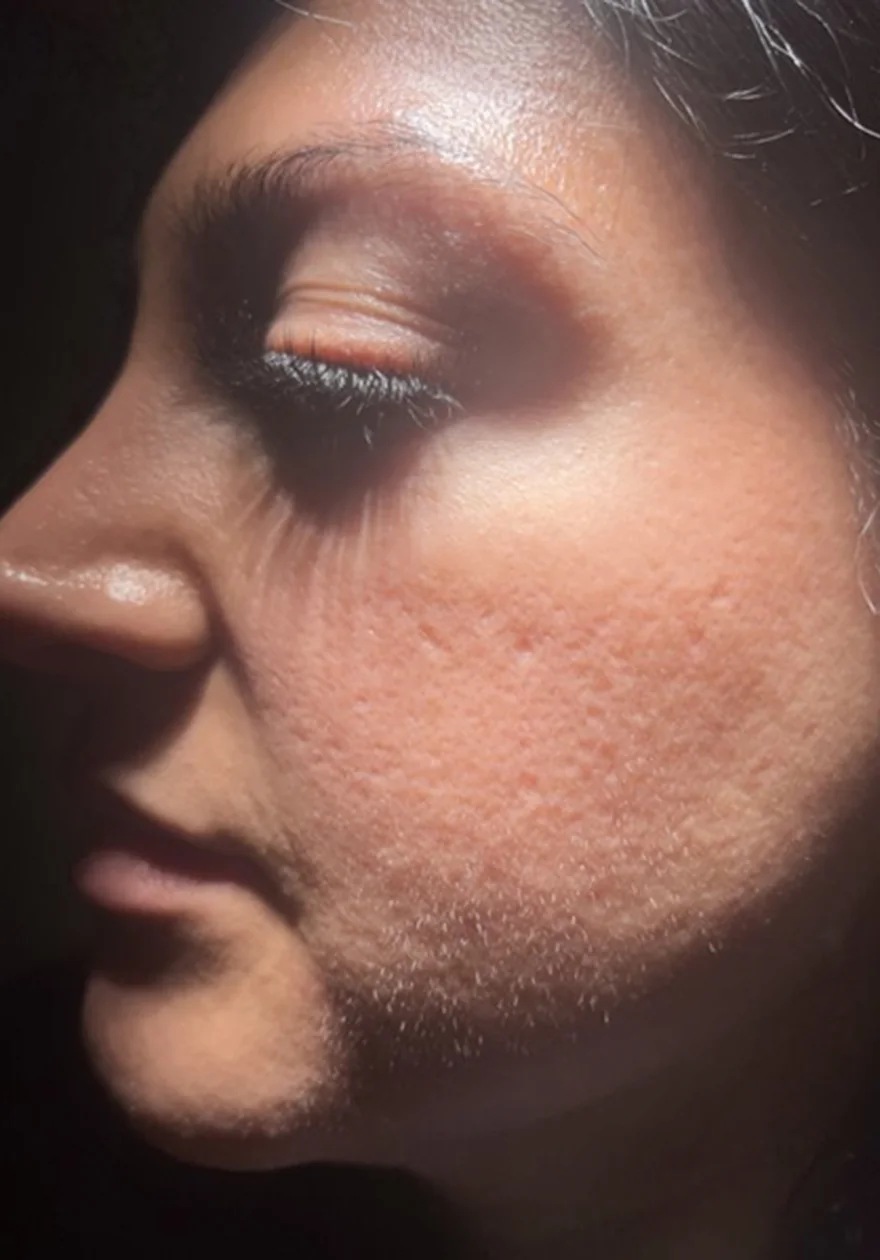
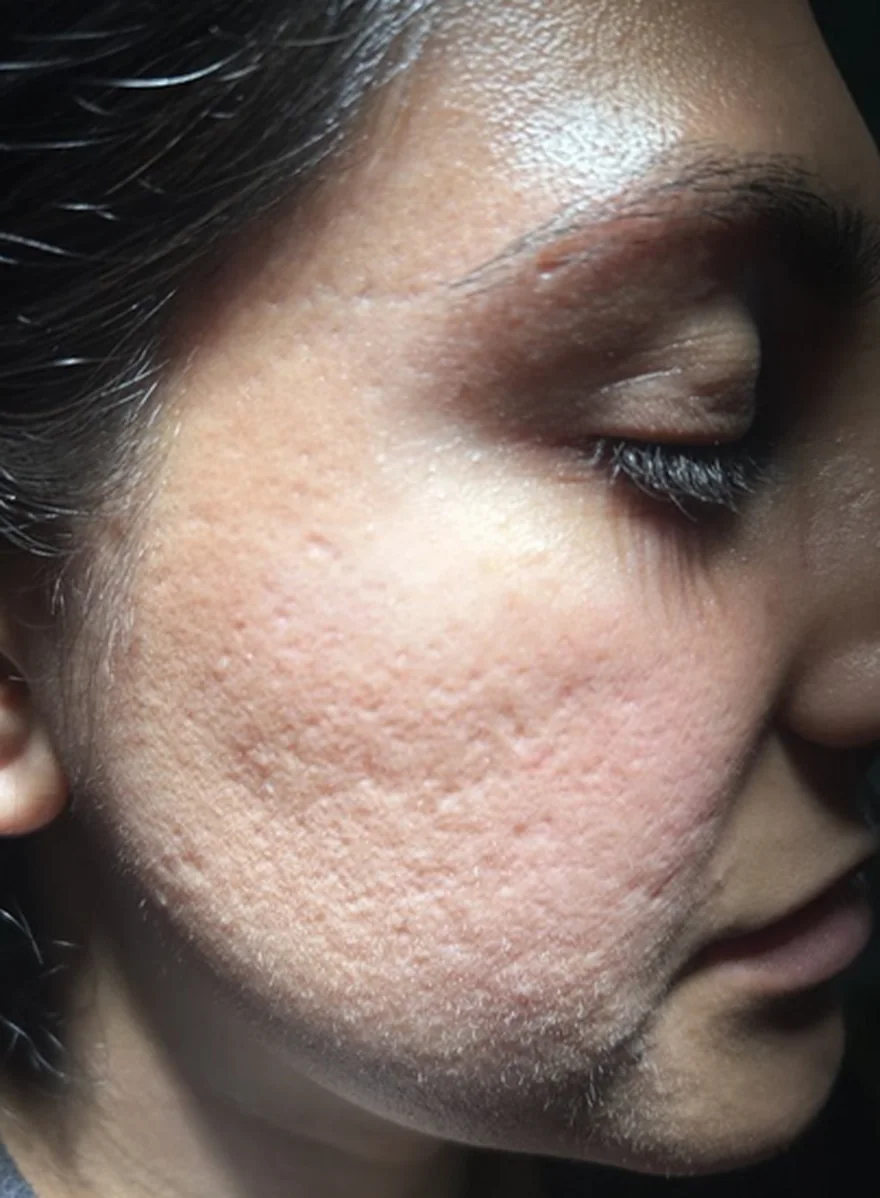
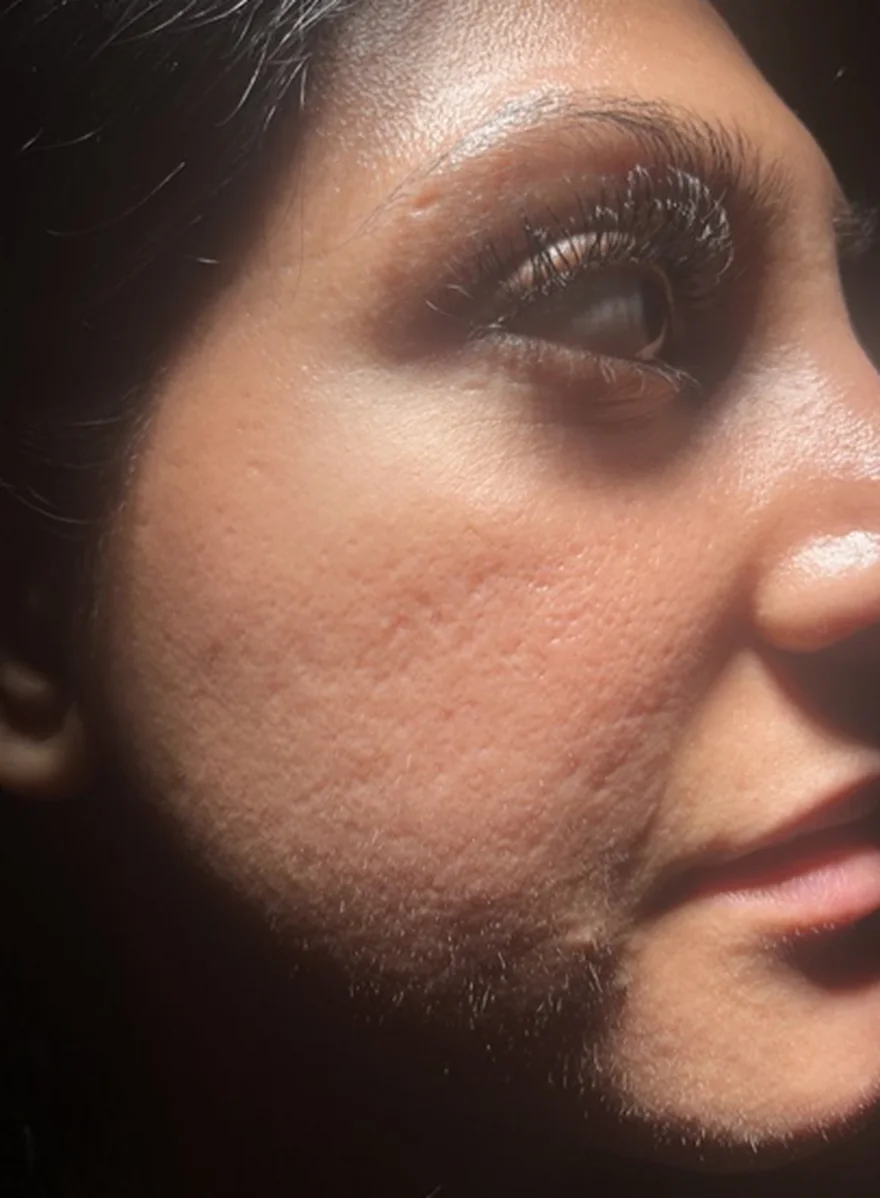
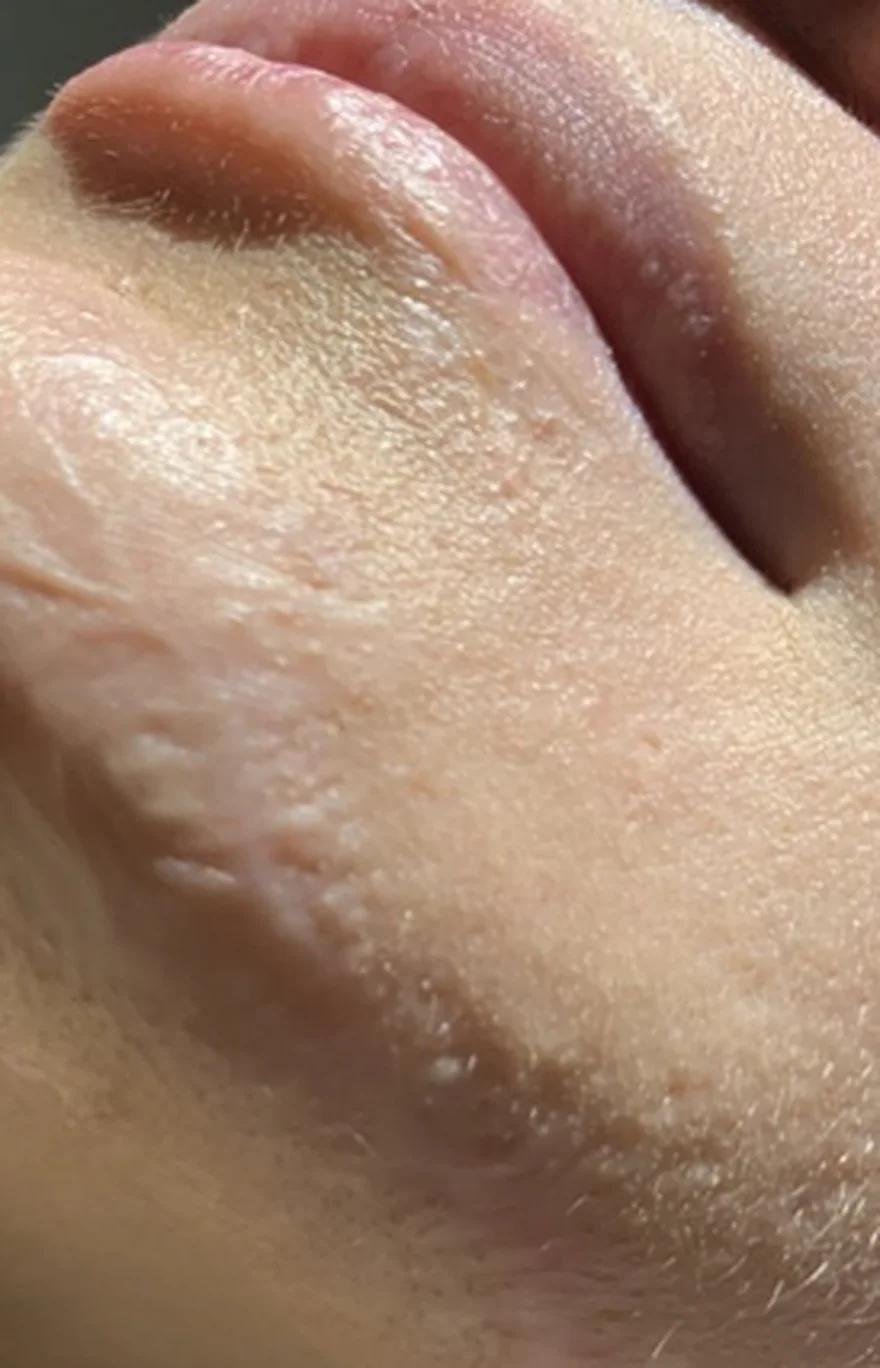
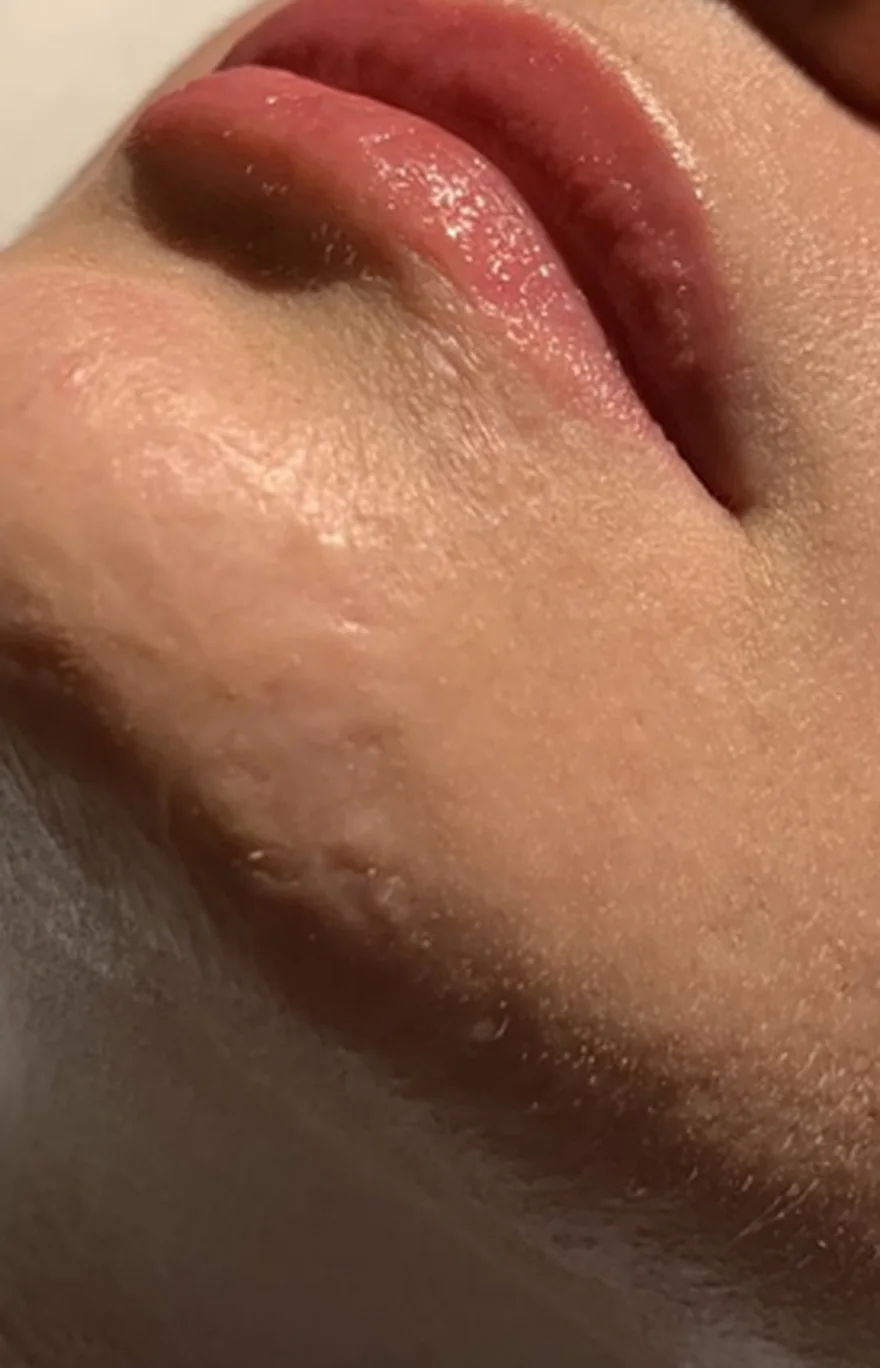
What we will not tell you
Some scarring has a ceiling
Scar revision improves scars. It does not return skin to the state it was in before the scarring, and no technique currently available does. In a complex case the realistic target is usually a sixty to eighty per cent improvement over a course of years, and for some scar types it is less than that.
Being told this at the first consultation is not pessimism. It is the difference between a patient who is pleased at the end of three years and one who is disappointed by the same result.
Questions
Good to know
If your question is not here, ask it in the enquiry form — Dr. Henningsen answers these personally.
Ask a question- I have already had laser treatment that did not work. Is there any point?
- Can a scar be made worse?
Yes, which is why this is done by a dermatologist rather than by a device operator. The realistic risks are post-inflammatory pigmentation, prolonged redness, and in keloid-prone skin a hypertrophic response to the treatment itself. They are managed by assessment and conservative staging, not by avoiding treatment.
- How long does a complex course take?
Typically four to eight sessions over two to three years. Collagen remodels over about three months per stage, and compressing that produces a worse result, not a faster one.
- Should I bring records from my previous clinic?
If you can. Knowing what device was used, at what settings and how many times genuinely changes the plan — particularly where skin has had repeated ablative treatment.
- Is it more expensive than standard scar revision?
Per session, not usually. Over a course, often, because there are more stages. The full sequence and its cost are set out before anything is booked.
Consultation
Ready to talk about your skin?
Consultations with Dr. Henningsen are arranged individually. Tell us what you would like to change and we will come back to you with the options, the honest downtime and the realistic result.