Ordinary microneedling makes channels and relies on the injury itself to stimulate collagen. Genius adds radiofrequency delivered at a chosen depth, which heats a measured volume of dermis rather than only puncturing it. In practice that means significantly more change per session for scarring. We have not found a head-to-head randomised trial of the two, so treat that as our clinical experience rather than as a trial result.
Overview
Precision rather than power
Forty-nine insulated gold-plated titanium needles, each delivering radiofrequency at a depth chosen for the tissue in front of them.
Radiofrequency microneedling occupies the space between microneedling and ablative laser. Fine needles pass through the surface and deliver energy directly into the dermis, heating tissue at a measured depth to trigger fibroblast activity. New collagen and elastin follow, and the skin tightens and remodels from within — without removing the epidermis.
What distinguishes the Genius system from older radiofrequency devices is control. The needles are insulated, so energy is delivered only at the tip, at the depth selected, rather than along the whole shaft. Real-time feedback measures the tissue and adjusts delivery. For scar work, where a millimetre of depth changes the outcome, that precision is the whole argument.
Dr. Henningsen is a Key Opinion Leader for Lutronic, the manufacturer of the Genius platform, and teaches its use to other dermatologists internationally.
At a glance
- Treatment timeAbout 20 minutes for the face; 30 with the neck
- AnaestheticTopical anaesthetic, occasionally a nerve block
- DowntimeRedness for a few hours; light swelling for 2-4 days
- Sessions1-3 depending on the baseline
- ResultsFirst changes at 1 month, full effect at about 6 months
- Combines withSubcision, TCA CROSS, CO2, bio-stimulation

How it works
Energy where it is needed, surface left intact
The handpiece creates thousands of micro-channels through the skin surface. Radiofrequency is then delivered from the insulated needle tips into the dermis, heating a controlled volume of tissue and provoking a wound-healing response confined to that depth.
Because the epidermis is not ablated, recovery is measured in days rather than weeks, and the risk of post-inflammatory pigmentation is substantially lower than with ablative resurfacing — which is why this is frequently the device of choice for darker skintypes, Fitzpatrick types IV to VI.
Improvements begin to appear at three to four weeks and continue developing for around six months as collagen matures. The collagen laid down is real tissue and does not simply disappear — but ageing continues alongside it, so the honest framing is lasting rather than permanent.
One point about safety that we would rather raise ourselves. Because there is no chromophore, this modality is often described as safe for everyone. That is true of the pigmentary risk and not of the thermal one. In October 2025 the United States regulator issued a safety communication about radiofrequency microneedling reporting burns, scarring, fat loss, disfigurement and nerve damage, and noting that it had not evaluated these devices for these particular uses; the professional societies responded that the modality is safe in trained hands. Both things are true at once. Every one of those complications is a function of depth and energy, not of pigment — which is precisely why the operator matters more here than the machine does.
Indications
Suited to
- Atrophic and hypertrophic scarring across a wide field
- Skin laxity on the face, neck and jawline
- Fine lines and early wrinkling
- Stretch marks on the abdomen, thighs and arms
- Enlarged pores and uneven texture
- Darker skin types where ablative resurfacing carries higher pigment risk
- Seveverl sun-damaged skin with ueven pigmentation and telangiectasia
- A patient with substantial prior filler in the field, where current behaviour is less predictable
- Metallic implants or a pacemaker in the current path
- Active infection, or a marked keloid tendency
- Active connective tissue disease
- Anyone who has been promised something comparable to a facelift — no controlled evidence supports that framing
In the clinic
Step by step
Assessment and depth planning
Needle depth and energy are chosen for the area, the skin thickness and the target — scar floor, dermal collagen or laxity.
Topical anaesthetic
Applied and left in place for around 90 minutes. Paracetamol and Ibuprofen. A nerve block may be added for the more sensitive areas.
Passes
Two to five passes at different depths, layering the treatment through the dermis rather than treating one plane.
The first 24 hours
Moderate swelling and light redness. Make-up may be applied the day after the treatment.
Weeks three to twenty-four
New collagen matures. Results build gradually and are assessed at around six months.
Documented results
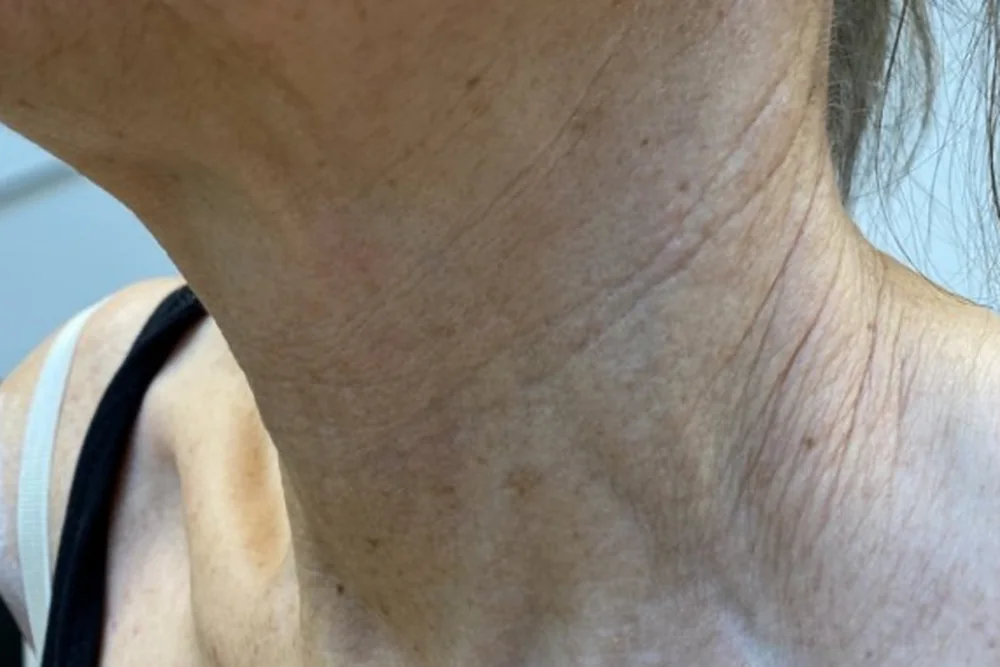
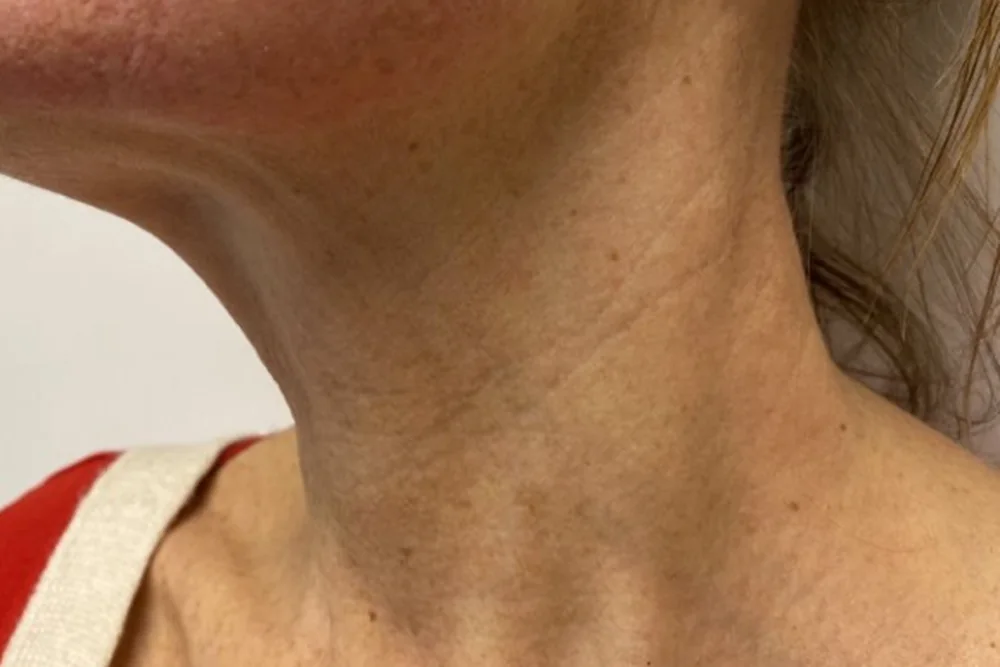
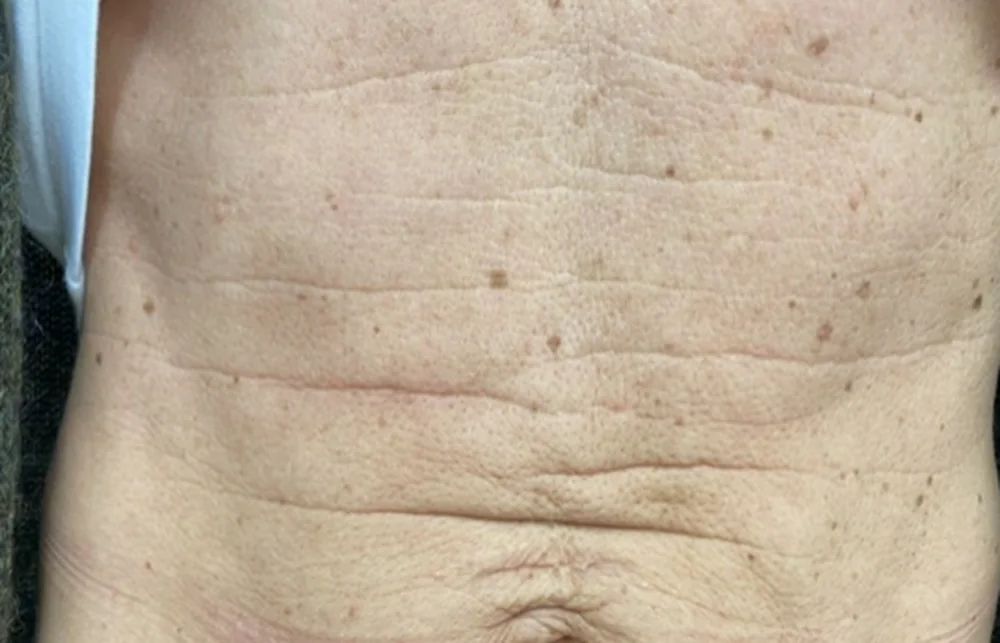
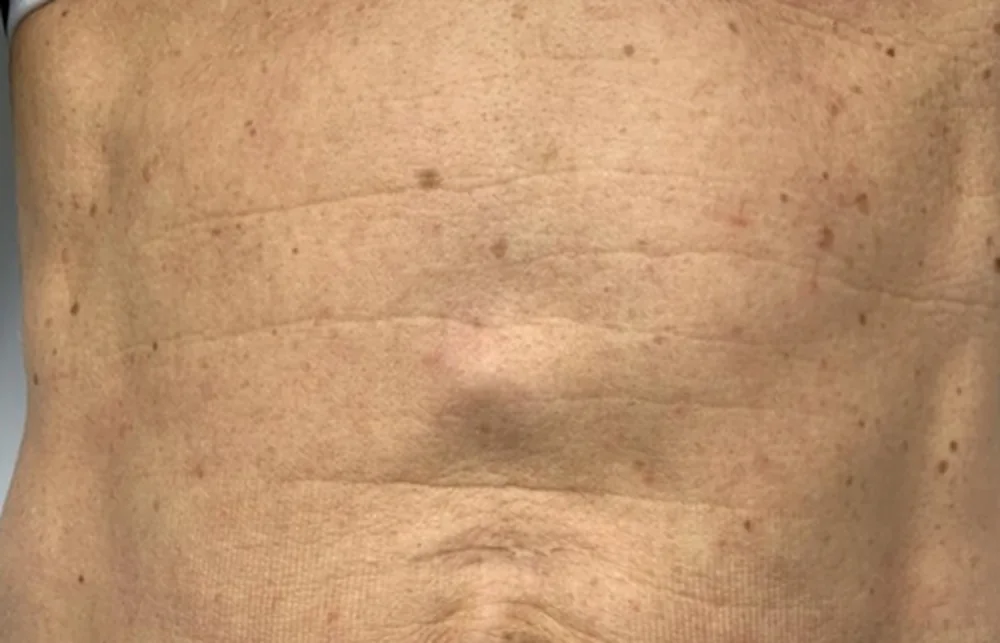
Before & after
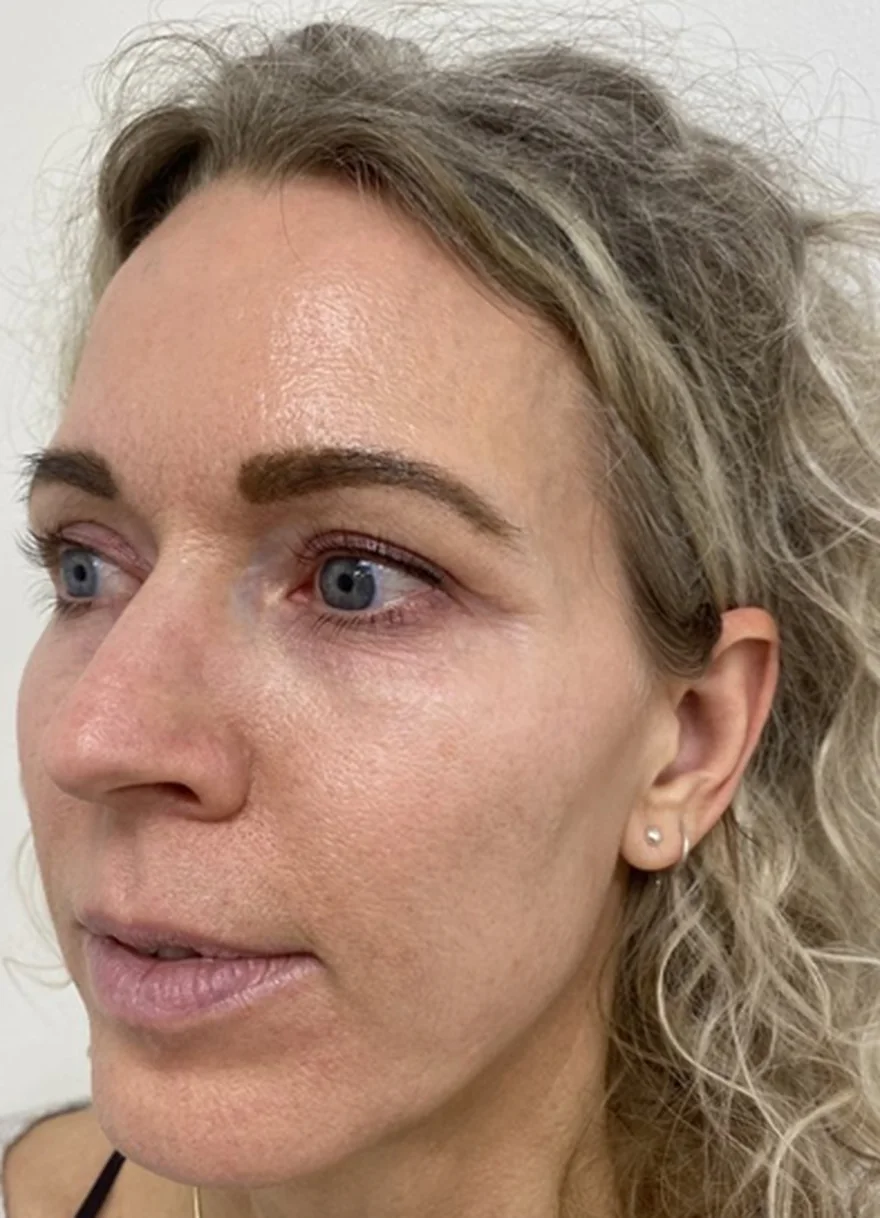
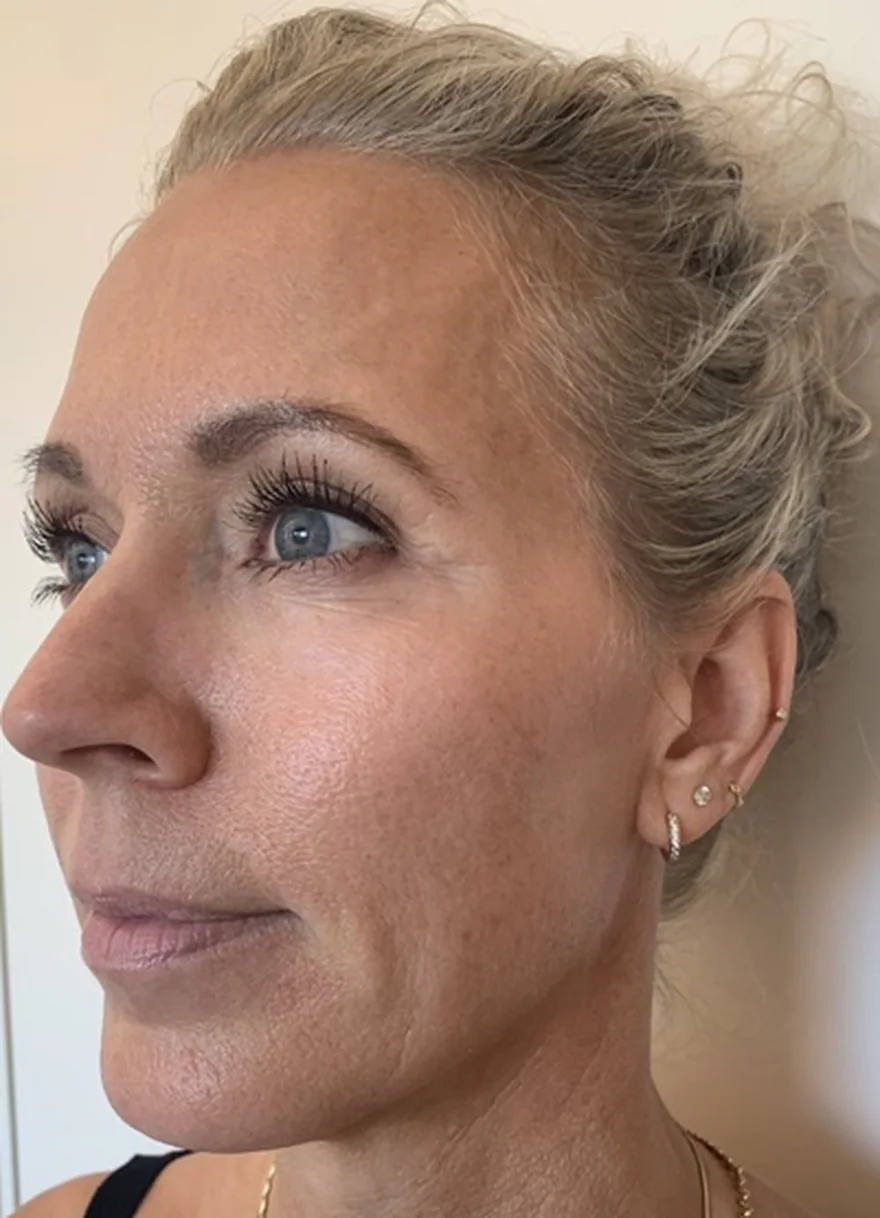
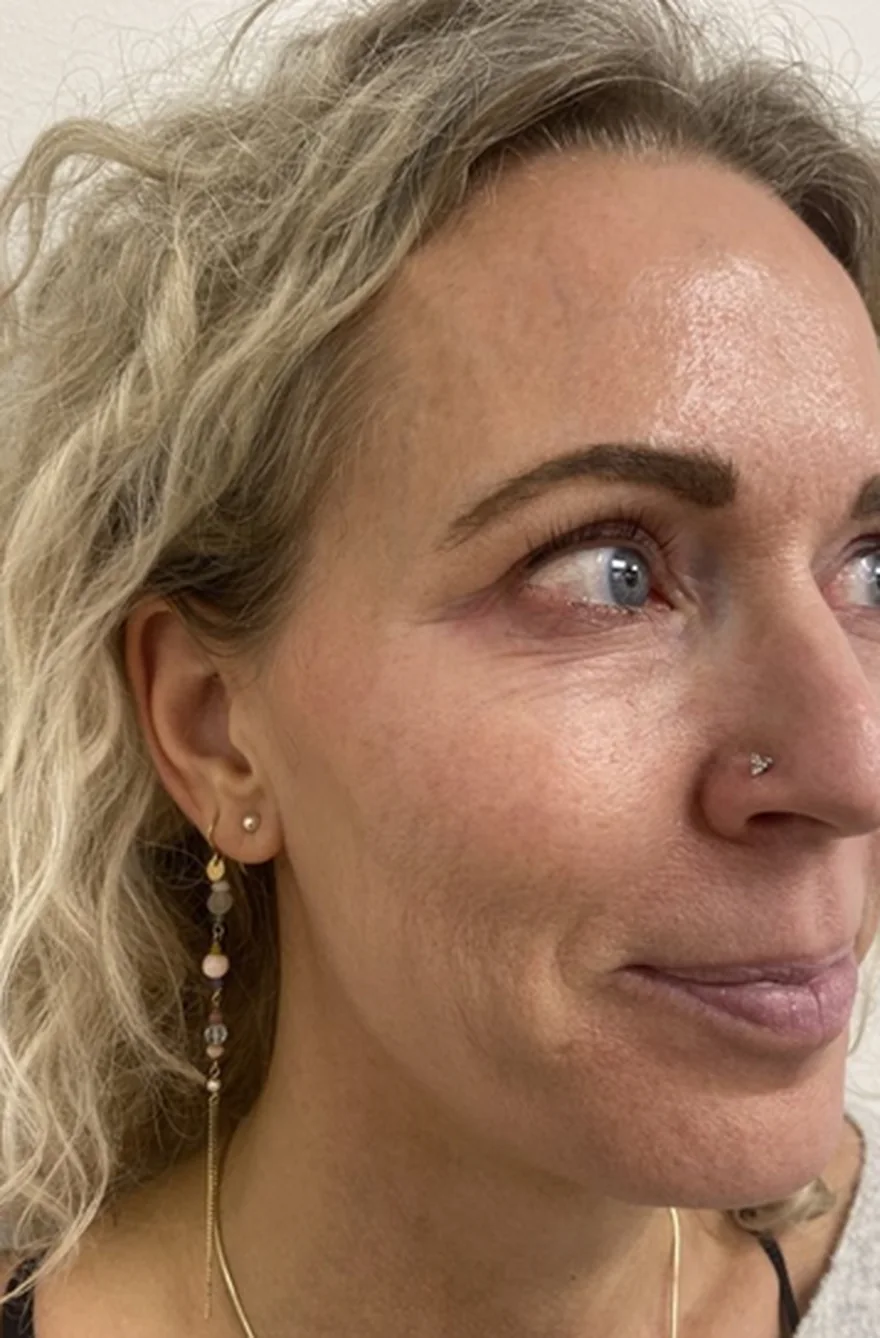
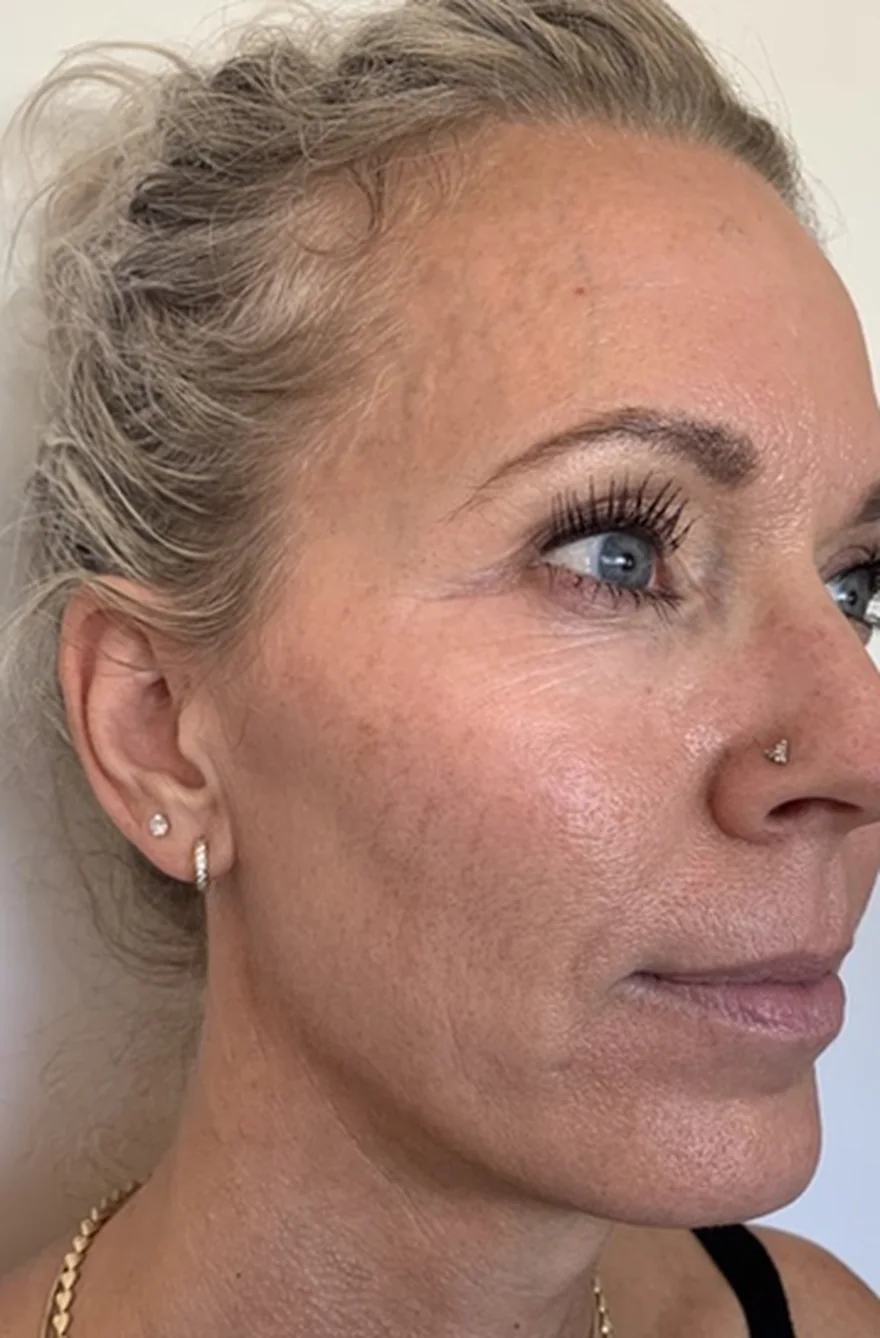
Drag the handle across each photograph to reveal the result. All images are unretouched and published with written patient consent.
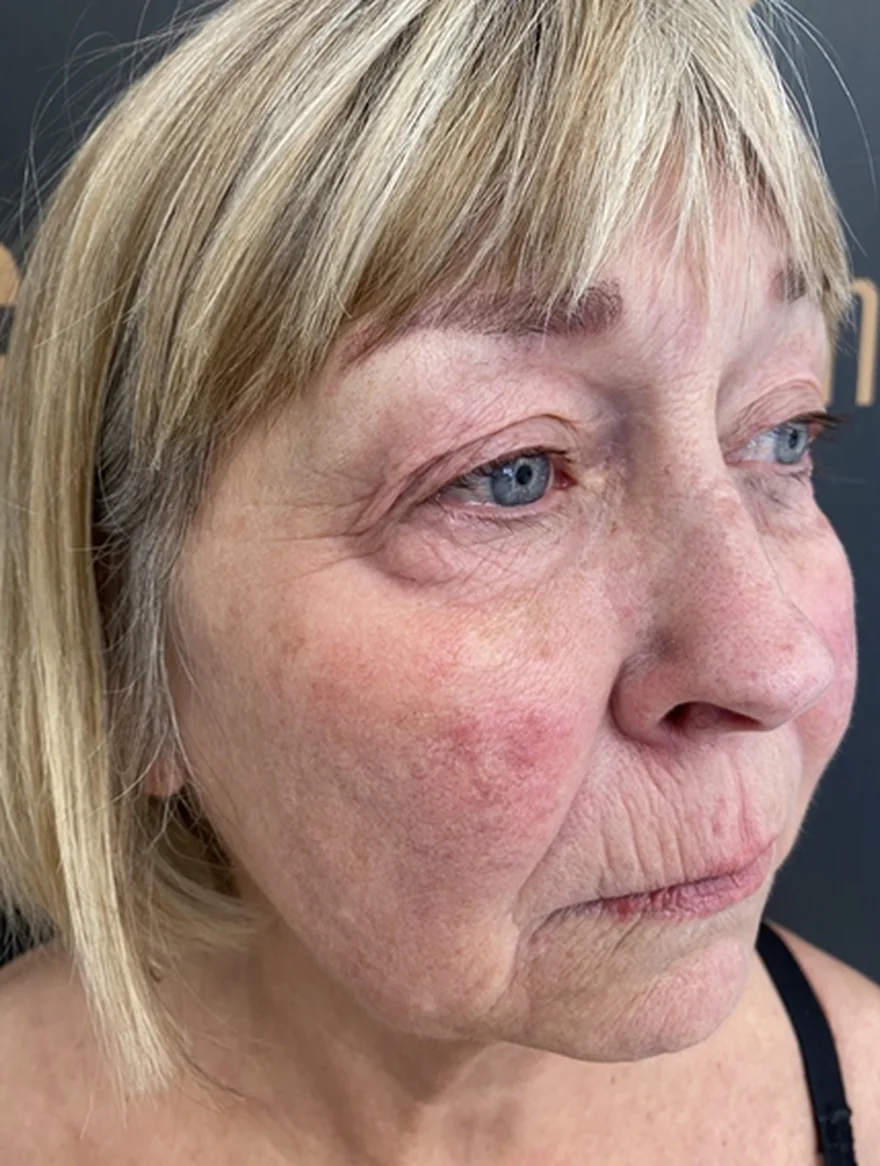
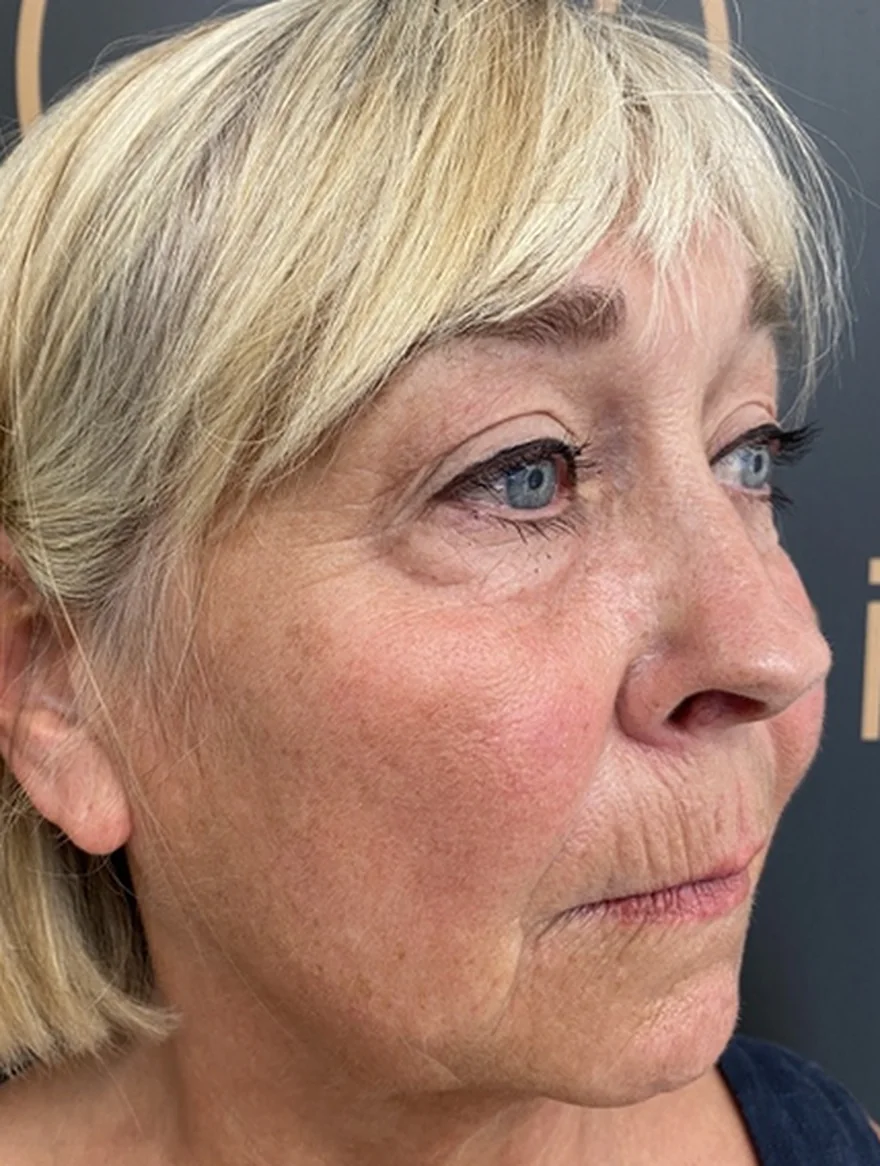
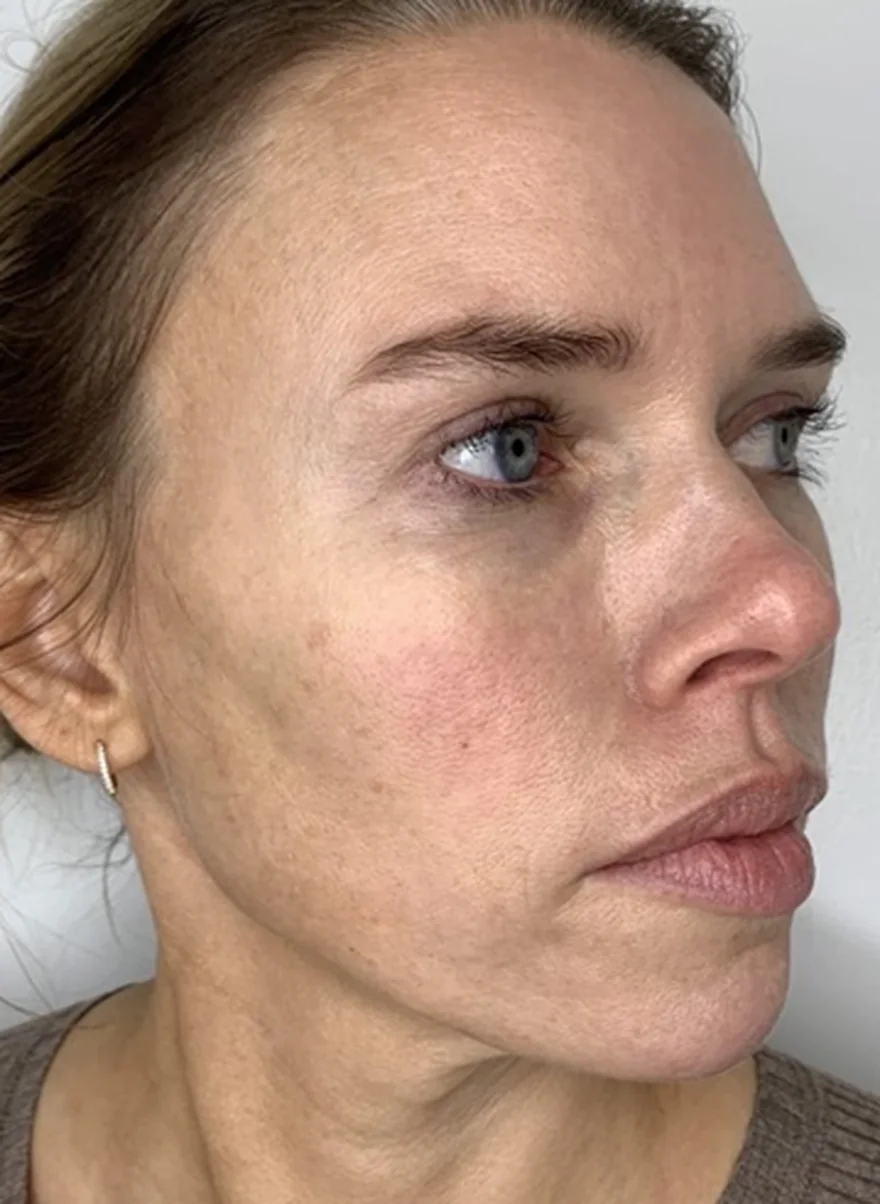
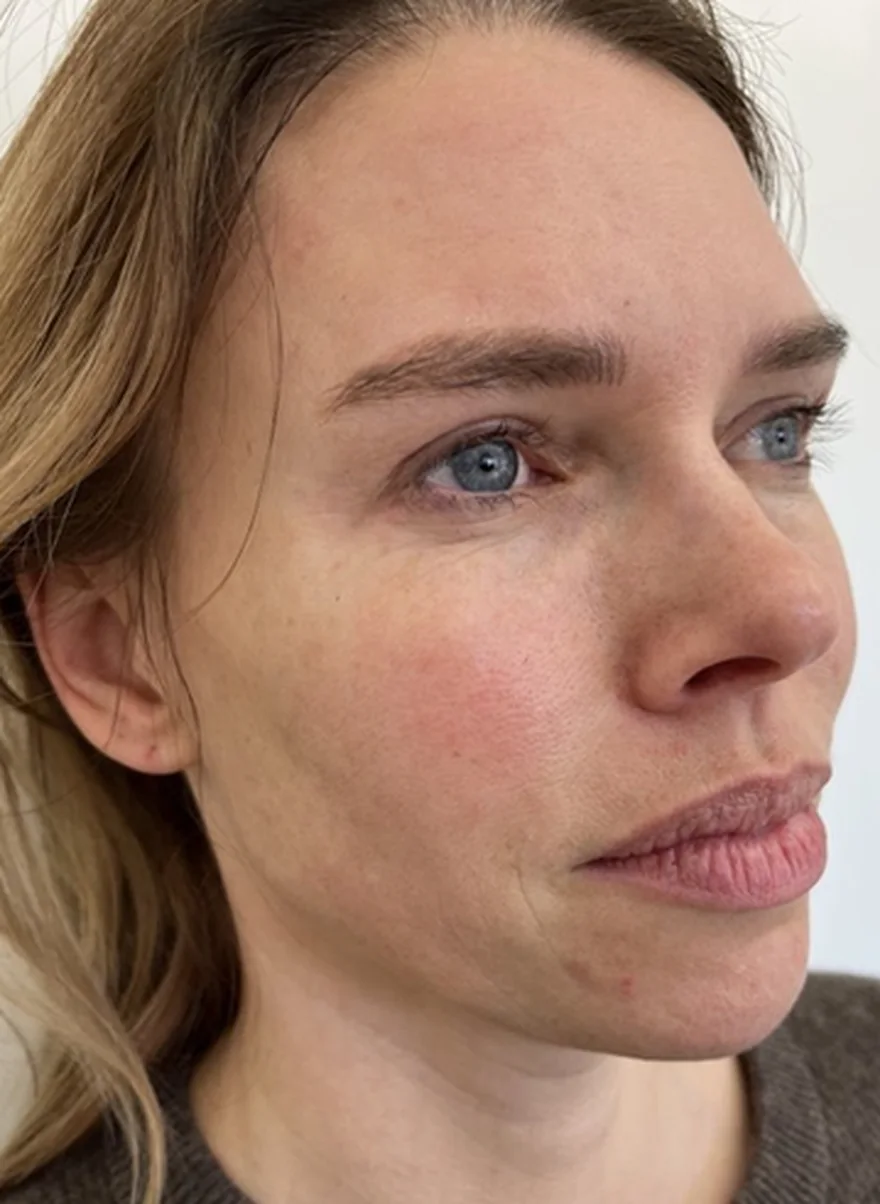
Recovery
Recovery
Minimal by the standards of dermal remodelling — but not invisible.
Expect moderate redness and swelling for the first twenty-four hours, then mild swelling that resolves within three to four days. Make-up may be worn from day one. Where treatment has been taken deeper for scar work, swelling can last around five days and a faint grid pattern may remain visible for up to 6 months.
Depth discipline matters. Radiofrequency taken too deep can affect facial fat and reduce volume. Correct technique and correct settings prevent this — it is a reason to choose the operator, not the machine.
The first 24 hours
Redness and fine white dots at each insertion point, with mild swelling. Keep the head elevated for the first two or three nights if the face has been treated.
Days two to four
Swelling settles; light peeling. Make-up can be worn from day one, which is the practical reason many patients choose this over resurfacing.
Weeks one to two
After a higher-energy session a faint grid pattern can remain visible. It fades, but in deeper scar work it can persist longer, and we will tell you when to expect that.
Weeks four onwards
Texture begins to change. Nothing meaningful happens before a month.
Months three to six
The real result. Where volume and firmness were measured in the published dose-response work, the change at six months tracked the total energy delivered and the number of sessions.
Risks
What can go wrong
Expected
Redness, insertion-point marks, swelling, transient grid marks, and discomfort during treatment.
Uncommon
Prolonged erythema. Dyspigmentation — rare, and mostly in darker skin. Persistent grid marks after high-energy treatment.
Rare but serious
Burns, scarring, loss of facial fat, and nerve injury. An analysis of the United States regulator’s adverse-event database found 114 reports covering 224 events between 2013 and 2025, led by textural change and pigmentary alteration, with fat loss third. That database is passive and has no denominator, so it cannot be turned into a rate — it is neither as reassuring nor as alarming as it is usually made to sound.
Mitigation is entirely technical: conservative depth over thin skin and bone, no stacked overlapping passes, caution where there has been filler or where volume is already lost, and a willingness to treat a face twice at a modest dose rather than once at an ambitious one.
Evidence
What the evidence shows
Good for scars, thin elsewhereFor atrophic acne scarring the evidence is reasonable and the comparison is favourable. In a split-face randomised trial, radiofrequency microneedling and fractional CO2 produced statistically indistinguishable improvement in scar scores — while radiofrequency gave shorter redness, less pain and fewer pigmentary events. Pooled across randomised trials, CO2 held a modest edge on categorical treatment success. Pigmentation was reported more often after CO2 than after radiofrequency microneedling, though that difference did not reach statistical significance and the trials were small; against standard microneedling, where the comparison is better powered, CO2 carried roughly three times the risk.
That trade is the whole clinical argument, and it is why this is frequently the right choice in dark skin Fitzpatrick IV to VI and the wrong choice if what you need is maximum change in a single session.
For the longer list of indications these devices are marketed for — laxity, rosacea, sweating, hidradenitis — the review literature reports them without grading the evidence for any of them. Skin tightening in particular rests largely on uncontrolled volumetric data. We use this device for scars and for dermal remodelling, and we would rather not claim the rest.
If you are travelling
Same-day travel is possible. Most patients prefer one night, mainly because of the swelling on the first evening.
For scar work the sessions are spaced at least three months apart, so this fits a pattern of occasional visits better than almost anything else we do — and it is often the right choice for an international patient precisely for that reason.
If you are visiting once and want the most change for one trip, say so. The answer may be CO2 and a longer stay rather than radiofrequency and a shorter one, and we would rather have that conversation before you book.
Questions
Good to know
If your question is not here, ask it in the enquiry form — Dr. Henningsen answers these personally.
Ask a question- How is this different from ordinary microneedling?
- Is it suitable for darker skin?
Yes, and it is often preferred. Because the epidermis is not ablated, the risk of post-inflammatory hyperpigmentation is significantly lower than with ablative laser.
- How many treatments for acne scars?
For scarring, plan on several sessions at minimum three-month intervals, usually as part of a combined plan with subcision and TCA CROSS rather than alone.
- Can it treat the body?
Yes. Abdomen, arms, thighs and décolletage all respond, and stretch marks are a common indication.
Consultation
Ready to talk about your skin?
Consultations with Dr. Henningsen are arranged individually. Tell us what you would like to change and we will come back to you with the options, the honest downtime and the realistic result.