CO2 removes tissue; radiofrequency heats it without ablating the surface. CO2 generally achieves more per session and asks more of you in recovery. Genius RF asks less of you and is often the better choice for darker skin types or for patients who cannot take a week away.
Overview
The strongest tool we own
The most powerful resurfacing tool we own, and the one that demands the most honesty about what the week afterwards looks like.
A fractional CO2 laser creates a fine grid of vertical columns of ablation across the treated area, up to about one and a half millimetres deep on most platforms. How deep, and what proportion of the surface is treated, are both set deliberately rather than fixed by the device — published protocols run from around a twentieth of the field to about half of it. The untreated skin between the columns is what allows the surface to heal quickly.
The heat delivered around each column is the point. It drives a dermal wound-healing response that increases elastic fibres, collagen and glycosaminoglycans — the substances that give skin its thickness, bounce and light-handling. That remodelling continues for months after the surface has healed, and the final result of a treatment is properly assessed at around one year.
Treatments are spaced roughly three months apart to allow the dermis to repair between sessions. Across two to three treatments, scarring, sun-damaged and wrinkled skin improves in texture, and skin tone and fine lines improves progressively. We have deliberately stopped putting a number of years on that, because there is no validated instrument that measures it — the figure would be ours rather than anyone else’s.
At a glance
- Treatment time30 minutes for a full face
- AnaestheticTopical anaesthetic, Paracetamol & Ibuprofen, nerve block
- Downtime4–14 days; redness can persist for weeks
- Sessions2–3, spaced about 3 months apart
- ResultsAssessed at 12 months, on standardised photographs
- Combines withSubcision and fillers, TCA CROSS, bio-stimulation

How it works
Fractional columns, full-thickness response
Ablative fractional resurfacing works on a simple principle: injure a fraction of the skin deeply rather than all of the skin superficially. The columns of ablation reach the dermis, where the collagen that determines texture actually lives, while the bridges of intact tissue between them supply the cells that resurface the wound within days.
For scars, this does two things at once. It vaporises the raised edges of textural scars so the transition to normal skin softens, and it triggers dermal remodelling beneath the scar floor. For photoageing, it removes accumulated sun damage in the epidermis and rebuilds dermal collagen underneath.
Depth, not surface intensity, is what treats a scar. A deep narrow column at modest density does more for scar architecture and less to the surface than a shallow, dense pass — which is also why the comfortable “three days of downtime” figure quoted in a good deal of clinic copy belongs to settings too conservative to change a scar. Downtime scales with the aggressiveness that makes the treatment work, and we would rather you planned for the real number.
In darker skin the parameters change rather than the answer. Higher fluence at lower density, longer intervals between sessions, strict sun avoidance for at least a fortnight either side, and a pigment-inhibiting regimen beforehand. Post-inflammatory pigmentation is the risk that governs this treatment: across the published series it ranges from about one patient in a hundred to roughly a third, and in darker-skinned cohorts the reported ceiling is higher still.
Indications
Suited to
- Atrophic & hypertrophic acne scarring, particularly boxcar scars
- Surgical and traumatic scars
- Fine lines and deeper wrinkles, including perioral and periorbital
- Sun damage, actinic change and irregular pigmentation
- Coarse skin texture and enlarged pores
- Crepey skin on the neck, décolletage and backs of the hands
- Fitzpatrick V and VI without a careful discussion of pigmentary risk first — often radiofrequency is the better instrument
- Active infection, cold sores or significant inflammatory acne in the field
- A history of keloid scarring
- Recept treatment with an energy based device at the site, particularly on the neck or eyelids
- Skin that cannot be kept out of the sun, or an aftercare regimen that cannot be followed
- Ice-pick scarring as the main complaint — the poorest responder of all scar types to this device
In the clinic
Step by step
Preparation
Daily SPF 30+ for one month before treatment. Any active infection is treated first, and antiviral prophylaxis is prescribed where indicated.
Anaesthesia
Topical anaesthetic is applied 90 minutes prior to treatment; Paracetamol & Ibuprofen, cooling air. A nerve block is added for deeper or more extensive treatment.
The pass
The laser is passed across the field in a fractional pattern, with additional passes at higher energy over individual scars where appropriate.
Immediately after
The skin looks pink and finely dotted, with mild swelling, oozing, and pin-point bleeding. Cool air and an occlusive antibiotic ointment are applied.
The first week
Crusting forms and sheds. Cleanse gently, keep the skin occluded, and do not pick. Make-up is permitted once weeping has stopped.
Months two to twelve
Collagen remodelling continues long after the surface has healed. The result is assessed properly at a year.
Documented results
Before & after
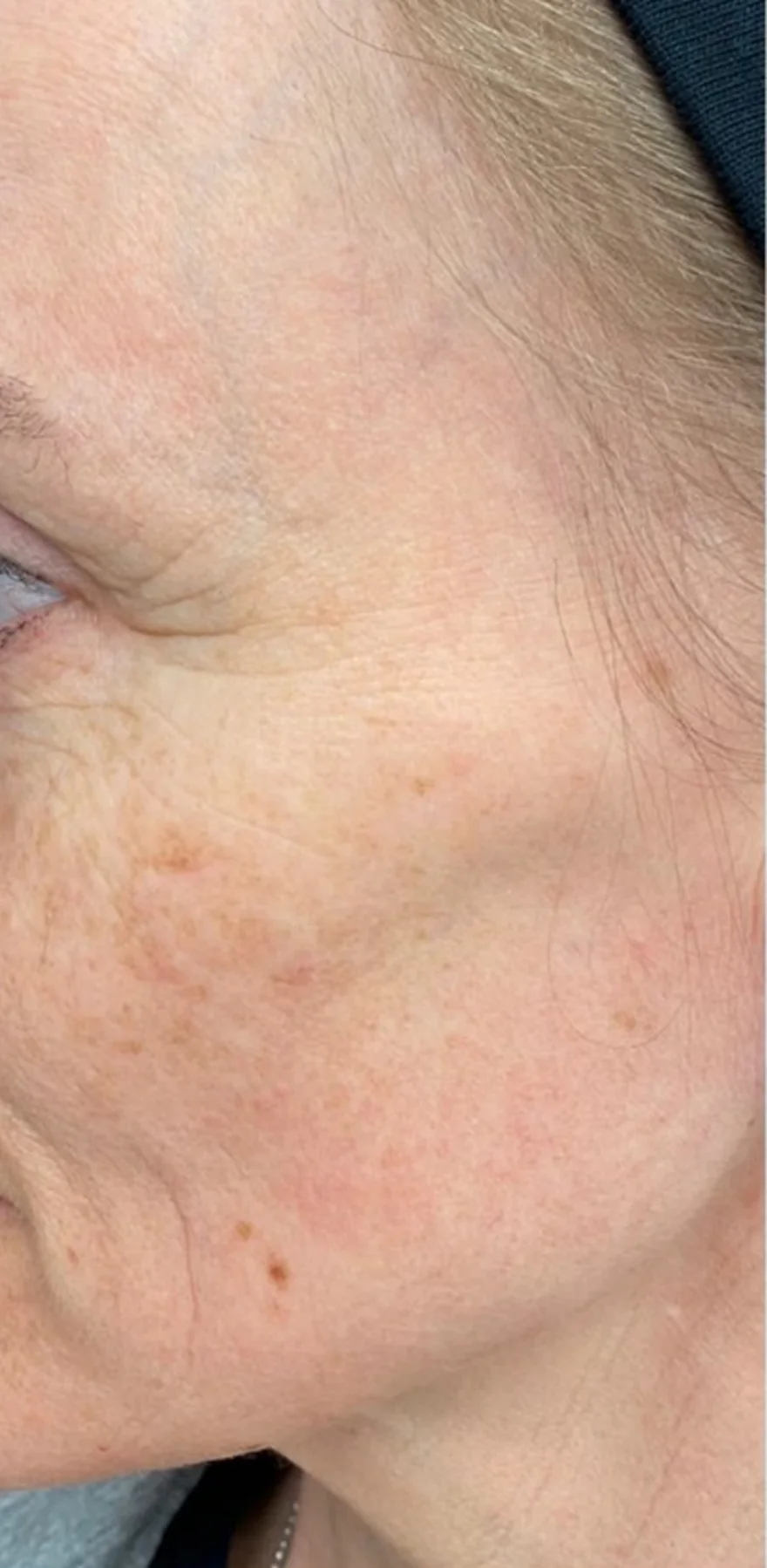
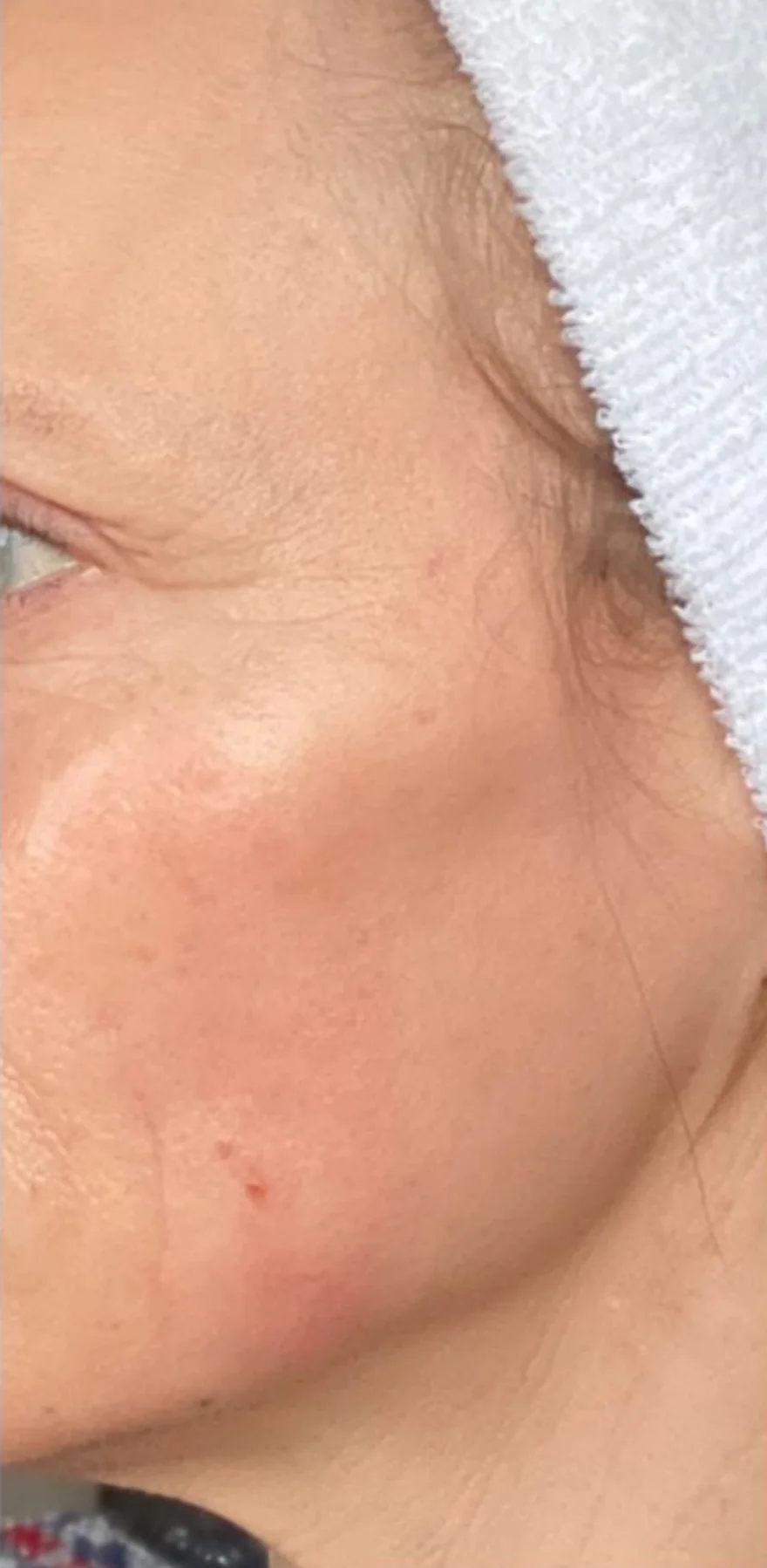
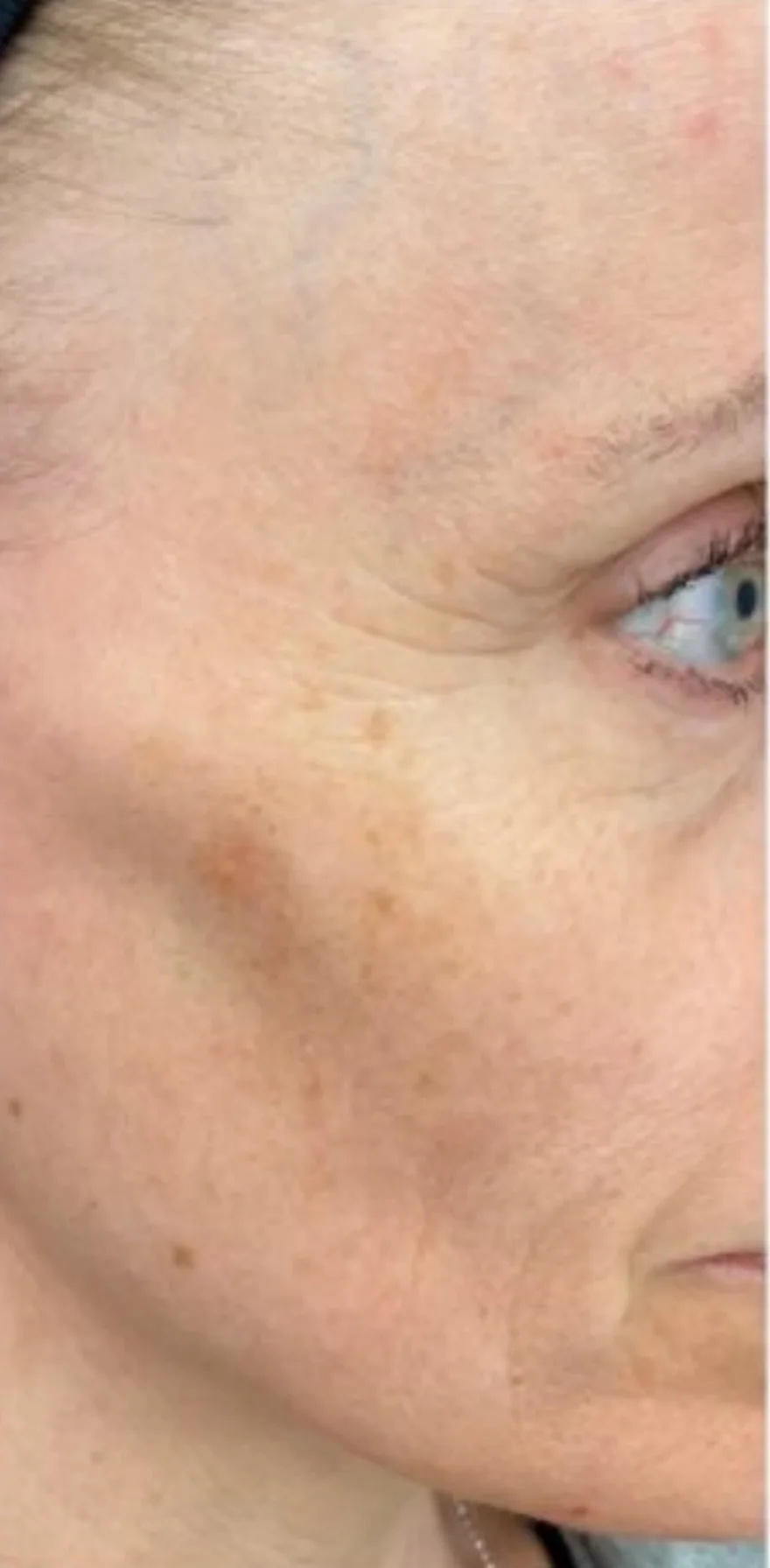
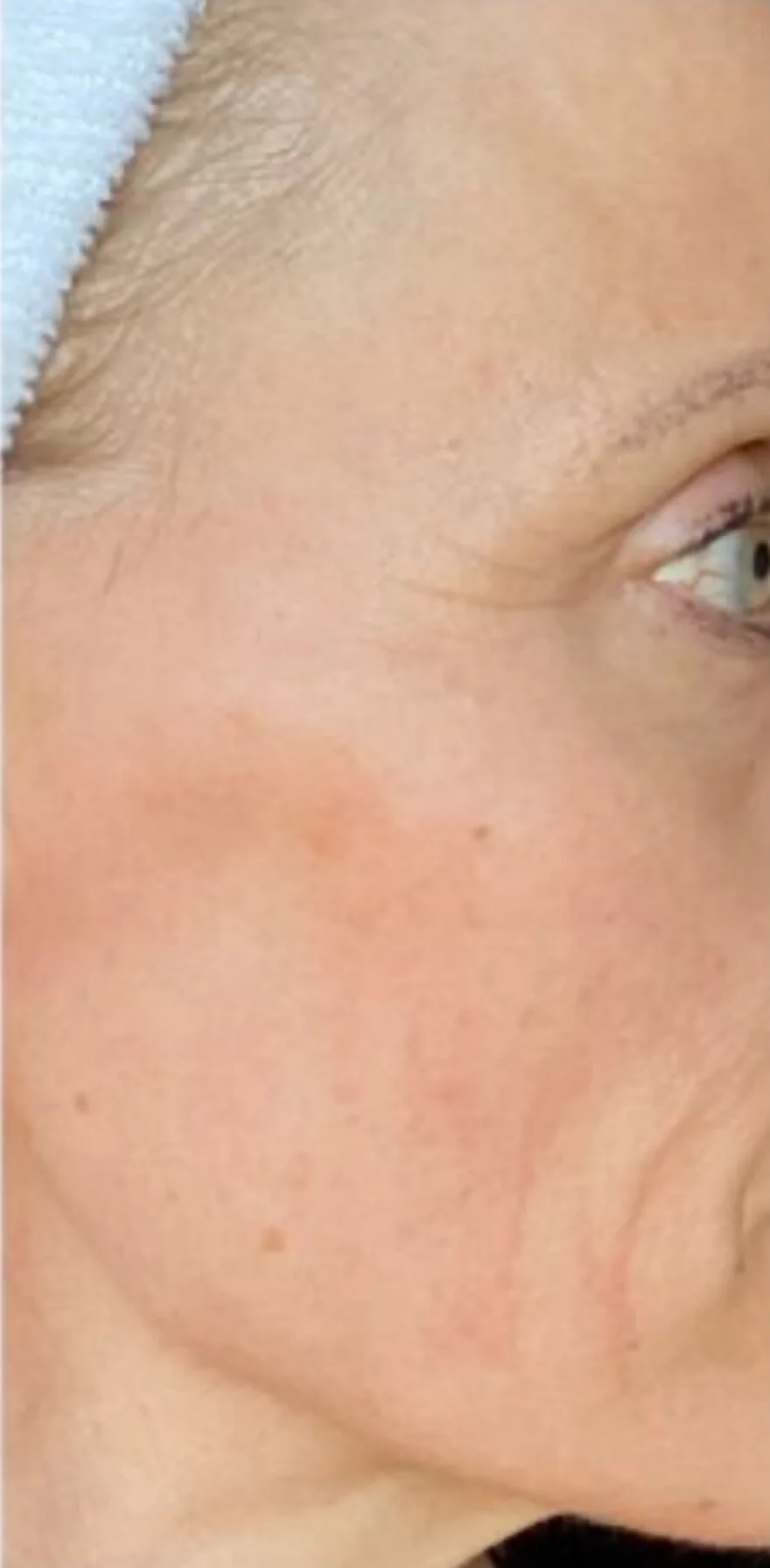
Drag the handle across each photograph to reveal the result. All images are unretouched and published with written patient consent.
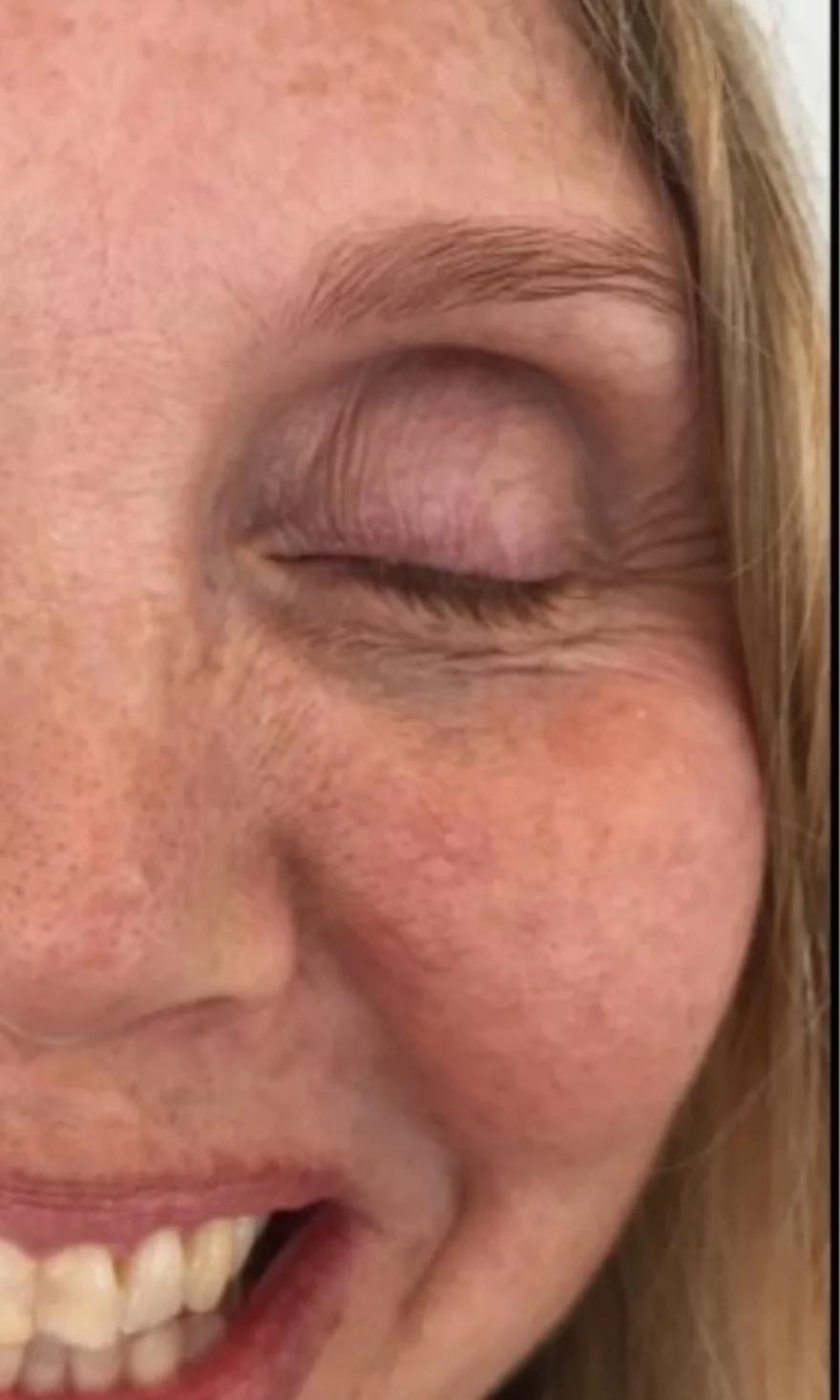
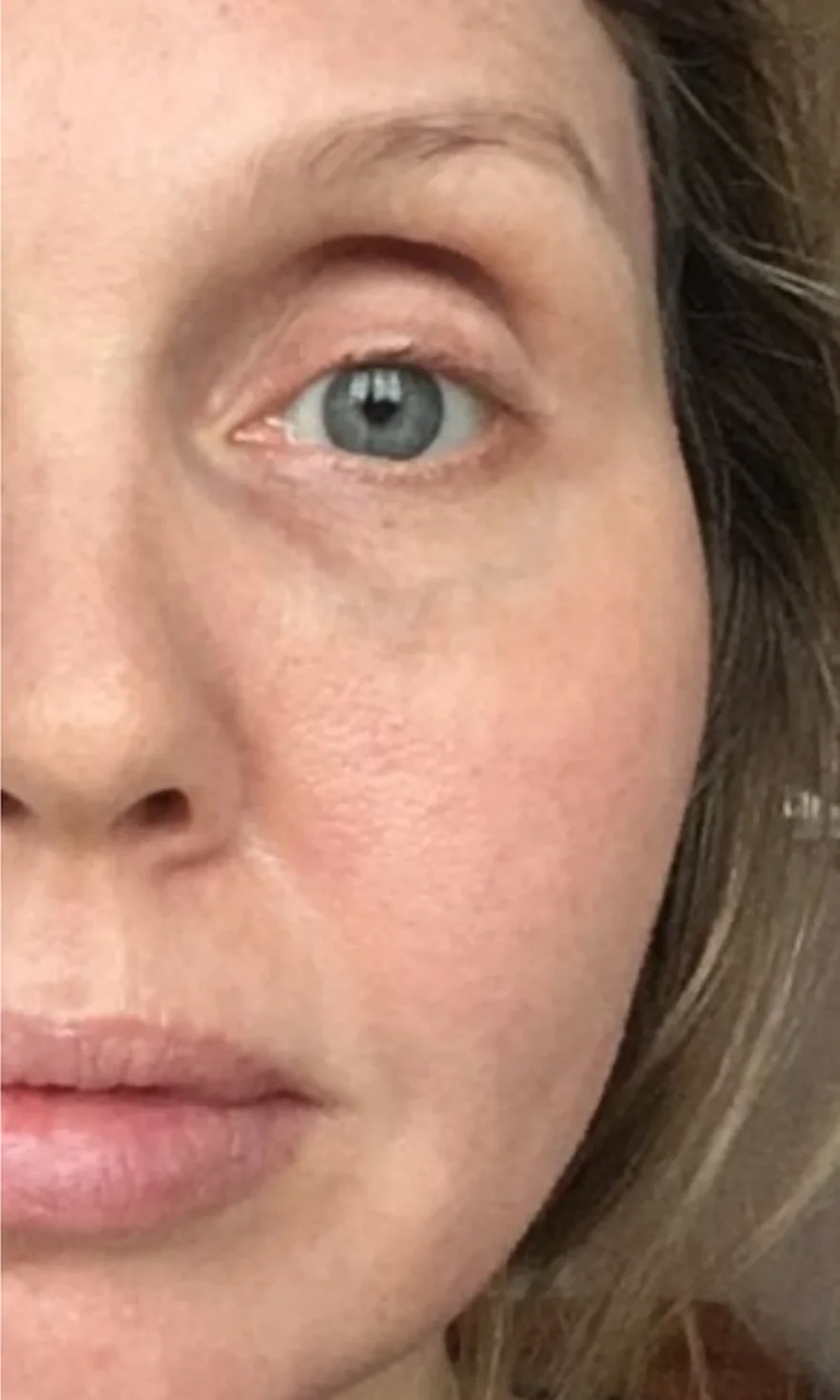
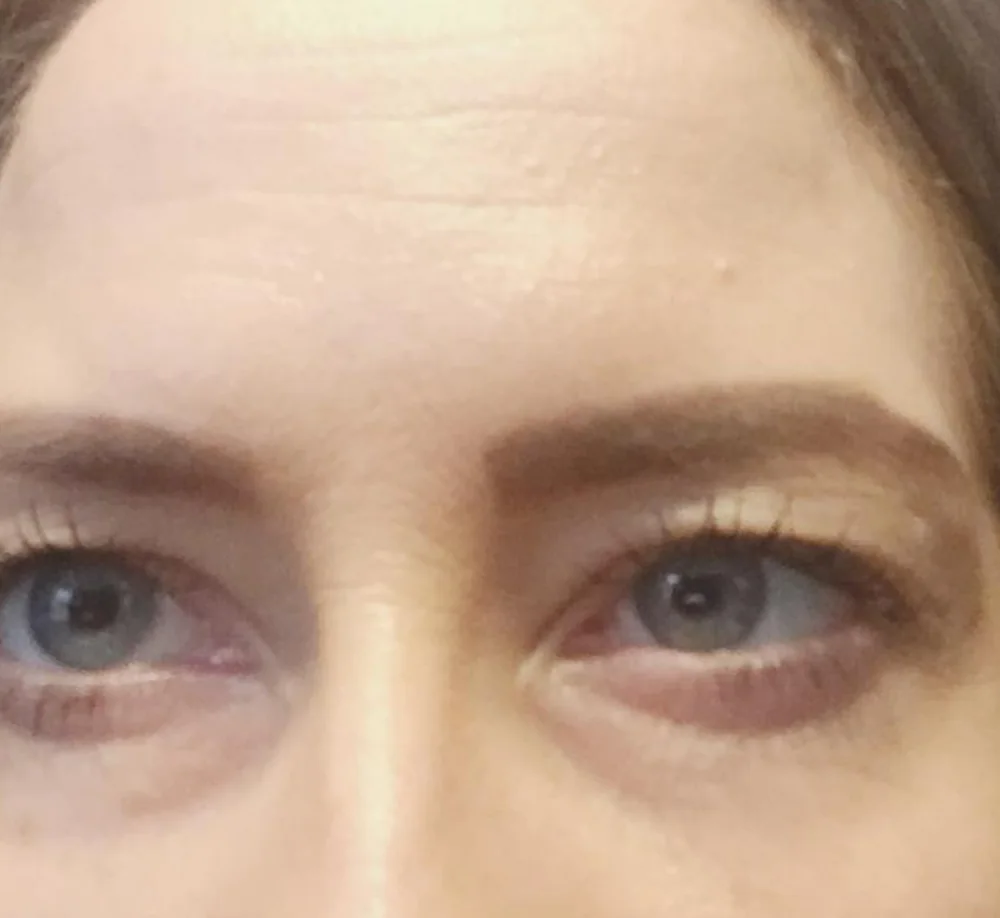
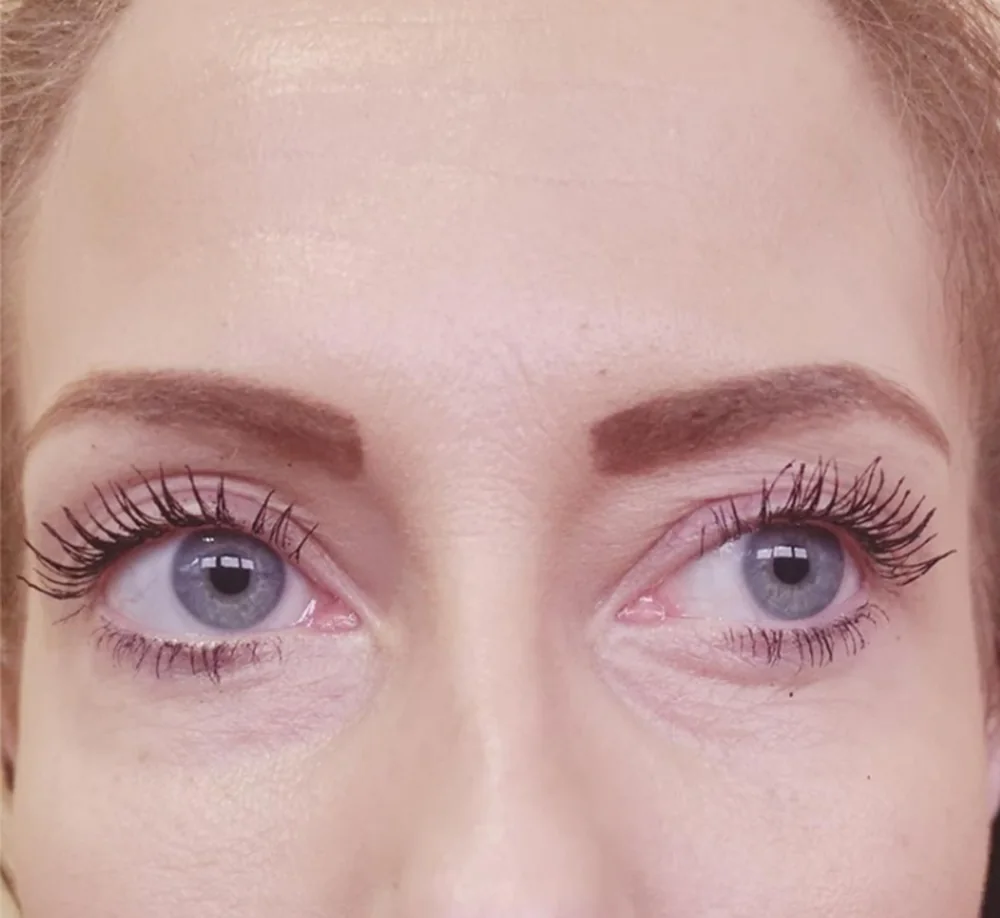
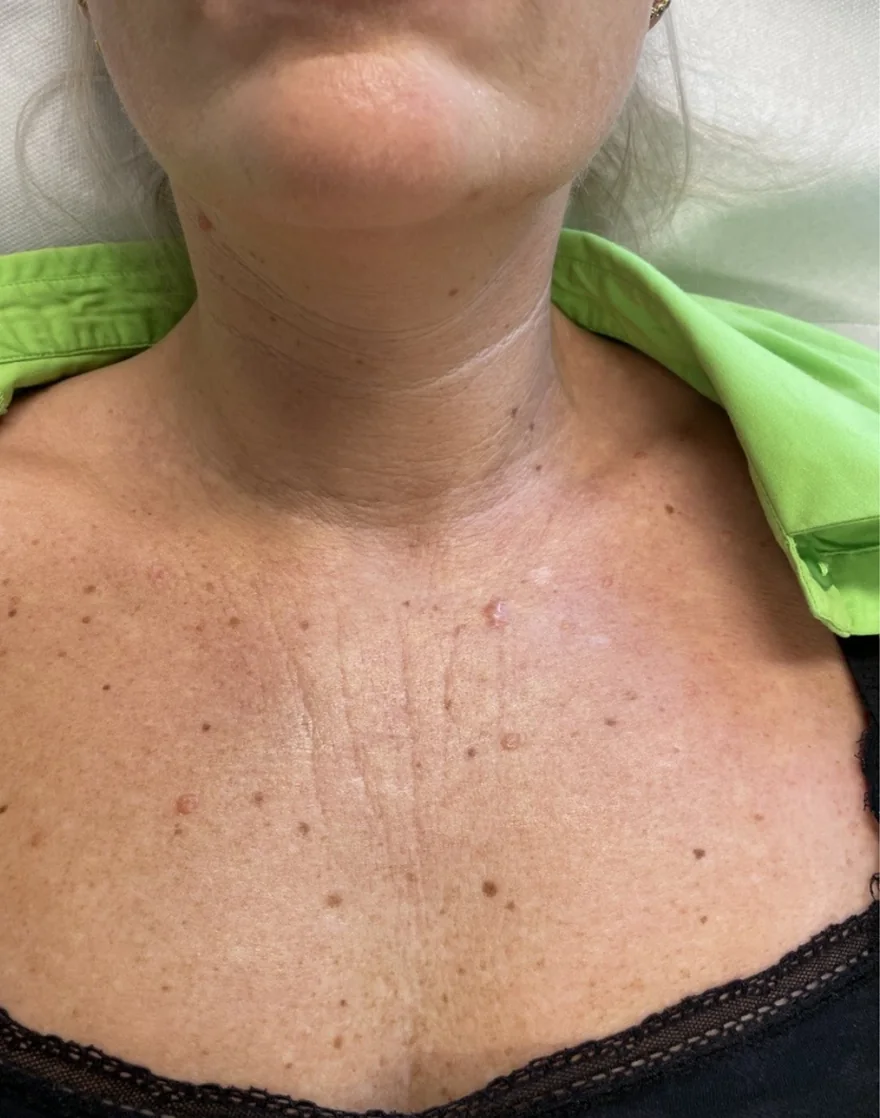
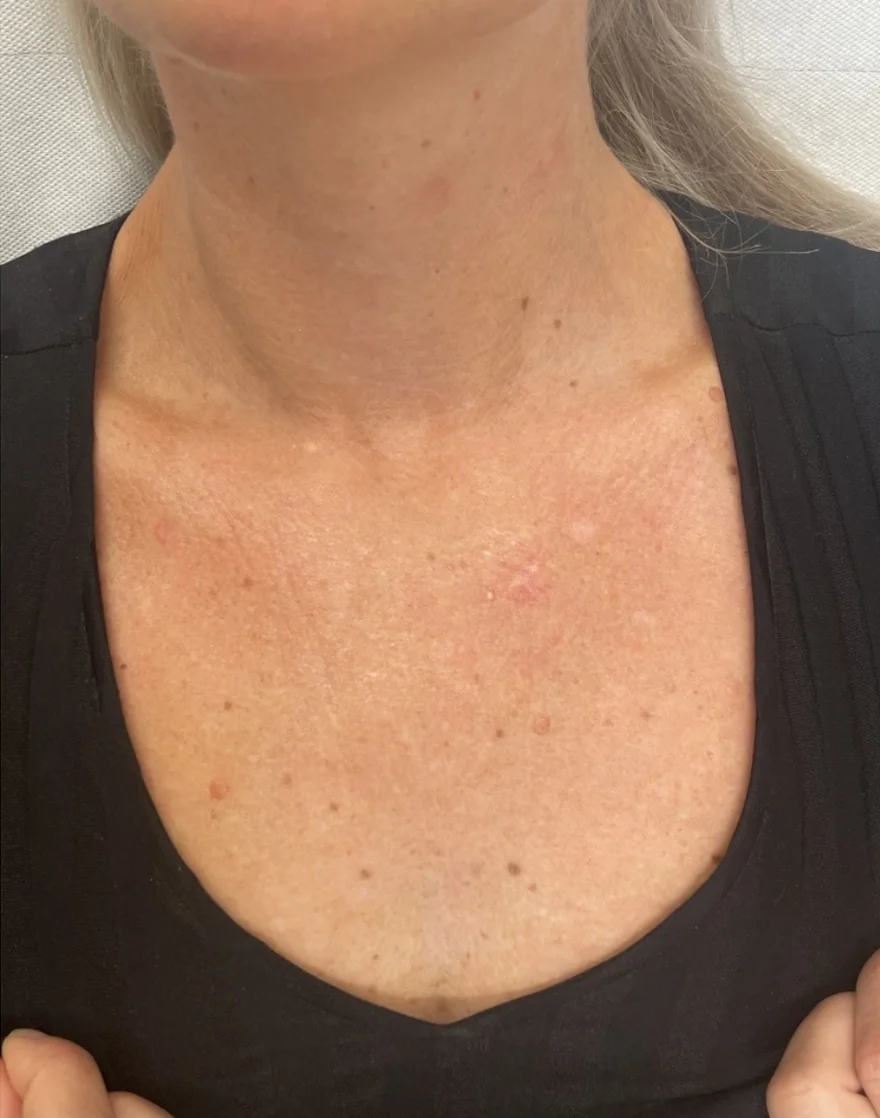
Recovery
Downtime, day by day
Dr. Emil Henningsen is the patient, photographed on each of the first five days after a full-face CO2 treatment. We publish it because the single most common reason people are disappointed by resurfacing is that nobody showed them this first.
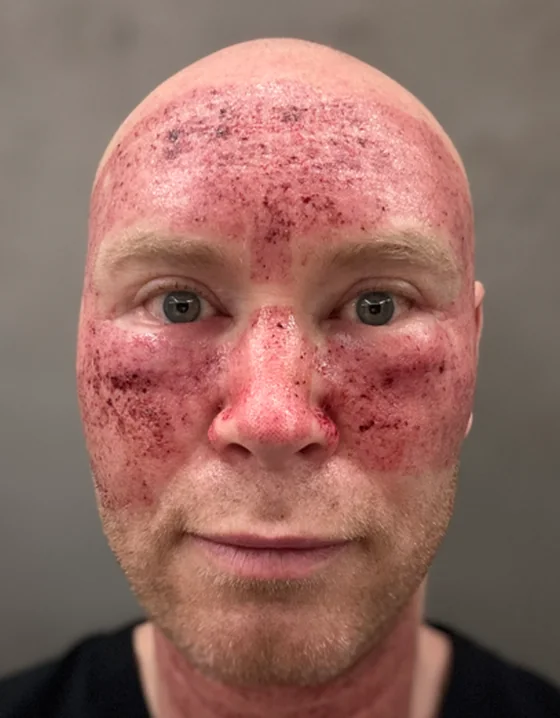
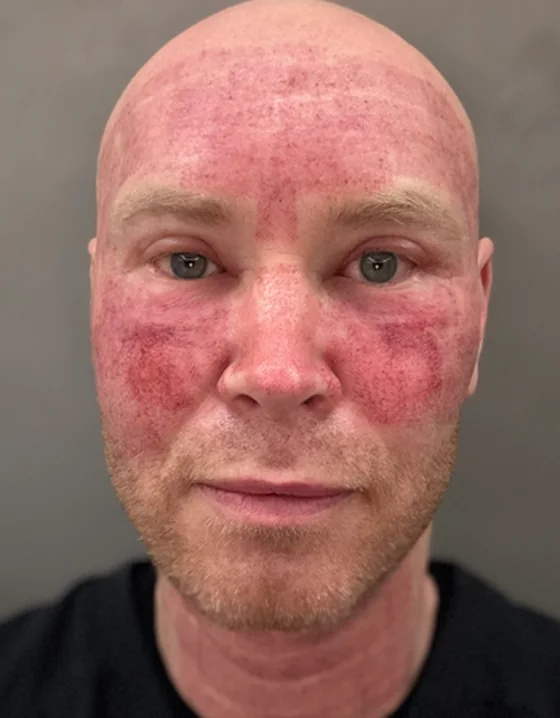
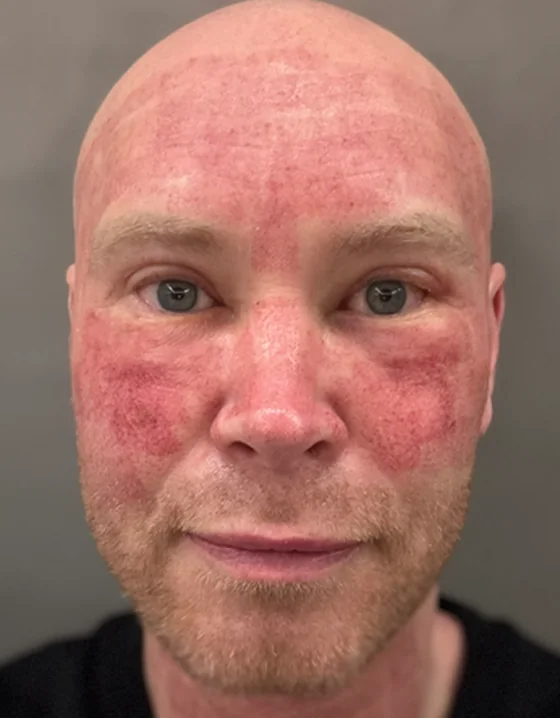
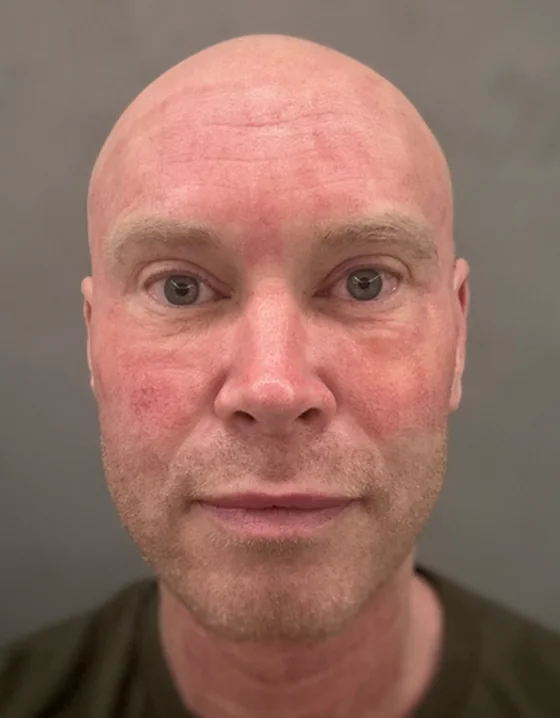
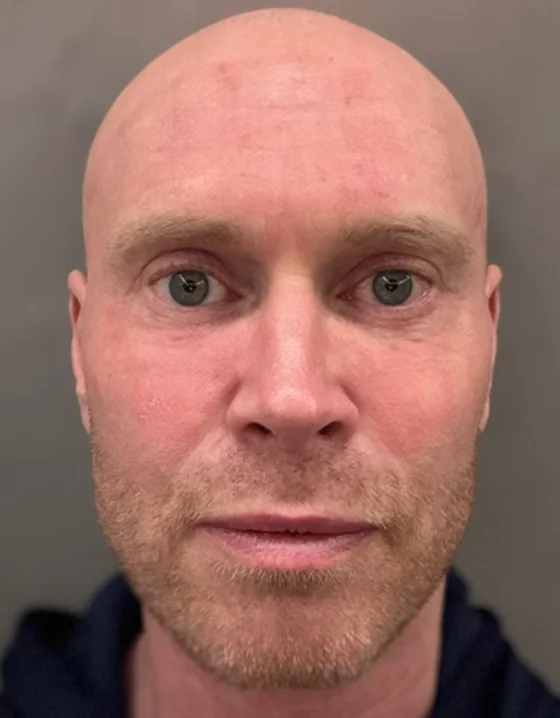
Healing takes four to fourteen days depending on the depth treated. Immediately afterwards the skin shows fine white dots, oozing and pin-point bleeding followed by redness with swelling. By day two or three small crusts form and shed around the end of the first week. Make-up can be applied once the skin has stopped weeping. Residual pinkness fades over the following weeks.
Aftercare is not optional. Cleanse gently with lukewarm water and a mild soap. Apply antibiotic ointment 2-3 times daily for the first three days. Do not pick or scratch — that is how a resurfacing treatment turns into an infection or a new scar. Daily SPF 30+ for one month before and after treatment reduces the risk of hyperpigmentation.
Day nought
Pinpoint bleeding and oozing, immediate swelling, and a burning sensation for a few hours. You leave with the skin occluded by ointment, and you should leave with a hat and sunglasses.
Days one to two
Peak swelling, worst around the eyes, and the first serous crusting. The skin looks and feels like significant sunburn.
Days three to five
Visible crusting and shedding. In a prospective series of fractional CO2 treatments the average scab duration was just over four days.
Days four to seven
The surface has re-epithelialised in most patients. Make-up becomes possible somewhere between day seven and day ten.
Weeks one to twelve
Residual redness. After ablative fractional treatment this is typically reported as three to fourteen days of marked erythema, resolving over about two to three months.
Months three to twelve
Collagen remodelling continues long after the surface has healed, and the result is properly assessed at a year.
Risks
What can go wrong
Expected
Swelling, bleeding, oozing, crusting, shedding and prolonged pinkness. Prolonged erythema is reported in more than one patient in eight after ablative fractional treatment.
Uncommon
Post-inflammatory hyperpigmentation — between roughly 1 and 32 per cent depending on device, settings and phototype. Acneiform eruption, 2 to 10 per cent. Milia, up to about one in five. Herpes reactivation, reported between well under one per cent and about one in ten across series, which is why antiviral prophylaxis is used liberally. Bacterial infection, around one in a thousand.
Rare but serious
Scarring, most often on the neck and décollete, around the eyes or along the jaw, and associated with excessive energy density or with infection. Ectropion in a patient with previous eyelid surgery. Delayed hypopigmentation, which is uncommon but can persist for months.
Two practical notes. Topical anaesthetic left on in high concentration over a large area has caused systemic toxicity, which is why it is applied and removed under supervision rather than by you at home. And bruising appearing more than three days afterwards is associated with anti-inflammatories, aspirin and anticoagulants, and with rubbing the treated skin.
Evidence
What the evidence shows
Mechanism strong, outcomes mixedThe physics is well characterised: each microbeam creates a vaporised column surrounded by a ring of coagulated collagen, with untreated skin between columns supplying the cells that resurface the wound. Histology and gene-expression work in human skin confirm a wound-healing and regeneration programme rather than simple thermal damage.
The outcome literature is considerably messier. Pooled against needling-based treatments across seventeen studies and more than a thousand patients, CO2 was not statistically superior on scar-score reduction; it held a small edge on categorical treatment success, at the cost of significantly more pigmentation. Pain did not separate the two reliably — where it was measured, radiofrequency microneedling was if anything the more uncomfortable of the two. The heterogeneity between those trials was extreme, which tells you the studies are not measuring the same thing — and the Cochrane review of acne scar treatments does not support first-line use of any intervention at all.
One myth is worth retiring, because it delays a great many patients unnecessarily. The instruction to wait six to twelve months after isotretinoin before laser is not supported: a multidisciplinary systematic review covering nearly 1,500 procedures found insufficient evidence to delay fractional ablative and non-ablative laser, superficial peels or cutaneous surgery, and a later randomised split-face trial found fractional CO2 given alongside oral isotretinoin was safe and produced better results than laser delayed until six to nine months after stopping. Fully ablative laser and mechanical dermabrasion are still avoided during isotretinoin. If you have been told to wait a year, it is worth asking us.
If you are travelling
This is the treatment on this site that most needs planning around travel. Allow three to seven days away from anything social, and up to ten before make-up will sit properly. Some patients are comfortable at three days; plan for seven.
You may fly on the day of a full-face treatment, but many patients choose to wait 4-5 days.
Prescriptions do not travel between jurisdictions, so the antiviral, the antibiotic and the aftercare are dispensed before you leave rather than recommended for you to find at home.
And the Marbella point, said plainly: sun avoidance for at least two weeks before and a month after is not advice, it is the condition on which the pigmentary risk depends. There are months of the year on this coast when we would rather treat you at home and see you here for something else.
Questions
Good to know
If your question is not here, ask it in the enquiry form — Dr. Henningsen answers these personally.
Ask a question- How does it compare to radiofrequency microneedling?
- Can it be done on the neck and chest?
Yes, with more conservative settings. Skin below the jawline has fewer adnexal structures and heals more slowly, so it is treated with respect.
- Will it help with redness?
Not directly. Redness driven by blood vessels responds to a vascular laser such as KTP; CO2 addresses texture, tone and collagen.
- Is one treatment enough?
Sometimes, for photoageing. For scarring and texture, almost never — the case photographs on this page are typically one to two treatments, and a full scar course usually includes more.
- What is the risk of pigmentation?
Real, and highest in darker skin types and in sun-exposed skin. Sun avoidance and daily high-factor sunscreen for a month either side of treatment is the single most effective thing you can do to reduce it.
Consultation
Ready to talk about your skin?
Consultations with Dr. Henningsen are arranged individually. Tell us what you would like to change and we will come back to you with the options, the honest downtime and the realistic result.