No, and any clinic that says otherwise is either using the word loosely or does not understand the condition. It can be brought down substantially and kept down. It relapses with sun, heat and hormonal change, which is why the plan includes what you do for the rest of the year.
Overview
Diagnosis before device
Uneven colour is the complaint patients bring most often and the one most frequently treated wrongly. Two conditions that look alike in the mirror can need opposite treatment.
Pigment and redness sit at the top of most people’s list because colour is what the eye reads first. An uneven cheek reads as tired skin long before a line does.
But “brown patches” covers at least four different conditions with four different mechanisms, and “redness” covers at least three. Sun-induced pigment sits in the epidermis and can be lifted out. Melasma sits deeper, is driven hormonally, and flares under heat — which means the laser that clears sun damage can set melasma back a year. Post-inflammatory pigment is a record of past inflammation and fades on its own if the inflammation stops.
So this page does not begin with a treatment list. It begins with the examination that decides which list applies.
At a glance
- Treatment time20–45 minutes
- AnaestheticNone to topical
- DowntimeNone to three days
- SessionsTwo to six, depending on diagnosis
- ResultsVascular from two weeks; pigment from six
- Combines withTexture work and biostimulation

How it works
What we are actually targeting
Vascular. Visible vessels and diffuse flushing are treated with a pulsed dye laser, which is absorbed by haemoglobin and leaves the surrounding tissue alone. It is the one part of this where a device genuinely is the answer.
Epidermal pigment. Sun-induced lentigines and general sun damage respond to resurfacing and to pigment-selective light, because the pigment is close to the surface and can be broken up and cleared.
Dermal and mixed pigment. Melasma is managed rather than removed: prescribed topicals, strict photoprotection, and only then very conservative energy, if any. Expecting to clear it in one session is the single most common way it is made worse.
Inflammatory drivers. Rosacea is treated medically first. Calming the disease usually removes most of the colour, and what remains is a much smaller vascular job.
Indications
What this covers
- Sun damage and lentigines on the face, neck and décolletage
- Melasma, including the hormonally driven and post-pregnancy patterns
- Post-inflammatory pigmentation after acne or after previous treatment
- Rosacea — flushing, persistent redness and papules
- Telangiectasia and visible vessels around the nose and cheeks
- Uneven tone left behind by scarring
In the clinic
Step by step
Diagnosis
Examination under several lights, including Wood’s light where it separates epidermal from dermal pigment. This step decides everything that follows.
Stabilise
Where the driver is active — rosacea, ongoing inflammation, unprotected sun exposure — it is treated before any device is used.
Treat
Vascular and epidermal targets are treated directly. Dermal pigment is treated conservatively, and sometimes not at all.
Protect
Daily photoprotection is what holds the result. For melasma in particular, it is the treatment, not the aftercare.
Documented results
Before & after
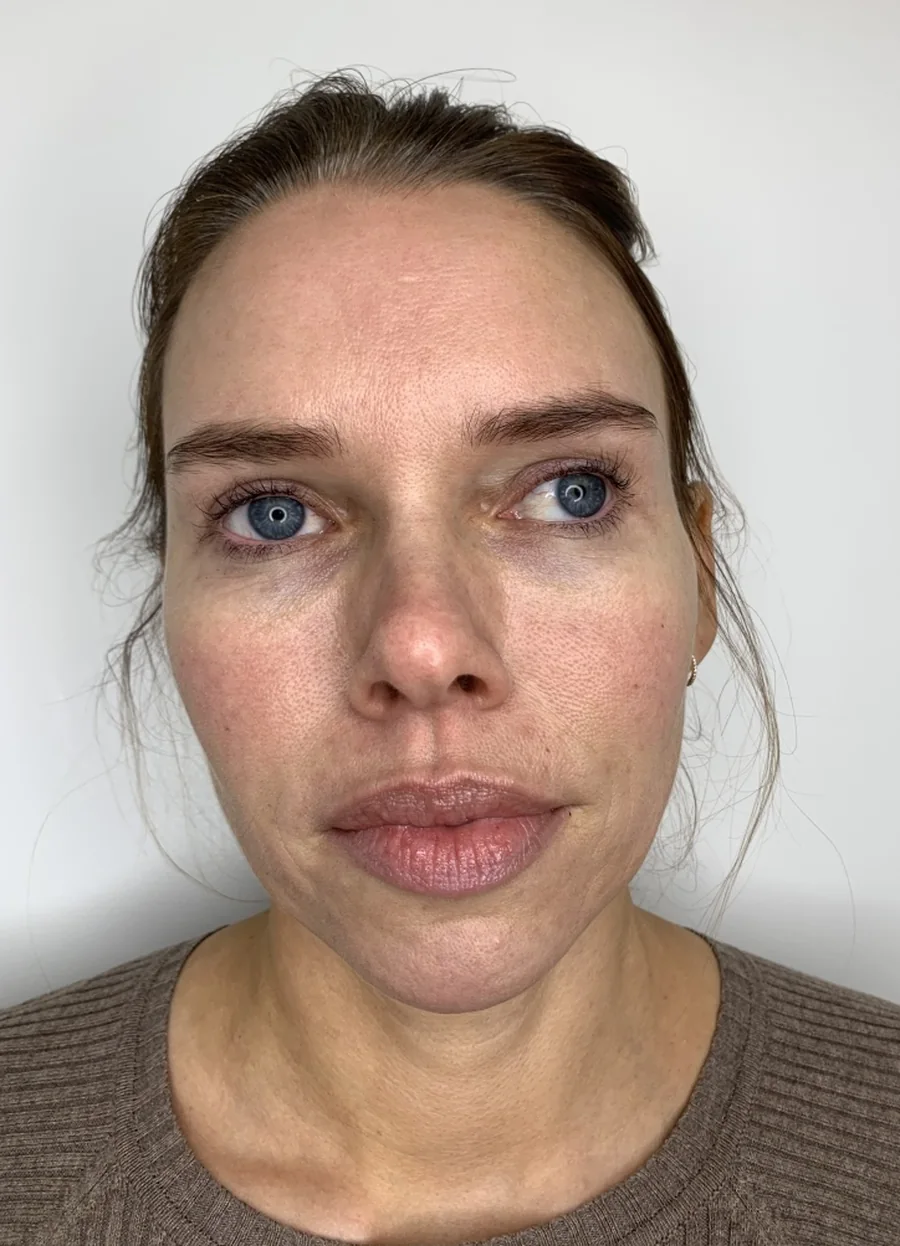
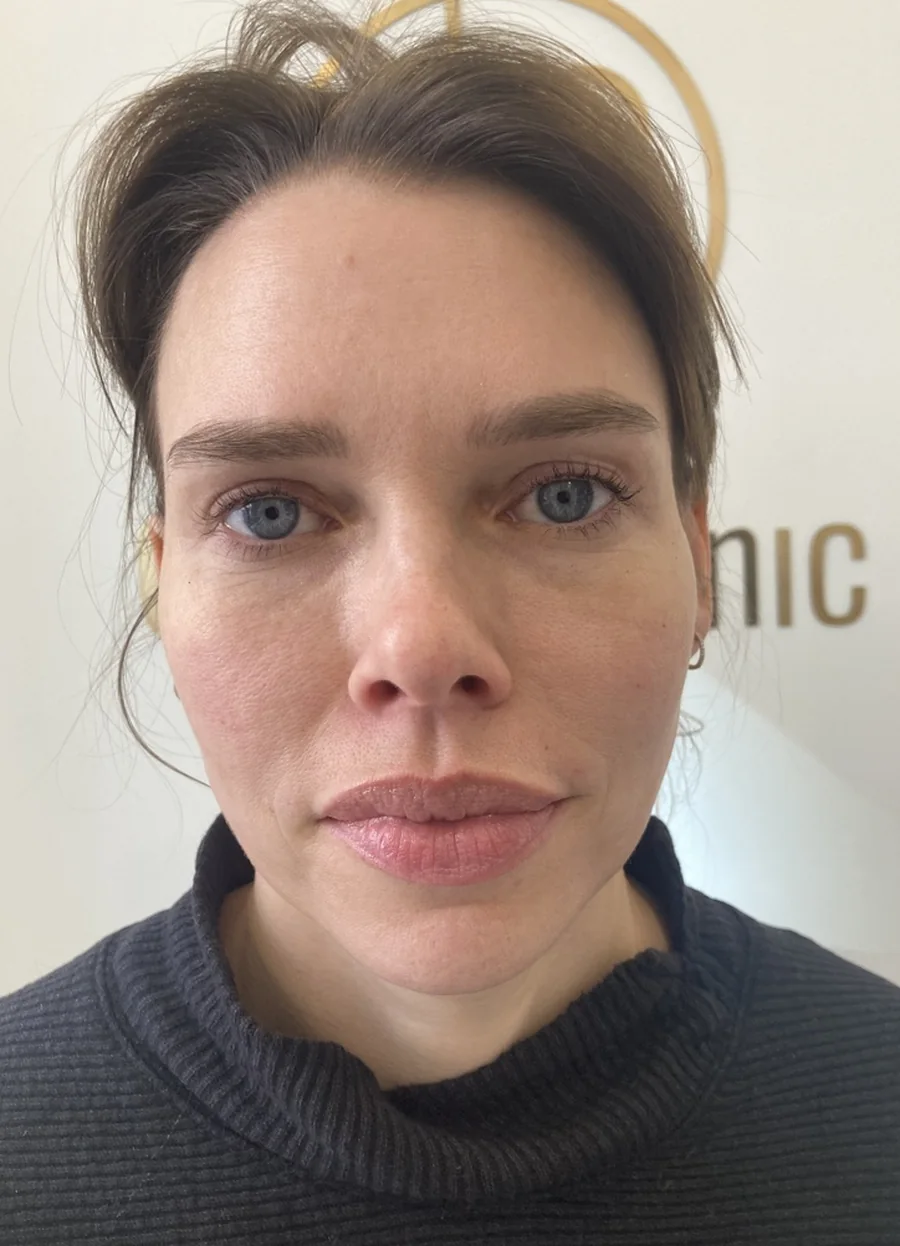
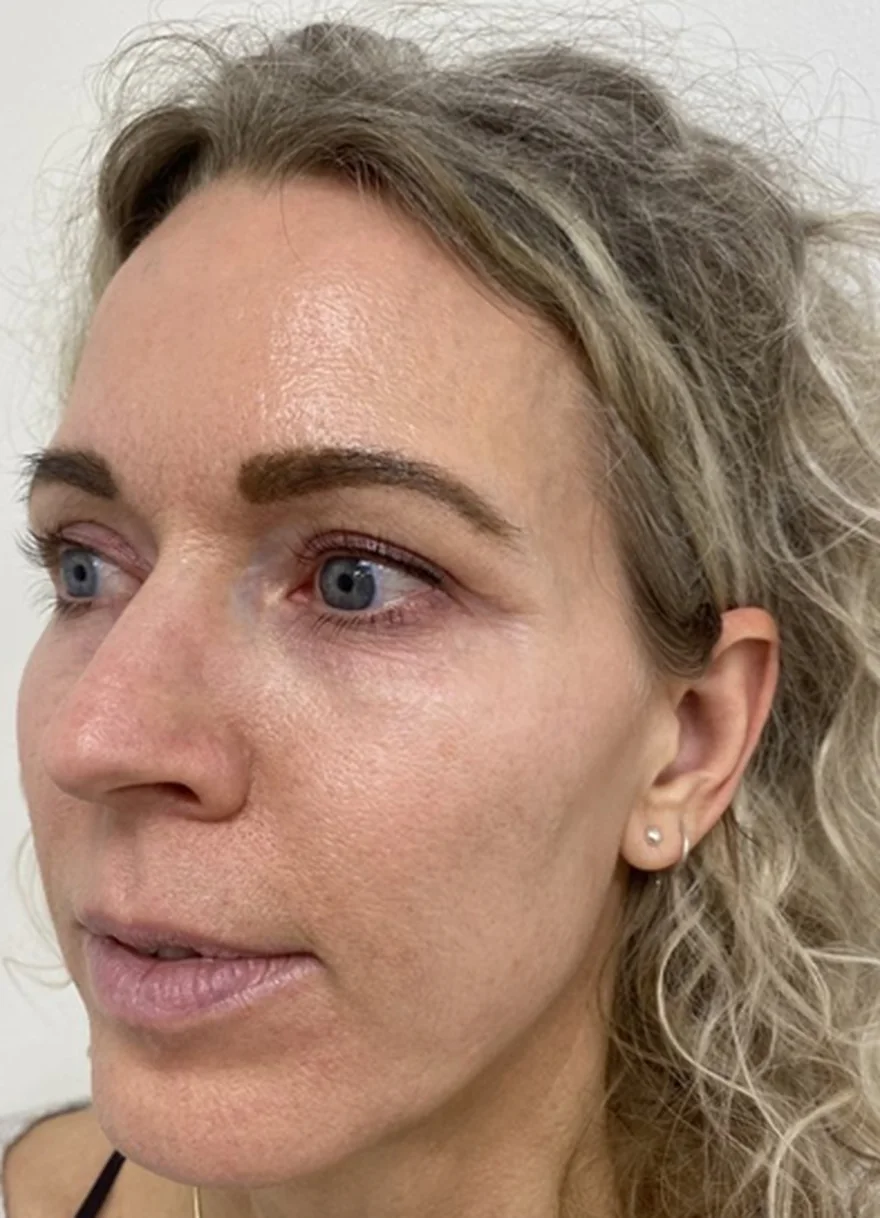
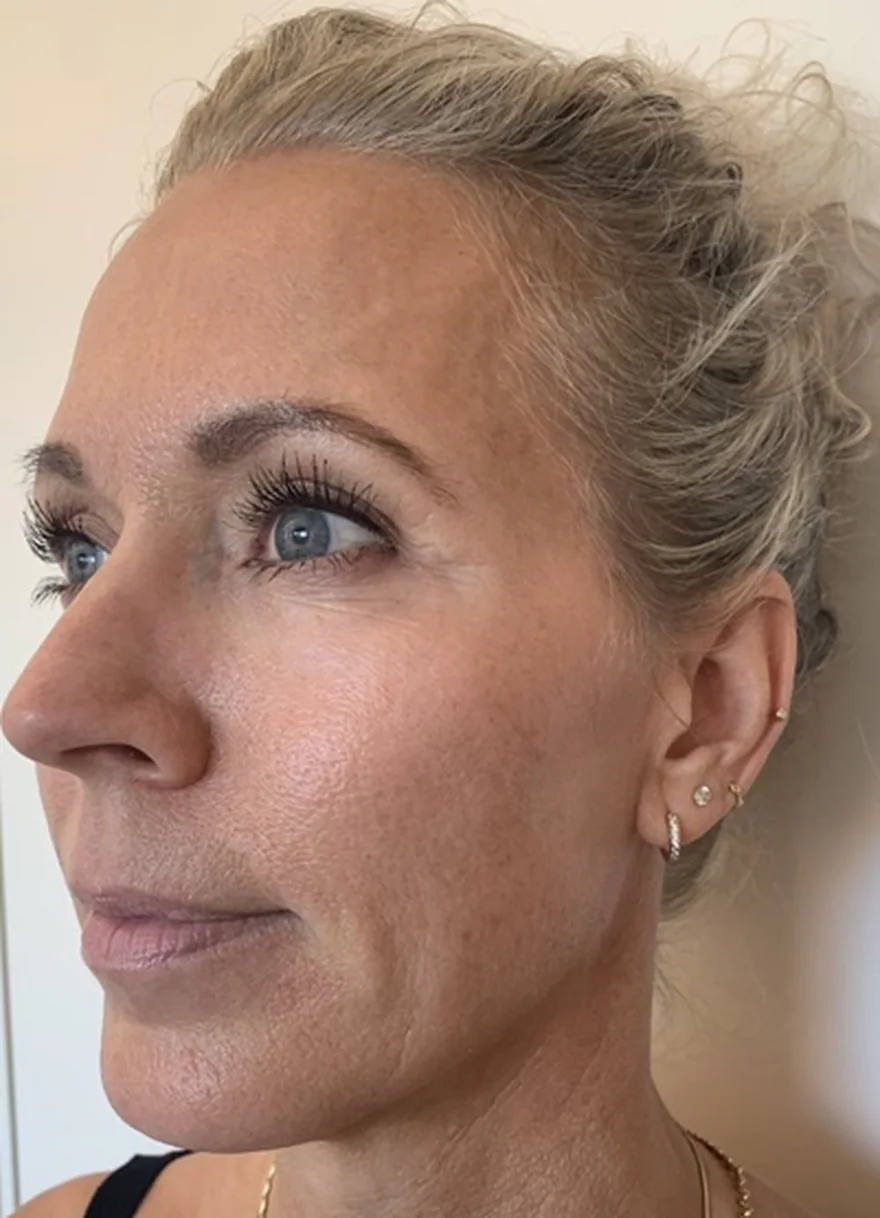
Drag the handle across each photograph to reveal the result. All images are unretouched and published with written patient consent.
The part that gets skipped
Melasma is not sun damage, and rosacea is not sensitivity
They look similar in a mirror and behave nothing alike under treatment. Sun damage can be removed. Melasma is a hormonally driven condition that relapses, and treating it with the wrong device makes it permanently worse. Rosacea is a vascular and inflammatory disease with a medical treatment ladder, not a reaction to the wrong moisturiser.
Which is why nothing in this section starts with a device. It starts with a diagnosis, and on this one subject the diagnosis changes the answer more than the equipment does.
Questions
Good to know
If your question is not here, ask it in the enquiry form — Dr. Henningsen answers these personally.
Ask a question- Can melasma be cured?
- Why do you sometimes refuse to laser pigmentation?
Because on the wrong pigment a laser deposits heat into the exact layer that is already overproducing. The rebound can be worse than the original and much harder to treat. Declining that session is part of the job.
- Will redness come back after vascular laser?
The vessels treated are gone. Rosacea, if that is the driver, continues to make new ones, so most patients have a top-up every one to two years alongside medical treatment.
- Is this safe on darker skin?
Pigment treatment on darker skin is a different discipline, not the same one at lower power. It needs priming, conservative settings and a low tolerance for heat. It is done, carefully, and sometimes the honest recommendation is topical management only.
Consultation
Ready to talk about your skin?
Consultations with Dr. Henningsen are arranged individually. Tell us what you would like to change and we will come back to you with the options, the honest downtime and the realistic result.